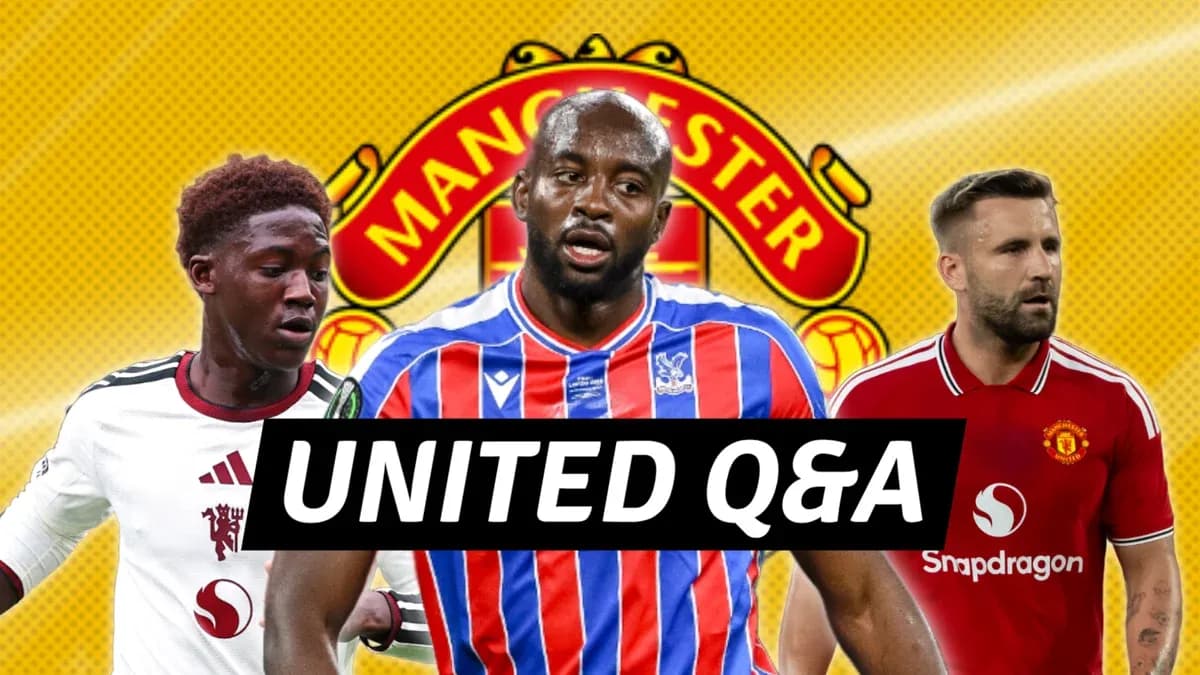
Manchester United's New Transfer Strategy Under Sir Jim Ratcliffe
Manchester United’s new era under Sir Jim Ratcliffe is starting to take shape – and it doesn’t look much like the old one.
For a decade, United chased headlines and “statement” signings. Big names, big fees, mixed results. Now, the club’s hierarchy is steering away from that approach, even as rivals like Tottenham and Arsenal continue to splash out on marquee players.
United’s record transfer – Paul Pogba’s £89million move in 2016 – suddenly feels like a relic. It may stay untouched for a while yet. That’s not because United have ruled out ever going past the £100m mark again, but because this summer was never built for one blockbuster arrival.
With a full midfield rebuild required and several other areas of the squad still waiting to be addressed, the budget was always going to be spread around. History shows United tend to throw money at the problem when they miss out on the Champions League, desperate to claw their way back into the competition. This time, they finished in the top three. That changed the mood and the maths. After last summer’s £225m outlay, this window was always likely to be leaner, more selective, less emotional.
The fans, of course, still want answers.
The left-back question that won’t go away
“When are United signing a left-back?” has become the soundtrack of the window.
It’s blunt, it’s fair, and it’s on the minds of most United supporters. The club’s failure to go all-in for Lewis Hall has not gone unnoticed. Whether the Newcastle defender would have pushed for the move is another matter, but United never truly forced the issue. For many, that felt like a lack of ambition in a position that clearly needs reinforcing.
Inside the club, the stance is clear: they do want a left-back, but only at the right price. The signing of Carlos Baleba this week underlined a new transfer principle – they are prepared to walk away if the numbers don’t add up. They did it with Baleba last summer before eventually landing him this time around, and that willingness to step back from deals is now part of the Ratcliffe-era identity.
Still, time is ticking. Luke Shaw’s injury history hangs over every team-sheet. He came through last season largely unscathed, but with a congested fixture list ahead, relying on him without proper cover looks like a risk rather than a plan. Harry Amass is highly rated, yet nowhere near the level required to be thrown in as Shaw’s deputy in a long, demanding campaign.
United’s summer won’t be “undone” if a left-back doesn’t arrive before the deadline. But the lack of urgency around the position is jarring, and everyone knows it.
Mainoo, Baleba and the shape of United’s midfield
Another theme running through the fanbase: “Mainoo is our midfield man. Why not play him regularly? And why sign Baleba if he’s not as good?”
The answer is less dramatic than the question. Kobbie Mainoo and Carlos Baleba are very different profiles, and there is no suggestion inside the club that one cancels out the other. A Mainoo–Baleba partnership is not only possible this season, it’s highly likely.
As for Mainoo’s minutes, timing matters. He only returned to pre-season training less than three weeks ago, which meant he was never a realistic option to start the opening-day defeat to Hull. He came off the bench midway through the second half at the MKM Stadium and is now in contention to start on Sunday.
United see him as both the present and the future of their midfield. His role isn’t under threat. It’s being built around.
Baleba’s arrival is about depth, balance and durability in a position that has repeatedly let United down when injuries and fatigue bite. This isn’t a straight shoot-out. It’s about giving the manager enough tools to shape different midfields for different games – and not having to run one young star into the ground by October.
Cover, competition and the final pieces
Beyond left-back and midfield, some supporters are already thinking about the attack. One suggestion doing the rounds: Jean-Philippe Mateta as an experienced backup for Benjamin Sesko.
On paper, it makes a certain kind of sense – a proven Premier League striker who could support, not block, Sesko’s development. But inside Old Trafford, the immediate priority remains clear: secure a left-back, protect Shaw, and avoid another season where one injury triggers a reshuffle across the entire back line.
United have changed the way they operate. The chequebook is no longer a weapon of impulse. Every deal is being weighed, tested, sometimes abandoned.
That discipline will be praised if the squad looks balanced and competitive come May. If they go into the season short at left-back and pay the price, the questions being asked now will sound a lot louder.