
Manchester United's Summer Transfer Strategy Shift
Manchester United’s summer was never supposed to look like this.
The plan on the whiteboard at Carrington had a clear headline: one elite midfielder, maybe two, to reshape the heart of the team. Elliot Anderson was circled. Mateus Fernandes was underlined. Éderson was pencilled in. Instead, Anderson is across town at Manchester City for £116 million, Fernandes is at Tottenham for £85m, and the £35m move for Éderson from Atalanta has stalled on medical grounds.
United haven’t torn the plan up. They’ve just had to redraw it. Fast.
Flexibility by necessity
Before the window opened, CEO Omar Berrada spoke about the need to be “flexible.” It sounded like a corporate buzzword at the time. It now reads like a mission statement.
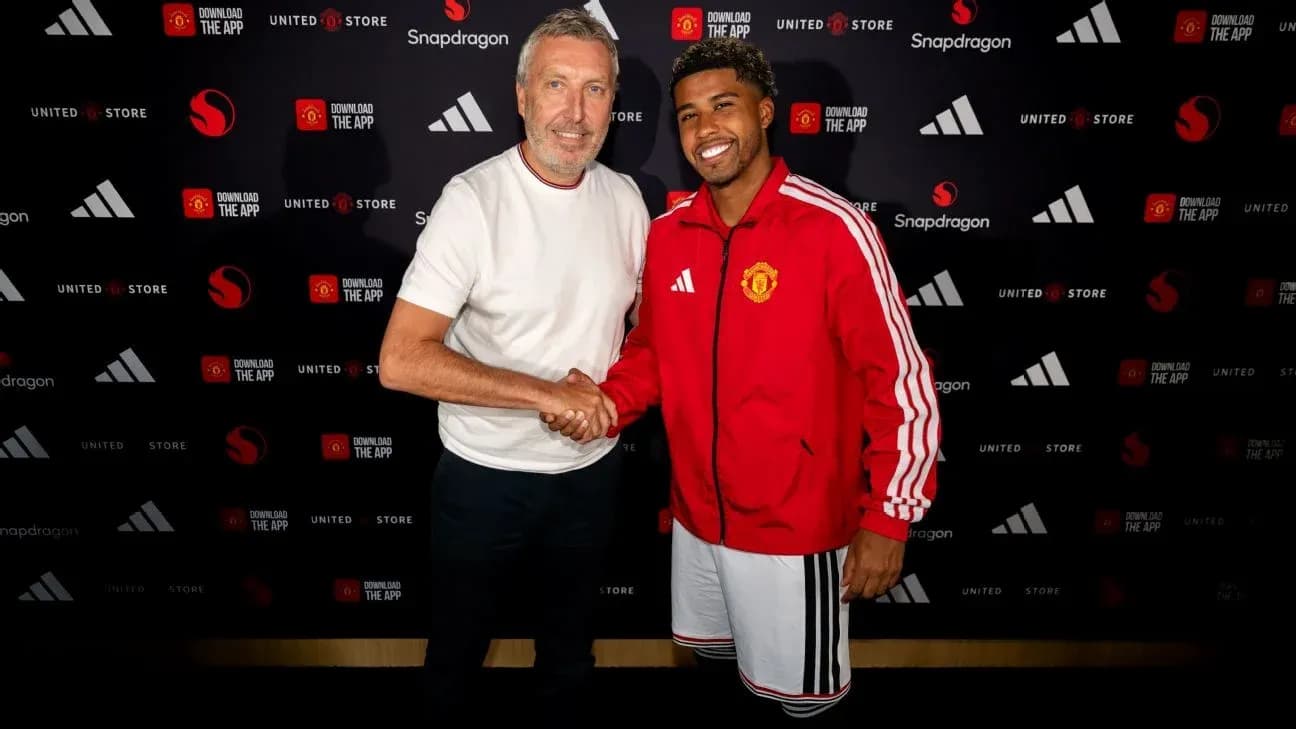
Rather than building around Anderson and Fernandes, United’s midfield revamp is anchored by Andrey Santos, signed from Chelsea for £48m, and Youri Tielemans, activated via a £35m release clause at Aston Villa. Not the original script, but very much the reality.
Inside the club, Berrada and director of football Jason Wilcox have tried to project calm in a market that has done anything but. United have a long history of blinking when the pressure rises and the targets slip away. This time, those close to the recruitment operation insist the priority has been as much about avoiding expensive mistakes as landing the big names.
Anderson was the first hard lesson. United identified the England international as their top midfield target early in the year, but the numbers quickly spiralled. Nottingham Forest wanted close to £120m as an initial fee. City’s interest turned a difficult deal into a near-impossible one.
United had seen this film before.
In January, they believed they were well placed for Bournemouth winger Antoine Semenyo after positive talks with his camp. Then City entered the room. Wage demands shifted sharply. The structure of the deal changed. United walked away as Semenyo went to the Etihad for £64m. The message was clear: matching a fee is one thing, matching City’s salary package is another.
They refused to go down that road again with Anderson and stepped back early.
Fernandes, doubts and a different profile
Fernandes was supposed to be the alternative. United had budgeted £80m-£90m for a midfielder and could have gone toe-to-toe with Spurs financially. West Ham’s stance hardened, the price rose, but the real problem lay elsewhere.
During talks, United never felt a firm signal that Old Trafford was Fernandes’ first choice. When the time came to decide whether to meet West Ham’s demands, there were lingering doubts over how committed he was to the move. For Berrada and Wilcox, that attitude jarred with their experience last summer.
Bryan Mbeumo and Matheus Cunha, pursued amid competition from clubs in the Champions League, made it unequivocally clear they only wanted United. Internally, that clarity is seen as a key reason both players settled so quickly. Some staff still believe Jadon Sancho’s struggles trace back partly to his own uncertainty over leaving Borussia Dortmund in 2021.
Tielemans was the opposite. Premier League-hardened, technically reliable and, crucially, emphatic in his desire to join. That box was ticked from the first conversations. Once his £35m release clause came into play, the deal aligned perfectly with Berrada’s preference for clause-driven transfers that bypass what is grimly known at Old Trafford as the “United tax.”
The Santos deal fit the same logic. At £48m plus £2m in add-ons, United saw a 20-year-old with upside, at a fee that didn’t threaten to distort their entire summer.
Éderson setback and a moving budget
The Éderson situation underlined how quickly carefully laid plans can unravel. United had an agreement with Atalanta worth around £35m in place before the World Cup. Medical tests then flagged an issue, and the club pulled back. Sources have not ruled out a return to the deal later in the window, but for now it is parked.
All of this plays out against a financial backdrop that is tighter than Champions League qualification might suggest. The extra revenue has helped, but United cannot afford to sink big money into the wrong player. Internally, Fernandes had initially been placed in a £40m-£50m bracket, particularly if West Ham were relegated. When his final fee nudged towards double that, alarm bells rang about the wider market being dragged up with it.
Tottenham’s spending only added to the sense of shifting ground. Few at United expected Spurs to drop a combined £185m on Fernandes and Newcastle’s Sandro Tonali, another midfielder on United’s long list. Recruitment staff try to game out rival clubs’ moves; Tottenham’s early aggression caught them off guard.
On the outgoing side, the numbers have moved too. The early hope was that sales — including Rasmus Højlund’s £40m switch to Napoli and potential exits for Marcus Rashford, Manuel Ugarte, Joshua Zirkzee and Altay Bayindir — could raise around £90m and effectively underwrite the marquee midfield arrival.
That plan frayed quickly. Barcelona declined the option to make Rashford’s £25m move permanent. Ugarte then suffered a serious knee injury playing for Uruguay at the World Cup, ruling out a transfer and potentially sidelining him for most of the season.
The budget, like the target list, has had to be constantly reworked.
One eye on a third midfielder
Despite Santos and Tielemans already through the door, United have not closed the book on further midfield business. Ugarte’s injury, in particular, has sharpened the need for another body in the engine room.
Bournemouth pair Alex Scott and Tyler Adams are on the radar. So is Fulham’s Sander Berge. Crystal Palace’s Adam Wharton has been watched extensively, as have Wolves’ João Gomes, Roma midfielder Manu Koné and Lille’s 18-year-old Morocco international Ayyoub Bouaddi, one of the breakout stars of the World Cup.
Real Madrid’s Eduardo Camavinga has been offered to a number of Premier League clubs, while United’s enquiry for Brighton’s Carlos Baleba last summer met a firm response: any deal would require an initial fee similar to the £100m Chelsea paid for Moisés Caicedo in 2023. That level of outlay, at this stage of the window, looks unlikely.
Beyond midfield: gaps still to fill
The midfield is only part of the puzzle. United still want a left-sided player — either a full-back or a winger — and a second striker. The club also expect Wales international Karl Darlow, 25, to arrive from Leeds United as experienced back-up to first-choice goalkeeper Senne Lammens.
The brief is twofold. Raise the quality of the starting XI after last season’s third-place finish, and thicken the squad for the physical demands of a campaign that includes Champions League football. The margin for error shrinks when midweek trips to Europe sit between heavyweight league fixtures.
Inside Old Trafford, the mood around the window is more relaxed than the noise outside would suggest. There is frustration among sections of the fanbase that the blockbuster midfield signing has not arrived, but club figures have been consistent: judge the work when the window shuts, not in mid-July.
There are six weeks until the Premier League season kicks off on Aug. 22, seven until the market closes on Sept. 1. United’s best-laid plans have already been bent out of shape by rivals, medical reports and shifting budgets.
The question now is simple: in a summer of setbacks and improvisation, can they still build a squad that looks stronger when the lights go up on opening night?




