
Ma Ning’s World Cup Journey and Message for Chinese Football
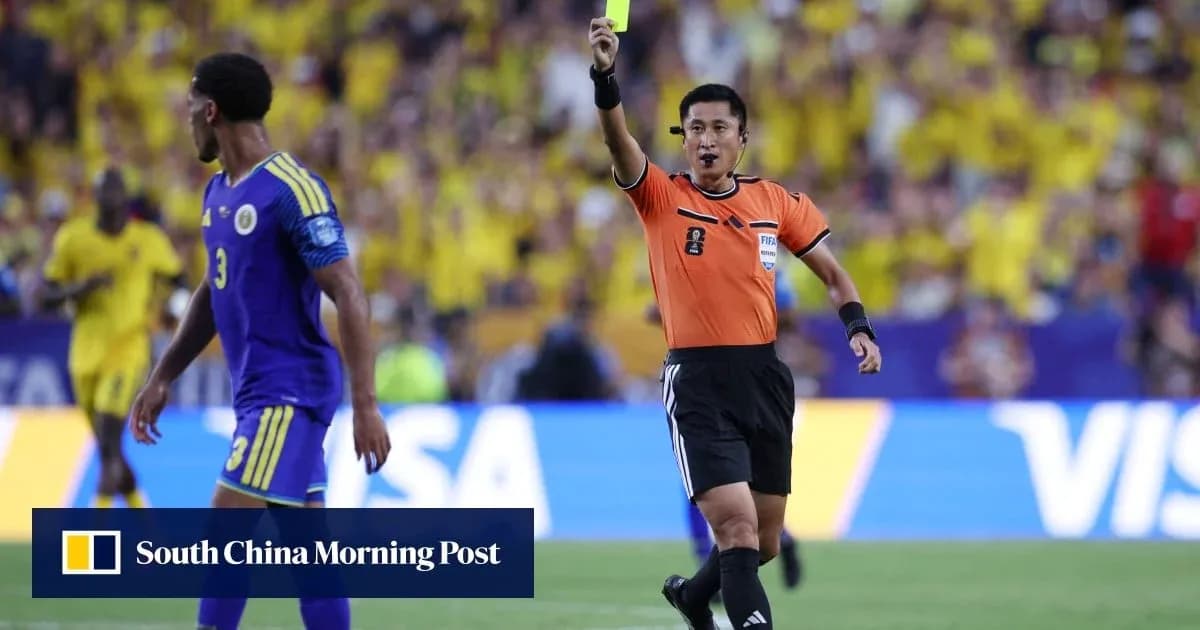
Chinese referee Ma Ning has blown his final whistle at this World Cup, returning home before the semi-finals and quietly closing China’s on-field involvement in the tournament.
Fifa’s final list of match officials for the closing stages did not include Ma, assistant referee Zhou Fei, or video assistant referee Fu Ming, whose exit last week had already trimmed Chinese representation. With their departures, China’s presence at this global showpiece now shifts from the pitch to the living rooms and phone screens of those following from afar.
For Ma, 47, the end of this assignment became something more personal than a travel itinerary. On Monday, he posted a farewell video on Chinese social media, turning a routine sign-off into a reflection on a two-decade climb from obscurity to the sport’s biggest stage.
“From the campus to the World Cup stage, from youthful ignorance to composure and calm, I have spent 20 years proving the meaning of persistence,” he said, framing his journey in the language of graft rather than glory. “At 47, many people say it is too late, but I always believe that as long as there is faith, we can turn the impossible into the possible.”
Those words sounded less like a victory lap and more like a manifesto for late bloomers in a football culture that still fights for its place in the global hierarchy.
Ma used the moment to draw the curtain back on the personal cost behind the whistle. He reserved “special gratitude” for his family, crediting their support with keeping him “resolute and fearless” as he navigated the scrutiny and pressure that trail every top-level referee. The spotlight usually finds the players; the backlash often finds the officials. Families feel both.
He did not shy away from that tension. Instead, he leaned into it, addressing the fans who have watched him evolve in real time.
“From teasing me as the ‘card master’ to recognising my officiating standard, it is your rationality and tolerance that have shown me the most lovely side of Chinese football,” Ma said. “You are not only watching the games, but also truly understanding the value of refereeing.”
That line cut to the heart of his role. In a sport where referees often exist as targets rather than protagonists, Ma framed the relationship as a dialogue. The early jibes about his card-happy reputation, the gradual shift toward respect for his control of matches — all of it became part of a broader story about how a football nation matures.
China’s World Cup narrative this time will not be written through goals or knockout drama. It will be remembered through figures like Ma, Zhou Fei and Fu Ming, who carried the flag in black uniforms, not red shirts.
Their tournament is over. The semi-finals and final will go on without them. But Ma’s parting words leave a different question hanging over Chinese football: if a referee can spend 20 years climbing from campus pitches to the World Cup, who — or what — comes next to follow that path onto the world stage?




