
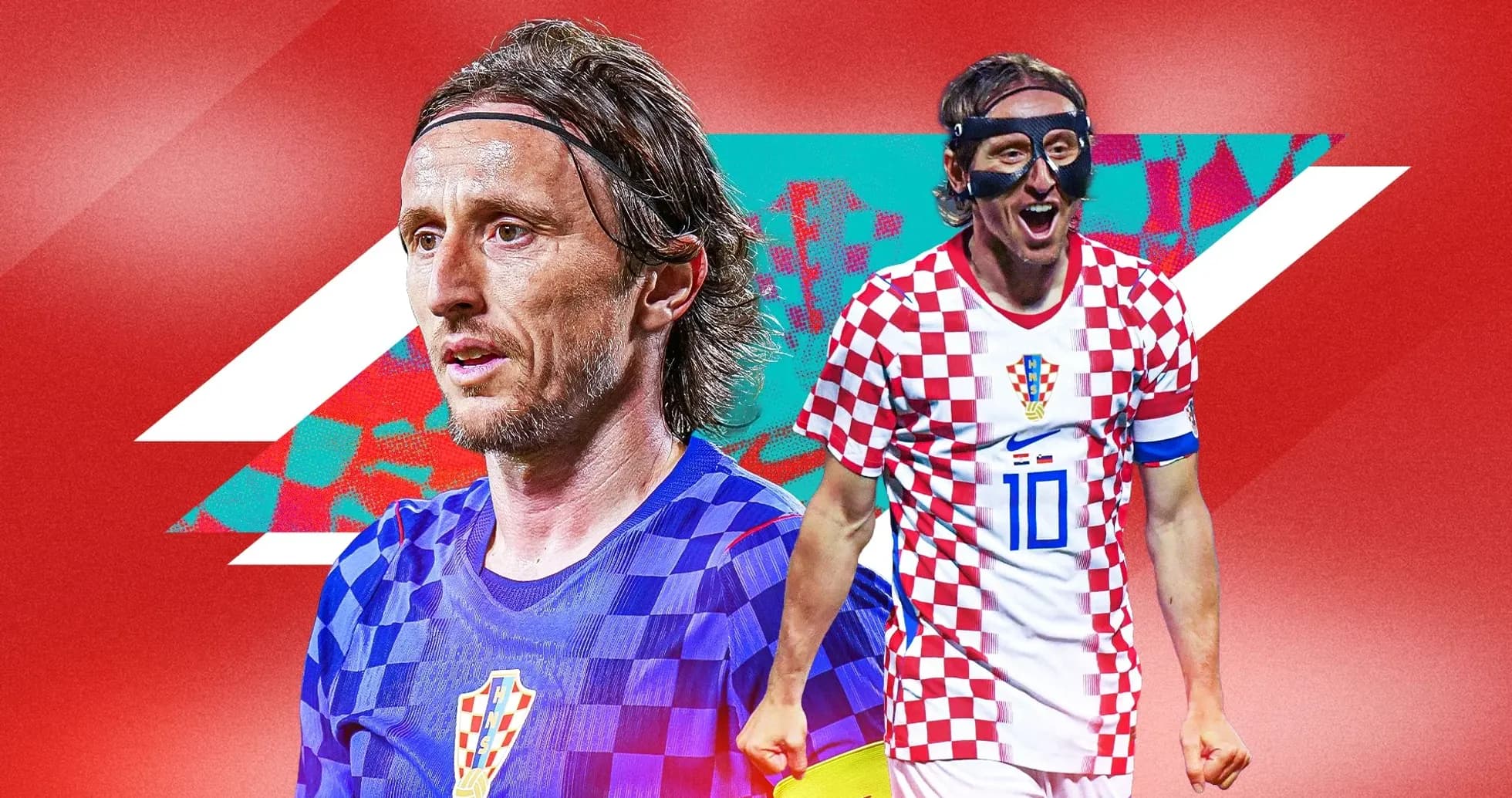
Luka Modric's Unyielding Legacy in Football
Luka Modric looked finished with international football that night in Leipzig. Not because his legs had gone, or his touch had deserted him, but because football can be cruel in ways that even the greats can’t outrun.
Croatia were seconds away from the Euro 2024 last 16. Modric had dragged them there. At 38, in what felt like a playoff for survival against a ragged Italy, he stepped up, took responsibility, and missed a penalty. Then, with the same move, the same heartbeat, he followed in and buried the rebound. A veteran’s goal. A survivor’s goal.
It should have been the story.
Instead, by the time he held the Player of the Match trophy, his face told a different tale. Deep lines, hollow eyes, the thousand-yard stare of a man who had just seen Mattia Zaccagni curl in a 98th-minute equaliser that turned into Croatia’s death sentence. Italy went through. Croatia went home. The script for a farewell had been ripped up in stoppage time.
It was not the ending Modric deserved. Nobody wanted it to be.
In the press room afterwards, the emotion finally broke through the usual post-match formalities. Italian journalist Francesco Repice spoke not as a neutral observer but as a fan of the game itself, thanking Modric “for everything you have shown, not just tonight but in your career” and begging him to “never retire”. The room understood. So did millions watching.
Modric smiled, but the answer carried the weight of reality. He admitted he would like to play forever, then added that a time would come when he would have to hang up his boots. He would keep going, he said, but didn’t know for how long.
That was then. Remarkably, that time still hasn’t come.
A boyhood dream, a grown man’s impact
When Modric walked away from Real Madrid last summer after 13 seasons stacked with trophies, the move to AC Milan felt romantic, almost nostalgic. The boy who had once idolised the Rossoneri, drawn in by compatriot Zvonimir Boban, finally pulling on their shirt at 39. It sounded like a farewell tour.
He insisted it wasn’t. This wasn’t a testimonial in slow motion. He believed he could still shape games, still shape seasons, still matter. He believed he could help revive Milan.
He was right.
Italy greeted his arrival with noise and scepticism in equal measure. One of the greatest midfielders of his generation, yes, but how much fuel could really be left in the tank? Milan had just signed Samuele Ricci, 24, energetic, Italian, a long-term project. The logic said Modric would mentor, cameo, decorate the squad.
The logic didn’t last long.
Massimiliano Allegri kept picking Modric. Kept trusting him. Kept building around him. Ricci, who might have been the one to lose out, had no complaints. He called Modric “the strongest player I’ve ever played with” and talked openly about the Croat’s humility and intensity. That says plenty about Modric the footballer. It says even more about Modric the professional.
The Italian press, not easily impressed by veterans living off their name, watched him run games and shook their heads. “If he really is 40,” wrote journalist Alberto Polverosi, “let’s clone him!” It was a line delivered half in jest, half in disbelief.
There was no secret formula. No miracle diet. Just a mentality that refuses to age.
Kaka, who shared a dressing room with Modric at Real Madrid, called him a “force of nature” at 40 and meant it. He spoke of a player who should, by all human logic, have lost his edge, his hunger, his need to compete – and simply hasn’t. Modric still calls team-mates, still leads, still fights. Training, matches, every day: same intensity, same standards.
His presence, Kaka argued, lifts not just Milan but Italian football as a whole. Enthusiasm. Leadership. Technique. All still there, all still sharp.
The price of dependence
Allegri fell under the spell as well. Coach and playmaker built a bond strong enough that whispers began to circulate: Modric as a future assistant, the veteran stepping straight from the pitch to the bench at San Siro.
There was a flaw in the plan. Milan leaned on him too heavily.
When Modric fractured his cheekbone in a 0-0 draw with Juventus on April 26, the entire structure shook. He could not start any of the final four league games. Milan lost three of them. A team that had been tracking a top-four finish suddenly slipped, stumbled, and fell to fifth.
The price of that collapse was brutal. No Champions League. No safety net for Allegri, who paid with his job. No guarantee that Modric’s Italian chapter would continue.
His future at Milan now sits in limbo. He has spoken warmly of the club and the city, of how at home he feels in red and black, but the landscape has changed. A new coach will arrive with new ideas. At the same time, Real Madrid are reported to be waiting in the background, ready to welcome him back to the Bernabeu in some role whenever he finally decides the playing days are over.
For the first time in years, Modric’s next step is genuinely unclear.
One last dance – behind a mask
What feels certain is this: the World Cup will be his last major tournament with Croatia. That alone would make it a poignant moment. The fact he will likely do it wearing a protective mask, guarding that fractured cheekbone in punishing conditions, only adds to the image.
A 40-year-old conductor, face shielded, still trying to bend games to his will.
It sounds uncomfortable. It sounds risky. It sounds like something most players would avoid at that age. Modric has built an entire career on ignoring that kind of logic.
He said it himself not long ago: he never cared what others said; it only pushed him harder. Doubt has always been fuel, not friction.
So who dares to write him off now? Who looks at a masked Modric, 40 years old, still dictating tempo, still demanding the ball, and calls time on him?
Not the English media. They’ve seen this film before. They know how it usually ends when you bet against Luka Modric.




