
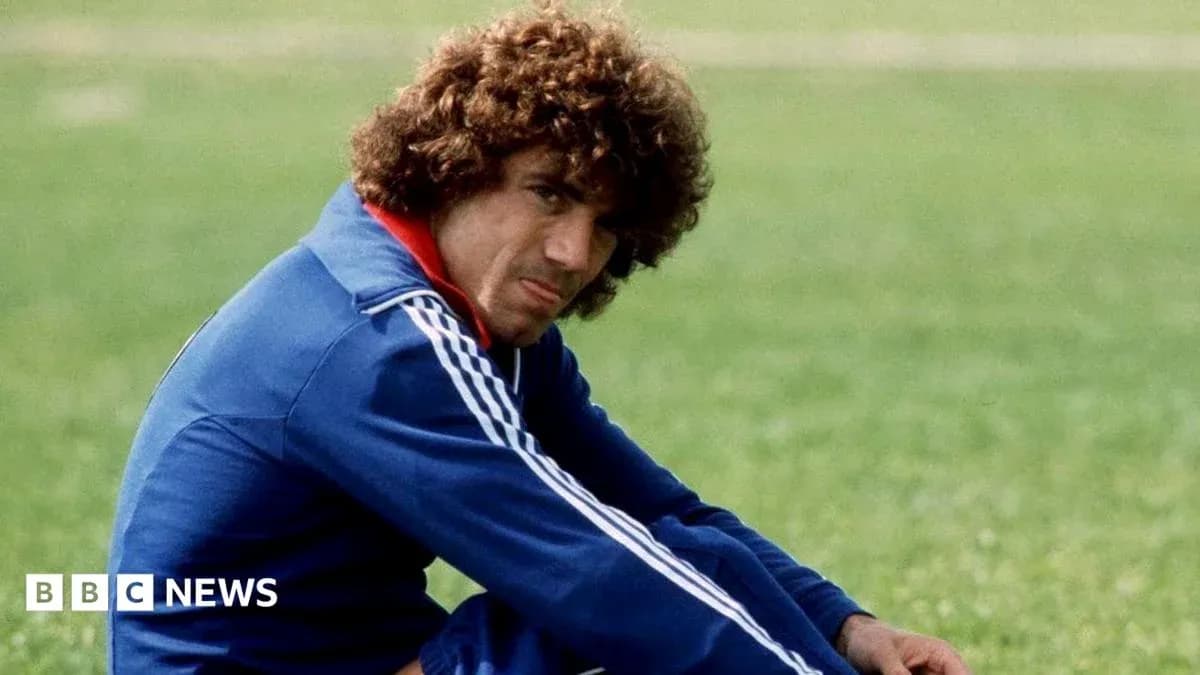
Kevin Keegan: The Bridge Between Liverpool and Hamburg
Kevin Keegan never treated a transfer as just a change of shirt. For Liverpool City Region Mayor Steve Rotheram, the former England striker did something far greater when he left Anfield for Hamburg in 1977: he joined two cities together.
Keegan, who died on Monday aged 75, had been due to return to Hamburg this year alongside Rotheram for the city’s annual Harbour festival. The trip was cancelled after a cancer diagnosis left him unable to travel. Instead, Rotheram sent a letter to Hamburg’s mayor – a tribute to a player whose career stitched together two football cultures.
By the time Keegan walked away from Liverpool, he had already carved his name into the club’s history. One of the most decorated English players of all time, a two-time Ballon d'Or winner, he collected seven major honours in red. His final act for Liverpool was to help deliver the club’s first European Cup, a parting gift on his last appearance before heading to Germany.
It was that move, a then-record transfer, that Rotheram believes turned Keegan into more than just a club icon.
“For one half of our football-mad city, Kevin was a footballing hero, for the other, a well-respected irritant on derby day,” the mayor wrote, in words seen by the Local Democracy Reporting Service. It was a line that captured Keegan’s status on Merseyside perfectly: adored by Liverpool supporters, grudgingly admired by Evertonians who had seen enough of his brilliance up close.
“He was not just a Liverpool FC legend and one of the most beloved figures our city has ever known,” Rotheram continued. When Keegan crossed the North Sea in 1977, he did more than chase a new challenge. “When Kevin left our shores for Germany in 1977, he did more than make a then-record transfer between two football clubs. He built a bridge between two great cities.”
Hamburg embraced him as fiercely as Liverpool once had. Keegan’s success, Rotheram argued, belongs to both ports – two places where football is stitched into the fabric of daily life and where working-class pride finds its loudest voice on a Saturday afternoon. In Hamburg, as in Liverpool, he was “admired and loved”.
For Rotheram, Keegan came to embody something bigger than medals and awards. He pointed to a simple idea that the forward seemed to live out in both cities: “To me, he embodied better than anyone else that famous maxim: football is the people’s game.”
In Liverpool and Hamburg, they did not just watch Kevin Keegan play. They claimed him as one of their own.




