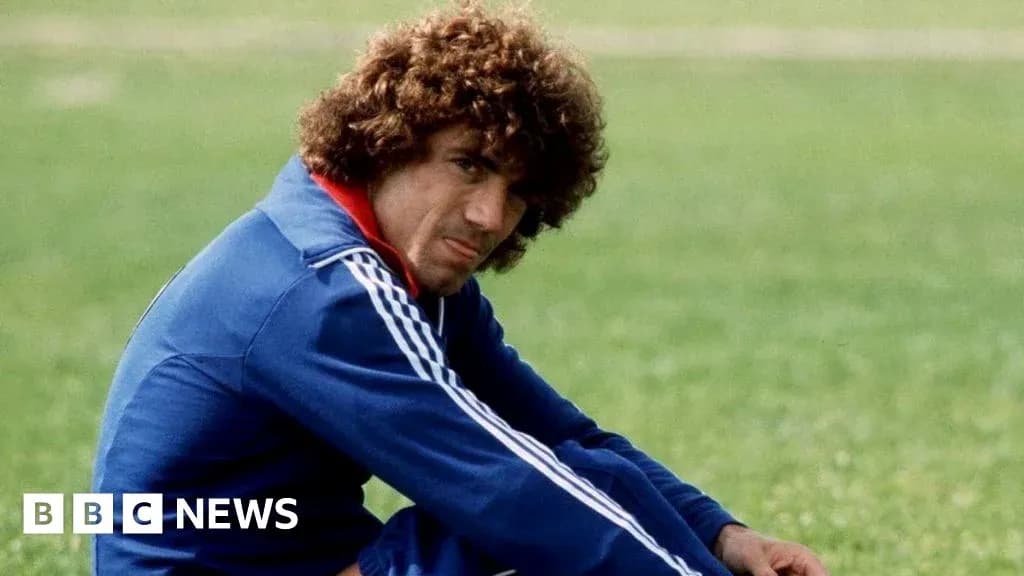
Kevin Keegan: The Bridge Between Liverpool and Hamburg
Kevin Keegan’s death on Monday, at 75, has triggered tributes from across the football world. In Liverpool and Hamburg, it has done something more: it has reopened an old love story between two cities that learned to share a hero.
Liverpool City Region Mayor Steve Rotheram, who had been due to travel with Keegan to Hamburg’s famous Harbour festival, chose to put that bond into words. In a letter to Hamburg’s Mayor, Dr Peter Tschentscher, he described Keegan as “a bridge between two great cities” – a line that feels less like political flourish and more like simple fact.
Keegan was never just another star passing through Anfield. One of the most decorated English players of all time, a two-time Ballon d'Or winner, he helped drag Liverpool into the European elite. Seven major honours, relentless energy, and, on his final appearance for the club, the big one: Liverpool’s first European Cup.
He lifted the trophy, then walked away. Not to London, not to Manchester, but to Hamburg SV in 1977, in what was then a record transfer. It looked a gamble. It became a statement.
Rotheram’s letter, seen by the Local Democracy Reporting Service, captures how sharply those years are still remembered on Merseyside.
“For one half of our football-mad city, Kevin was a footballing hero,” he wrote. “For the other, a well-respected irritant on derby day.”
It is a line that could have been heard in any Liverpool pub of that era: grudging admiration from the blue side, unfiltered adoration from the red.
“He was not just a Liverpool FC legend and one of the most beloved figures our city has ever known,” Rotheram continued. When Keegan crossed the North Sea, he did more than sign a contract. “When Kevin left our shores for Germany in 1977, he did more than make a then-record transfer between two football clubs. He built a bridge between two great cities.”
That bridge was built on goals, graft and charisma. Hamburg took him to their hearts as completely as Liverpool had. Rotheram was clear that Keegan’s success “belonged equally to Liverpool and Hamburg”, where he was both “admired and loved”. For the mayor, Keegan embodied that old saying that football is “the people's game” better than anyone.
The relationship between the cities did not end when Keegan moved on. Rotheram praised his efforts to keep that connection alive, pointing to a special exhibition celebrating the links between Liverpool and Hamburg, with Keegan’s career at its centre. The story was not just about a player, but about two ports, two fan cultures, two places that recognised themselves in each other.
“As you may remember, Kevin wrote some words for me to convey to the large audience at the Liverpool City Region pavilion back in May,” Rotheram reminded his Hamburg counterpart. The mayor joked about his “pidgin German and broad Scouse accent”, but said the message still landed. The crowd responded warmly. Keegan, he wrote, “may have left both cities many years ago, but he never truly left our hearts.”
This year, the script was supposed to repeat itself. Keegan had planned to join Rotheram at Hamburg’s port anniversary celebrations, the Hafengeburtstag. Cancer changed everything. The diagnosis meant he could not travel. He was, Rotheram said, “devastated not to be attending”, but he still sent a personal note for the Liverpool stage on the banks of the Elbe.
Rotheram has now shared that message with Hamburg once more. “In Kevin's words, once again: Forgive my Plattdeutsch, but I love Hamburg.”
That simple line, half-apology, half-declaration, summed him up: the superstar who never minded laughing at himself, the Englishman who embraced a new city and a new language, the forward who ran until the final whistle in every shirt he wore.
The letter closes not with statistics, but with solidarity. “On behalf of the people of Liverpool, we send our deepest condolences to Kevin's friends, the HSV family and the people of Hamburg. Thank you for loving him as we did. You'll Never Walk Alone.”
From Anfield to the Volksparkstadion, from the Mersey to the Elbe, the song and the sentiment are understood. The little No. 7 is gone. The bridge he built is still standing.