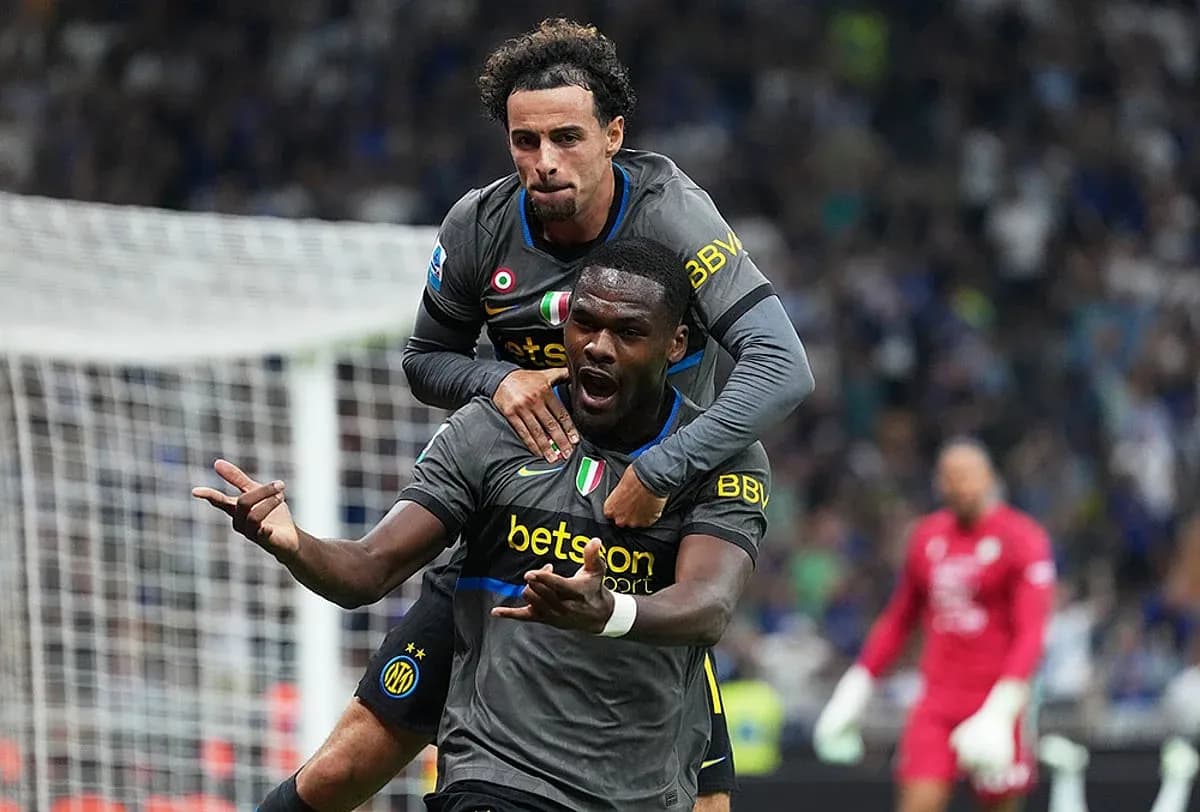
Inter's Thrilling 5-3 Victory Over Udinese Reveals Season Trends
Under the San Siro lights, this was supposed to be a test of Inter’s early‑season authority. Instead, it became a wild eight‑goal shootout that revealed as much about their attacking abundance as it did about their defensive looseness. Inter eventually ran out 5‑3 winners over Udinese, a scoreline that echoed their broader seasonal pattern: irresistible going forward, imperfect at the back, but relentlessly effective.
Heading into this game, Inter were already setting the tone in Serie A. They sat 2nd with 12 points from 4 matches, perfect in terms of results and carrying a total goal difference of +7, built from 13 goals scored and 6 conceded overall. At home they had been even more explosive, with 12 goals scored and 6 conceded across 3 San Siro fixtures, averaging 4.0 goals for and 2.0 against at home. Udinese arrived as a mid‑table puzzle: 13th with 4 points from 4 matches, a total goal difference of -2 (8 scored, 10 conceded overall). On their travels they were chaotic and entertaining, scoring 6 and conceding 7 in 2 away games, an away average of 3.0 goals for and 3.5 against.
Cristian Chivu doubled down on Inter’s identity with a 3‑5‑2 that looked almost tailor‑made to stretch Udinese’s 3‑4‑2‑1. J. Martinez anchored a back three of M. Akanji, J. Stones and A. Bastoni, a technically gifted unit designed to hold a high line and start attacks. Ahead of them, the absence of H. Calhanoglu through a muscle injury shifted creative responsibility. The midfield five of A. Diouf, N. Barella, P. Zielinski, H. Mkhitaryan and Carlos Augusto had to collectively replace his control and set‑piece threat.
Chivu’s gamble was to lean into dynamism. Diouf, already one of Serie A’s standout creators with 3 assists in 3 appearances and 13 key passes at a 91% pass accuracy, became the primary conduit between lines. Barella and Mkhitaryan offered vertical runs and late arrivals, while Zielinski floated into pockets to link with the front two. On the flanks, Carlos Augusto’s starting role signalled aggressive wing‑back play, pinning Udinese’s wide midfielders deep.
Up front, the pairing of M. Thuram and F. Esposito brought a blend of power, movement and form. Thuram came into the match with 2 goals and 1 assist from just 140 league minutes, plus an 86% pass accuracy and 4 key passes – a profile of ruthless efficiency. Esposito, at 20, had already scored 2 and assisted 1 in 4 appearances, with 9 shots (5 on target) and 17 duels won from 29. Together, they offered depth runs, wall passes and constant pressure on Udinese’s back three.
Kosta Runjaic’s Udinese were anything but passive visitors. Their 3‑4‑2‑1, with M. Okoye behind J. Abankwah, C. Kabasele and E. Ebosse, aimed to compress space centrally while relying on transition threat. M. Vojvoda and H. Kamara as wing‑backs were crucial: Kamara, in particular, arrived as one of the league’s form players, with 2 goals, 1 assist, 106 passes at 80% accuracy, 12 tackles and 18 duels won. His two‑way output made him both shield and spear on the left.
In midfield, J. Karlstrom and L. Miller were tasked with surviving Inter’s central overload. Ahead of them, U. Gomez and J. Ekkelenkamp floated behind K. Davis. Ekkelenkamp’s numbers underlined his importance: 2 goals, 1 assist, 6 shots (4 on target), 98 passes at 73% accuracy, plus 7 tackles and 4 interceptions. He was Udinese’s hybrid 10 – creator, late runner and first presser. Davis, with 2 assists in 3 appearances and 5 key passes, was less a pure finisher and more a facilitator, dropping to connect and dragging centre‑backs out of shape.
The tactical voids on both sides shaped the narrative. Inter’s loss of Calhanoglu removed their natural tempo‑setter and deep playmaker, forcing Diouf and Zielinski to share buildup duties. Yet their season numbers suggested they could absorb that: overall they had failed to score in 0 matches and had not missed a single penalty, with 0 penalties taken and 0 missed. The risk was defensive balance. Inter had kept only 1 clean sheet in total, and at home they were conceding 2.0 goals per match on average.
Udinese’s absentees cut deeper in terms of flexibility. J. Piotrowski, out with heart problems despite being one of the league’s more combative midfielders (2 yellow cards, 3 tackles, 4 fouls committed), removed a natural enforcer. O. Solet’s injury limited centre‑back rotation, and the loss of N. Zaniolo and A. Zanoli further reduced their capacity to alter the game’s shape from the bench. It left Runjaic heavily reliant on Kamara and Ekkelenkamp to carry both the creative and pressing burden.
Discipline loomed as a quiet subplot. Inter’s yellow cards this season were spread, with a notable 40.00% of their cautions arriving between 46‑60 minutes – a sign that intensity after the interval can spill over. Udinese, by contrast, had a more even distribution, but with 22.22% of their yellows between 16‑30 and another 22.22% between 31‑45 minutes, their aggression tends to spike before half‑time. In a match where Inter’s home attack averaged 4.0 goals and Udinese’s away defence conceded 3.5, any card‑induced reshuffle always risked opening more space.
The “hunter vs shield” duels were everywhere. Thuram and Esposito, combining for 4 total league goals before this fixture, attacked an Udinese away unit that had already conceded 7 goals in 2 trips. At the other end, Ekkelenkamp and Kamara, with 4 goals and 2 assists between them, probed an Inter defence that, overall, conceded 1.5 goals per match and had yet to keep a clean sheet at home. The game’s 2‑2 half‑time scoreline reflected those structural truths more than any individual error.
In the engine room, Diouf’s duel with Kamara and Karlstrom defined the rhythm. Diouf’s 3 assists and 13 key passes made him Inter’s creative metronome, while Kamara’s 12 tackles and 4 interceptions underlined his role as Udinese’s primary ball‑winner and transition trigger. Whenever Diouf escaped Kamara’s cover, Inter could overload the half‑spaces and feed Thuram and Esposito between Kabasele and the wing‑backs. Whenever Kamara broke Inter’s press, Udinese could attack the channels behind Carlos Augusto and the space outside Bastoni.
Following this result, the statistical prognosis hardens rather than softens. Inter’s attacking profile – 13 total goals from 4 matches before kick‑off, plus the 5 they added here – is that of a title challenger. Their lack of penalties and therefore lack of misses (0 taken, 0 missed) shows they are constructing chances from open play rather than relying on spot‑kicks. Udinese, for all their defensive frailty on their travels, continue to pose a serious threat in transition, with 8 total goals already before this match and a forward line that consistently finds shooting positions.
In narrative terms, this 5‑3 at San Siro was less an outlier and more a crystallisation of both teams’ seasonal DNA: Inter as the relentless, high‑octane machine that overwhelms you even while leaving doors ajar; Udinese as the brave, flawed disruptor whose own attacking ambition ensures that, whenever they come to town, chaos is never far behind.