
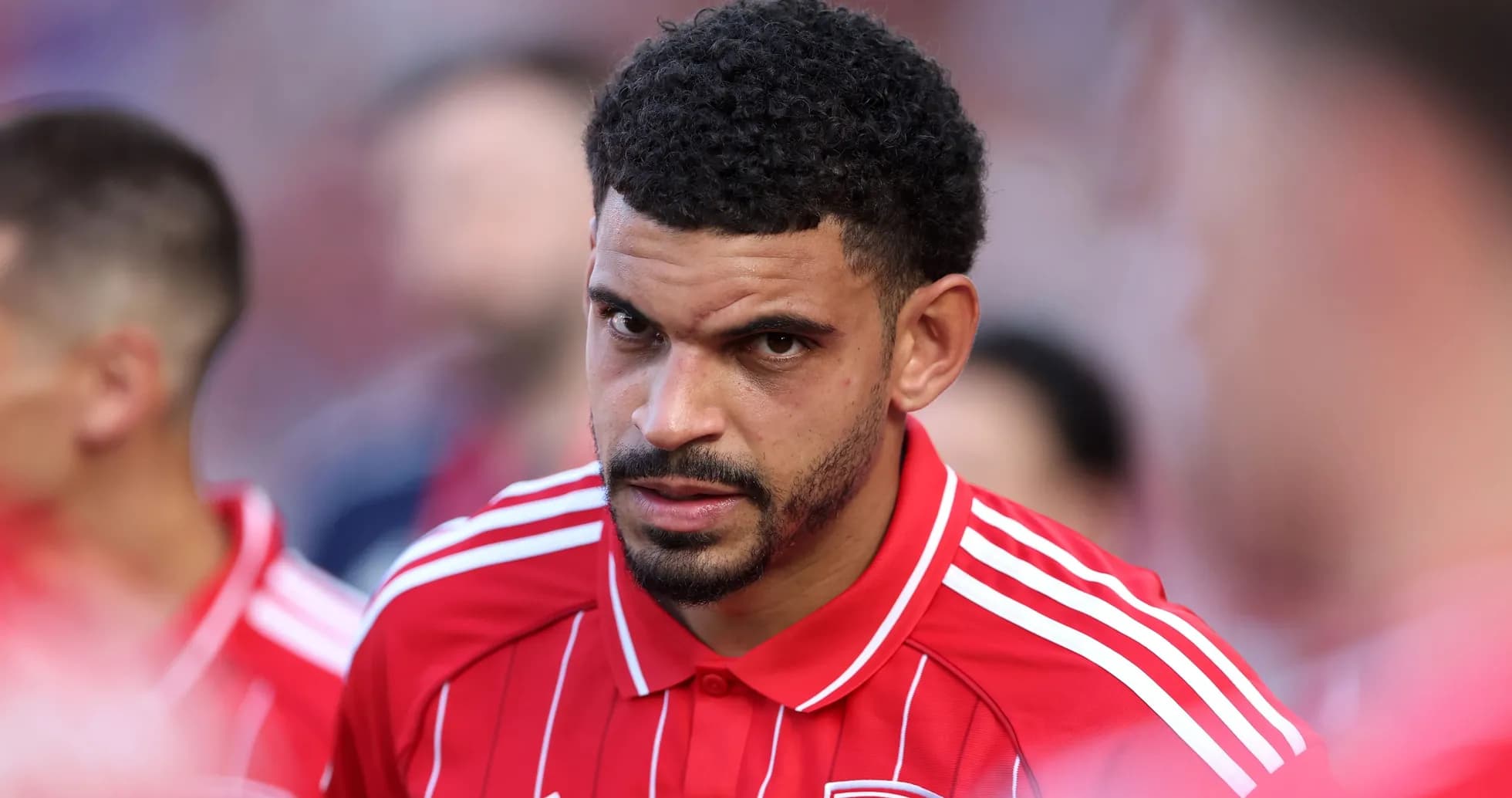
Morgan Gibbs-White's Defiant Response to World Cup Snub
Morgan Gibbs-White walked off the City Ground pitch with 18 goals to his name, a season behind him that screamed international calibre, and a World Cup summer in front of him that will be spent at home.
Omitted. But anything but quiet.
His answer to Thomas Tuchel’s snub came bent into the top corner, a gorgeous free-kick in a 1-1 draw with Bournemouth that felt less like a consolation and more like a statement. As the ball ripped past the wall and into the net, the noise inside the ground shifted from frustration to fury-tinged pride. This was their man, their playmaker, and in their eyes he had been wronged.
A phone call, then a fire lit
Gibbs-White found out on Thursday night. Not through a press release, not via a leaked squad list, but in a direct call from the England manager himself. Tuchel told him he would not be going to the 2026 World Cup. One of the form players in the country, with 25 goal contributions across the campaign, was out.
The 26-year-old did not hide his feelings.
“I know myself that I have done more than enough to be in the squad. I got on the wrong side of someone’s opinion,” he said afterwards, laying bare the edge that has driven his career. He talked about being on the “wrong side of people’s opinions” for years and promised, simply, to bounce back.
There was no tantrum, no attack on the manager. He praised Tuchel for picking up the phone, said he respected the honesty, even admitted he agreed with what was said in their conversation. But beneath that, the message was unmistakable: he believes his numbers and his performances should have carried him to the World Cup.
“I’m glad the season is behind us now, I’m going to concentrate on the summer,” he added. A line that sounded calm, but came after 90 minutes of pure defiance.
City Ground turns on Tuchel
If Gibbs-White kept his composure in front of the microphones, the City Ground did not bother with restraint.
From the stands came a stream of chants aimed squarely at Tuchel, the anger building with every Forest attack. When the free-kick flew in, the noise hit a different level. Gibbs-White wheeled away, pointed to the name on his back and flashed his fingers towards the crowd, a visceral gesture that said everything he did not spell out in words.
This was a player who believes he has done his part. A player who feels his contribution has been undervalued in a selection process that has already split opinion across the country.
Tuchel has stuck to his line. The England manager has insisted all along that this squad is about positional balance, about roles and profiles, not reputations or raw statistics. He has talked about hunger, about excitement, about building a group that fits his tactical blueprint.
That approach has left some of the Premier League’s biggest names watching on from the beach. Phil Foden, Cole Palmer, now Gibbs-White. All out. All victims, in Tuchel’s words, of numbers and positions rather than any individual failing.
“Does this mean that the other guys that you mentioned did anything wrong? No,” the German said when pressed on the omissions. “For some of them, it's just a positional thing that we also tried to have a balanced squad and not to bring five number 10s and make them play out of position because whom would we do a favour with? The player or ourselves? I don't think so.”
The logic is clear. The fallout is just as obvious.
One left behind, one heading to centre stage
While Gibbs-White steels himself for a summer without England, another Forest midfielder is moving in the opposite direction.
Elliot Anderson has surged into Tuchel’s plans and, barring late drama, looks set to start England’s tournament opener against Croatia. His rise has been rapid, his importance to the national setup growing with every camp. At club level, that progress has triggered a very different kind of tension.
Forest want to keep him. The market has other ideas.
A £100m price tag hangs over Anderson’s name, yet that figure has done little to cool the interest from Manchester City and Manchester United. Both clubs are watching closely, both know that players trusted by the national coach rarely stay under the radar for long.
Forest manager Vítor Pereira did not try to disguise Anderson’s quality when asked after the final game of the season.
“If you ask me if he deserves the best clubs in the world, he deserves,” Pereira said. “He has a lot of quality, he is a talent, but he is our player and I am very happy with him.”
Then came the reality check.
“The market is the market, I cannot predict the market. I know we want to keep the same players, to bring two or three players to help us balance the squad. In the end, we’ll see.”
It was a manager speaking like a man who knows how quickly plans can be ripped up once the window opens.
A club at the crossroads
So Forest close the season with one talisman staring at a World Cup from afar and another being lined up as a central figure for England on the biggest stage. One player defiantly pointing to his name on the back of his shirt, the other carrying a nine-figure valuation before his international breakthrough has truly begun.
Gibbs-White has framed this setback as just another opinion to overcome. Anderson stands on the brink of a summer that could reshape his career and his club’s future in one swing of the market.
For Tuchel, the judgement will not come from phone calls or press conferences. It will arrive under the lights in 2026, when the players he chose — and the ones he left behind — define whether this ruthless vision was genius or a gamble too far.




