Getafe Triumphs Over Mallorca: A Tactical Analysis
Under the lights at the Coliseum, this was a night where structure and suffering – the twin pillars of Jose Bordalas’ football – met the raw desperation of a relegation fight. Getafe, 7th in La Liga heading into this game with 48 points and a goal difference of -6 (31 scored, 37 conceded overall), hosted an 18th‑placed Mallorca side clinging to survival with 39 points and a goal difference of -11 (44 for, 55 against overall). By full time, the 3–1 home win felt less like an upset and more like the logical conclusion of two seasons’ worth of tactical identities colliding.
I. The Big Picture: Structure vs. Survival
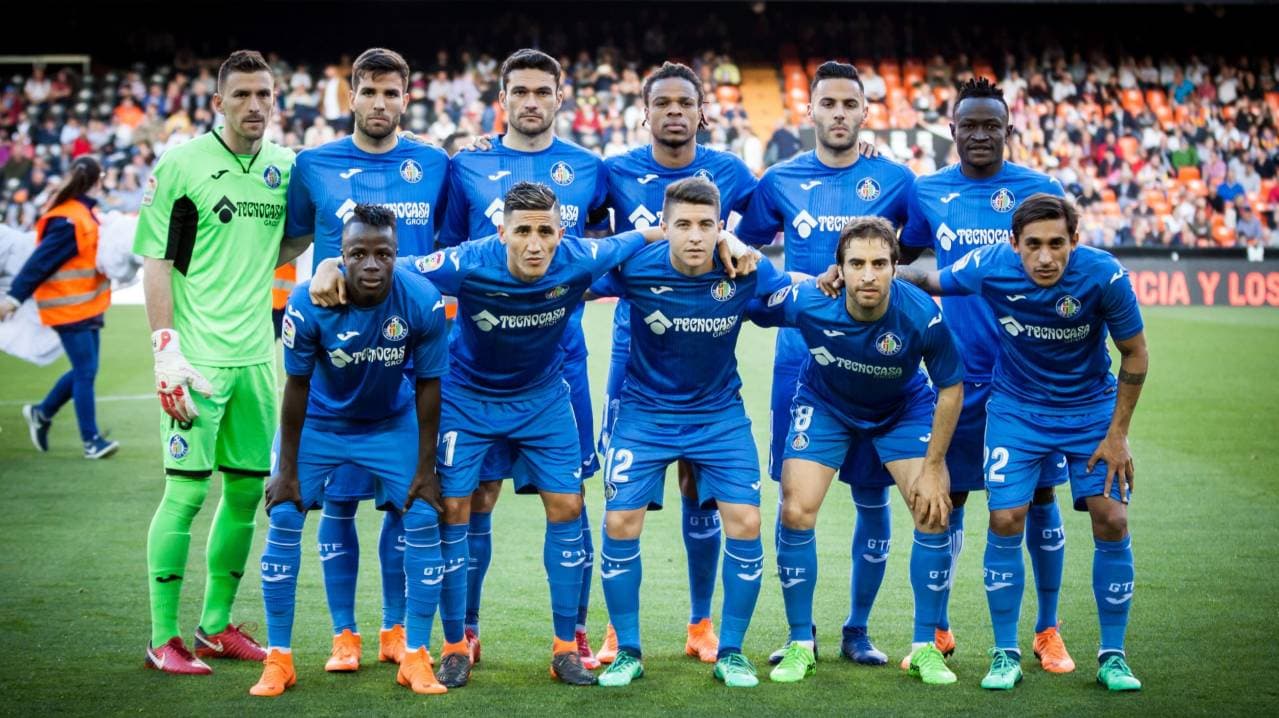
Bordalas doubled down on his seasonal DNA: a 5‑3‑2 that has been his most-used shape, deployed in 20 league matches heading into this game. It is a system built to compress space, protect central zones, and live with low margins – reflected in Getafe’s modest attacking numbers: only 31 goals in total this campaign, with 17 at home and an overall scoring average of 0.9 goals per game. Yet it is also a system that keeps them in contests; they concede 1.0 goals per game overall, and at home only 16 in 18 matches.
Across from them, Martin Demichelis stayed loyal to Mallorca’s primary identity: a 4‑2‑3‑1, the formation used in 20 league games this season. It is nominally an attacking platform – Mallorca have scored 44 in total, including 28 at home – but their fragility away from the island has defined their year. On their travels they had only 2 wins from 18, conceding 34 and scoring 16, an away average of 0.9 goals for and 1.9 against. That away brittleness was exposed again in Madrid.
The scoreline told a clear story: Getafe’s 5‑3‑2, with its back five and industrious midfield, imposed the game early, racing into a 2–0 half‑time lead before closing it out 3–1. For a side that had failed to score in 8 of 18 home fixtures heading into this match, this was an unusually ruthless night.
II. Tactical Voids: Absences and Discipline
Both squads arrived scarred by absences that subtly reshaped the contest.
Getafe were without A. Abqar (suspended for yellow cards), plus Juanmi and Kiko Femenia through injury. Abqar’s absence removed one of Bordalas’ more aggressive stoppers – a defender who had accumulated 10 yellow cards and 1 red across the season and is used to stepping high and duelling. Without him, the back line leaned heavily on D. Duarte, Djené and Z. Romero to hold the central corridor, with Allan Nyom and Juan Iglesias as wide defenders in the 5‑3‑2.
Mallorca’s list was longer and more structurally damaging: L. Bergstrom, M. Joseph, J. Kalumba, M. Kumbulla, A. Raillo, J. Salas and Samu Costa were all missing. Raillo and Kumbulla’s absences stripped Demichelis of leadership and aerial presence at the back; Samu Costa’s suspension removed a midfield enforcer who had 10 yellows and is central to their pressing and second‑ball game. Without him, the double pivot of O. Mascarell and Manu Morlanes lacked its usual bite.
The disciplinary profiles of these teams framed the emotional tone. Getafe, as a club, lean into confrontation: their season yellow‑card distribution peaks late, with 22.43% of bookings between 76–90 minutes and another 14.95% from 91–105, a clear sign of a side that fights to the edge as games become stretched. They also have multiple high‑card individuals: Domingos Duarte on 12 yellows, Mario Martín on 11, Djené on 10 (plus 1 red), and Nyom himself with a red this season. Mallorca, too, carry edge – Pablo Maffeo has 11 yellows – but their red‑card spikes (50.00% of reds between 31–45 minutes, 25.00% between 61–75, 25.00% from 91–105) hint at a team that can lose control in key phases.
On this night, Getafe channelled that aggression without implosion; Mallorca, chasing the game, were again forced into risky defending in their own third.
III. Key Matchups: Hunter vs Shield, Engine Room vs Enforcer
The headline duel was always going to be Vedat Muriqi against Getafe’s back three. Muriqi arrived as one of La Liga’s deadliest forwards: 22 goals and 1 assist in 35 appearances, with 86 shots (47 on target) and a rating of 7.09. He is not just a finisher but a reference point – 425 duels contested, 219 won – a striker who turns long balls into territory and fouls into set pieces.
Bordalas’ plan was to smother that reference. Djené, who has 36 interceptions and 10 blocked shots this season, was the natural shadow, with Duarte (15 successful blocks) providing aerial reinforcement. With Z. Romero completing the trio, Getafe could afford to go man‑to‑man around Muriqi, trusting their wing‑backs to squeeze Mallorca’s wide creators. Muriqi still found his moments – he rarely leaves a match without a footprint – but the structure around him was starved. Without Samu Costa’s surges and without Raillo’s long diagonals, Mallorca’s 4‑2‑3‑1 became a series of isolated attacks rather than a sustained siege.
In midfield, the “engine room” battle tilted the match decisively. Luis Milla, La Liga’s second‑best provider by assists with 10, orchestrated from the base of Getafe’s trio. His 1,313 passes and 79 key passes this season underline his role as the team’s metronome and creative brain. Flanked by Mario Martín – a yellow‑card magnet with 65 fouls committed and 54 tackles – and D. Caceres, Milla had both protection and runners.
Against them, Mascarell and Morlanes tried to hold the line, but without Samu Costa’s 62 tackles and 400 duels, Mallorca lacked a true destroyer. That imbalance allowed Milla to dictate tempo, hit early passes into M. Satriano and Mario Martín (pushed higher as a forward here), and drag Mallorca’s double pivot into uncomfortable, lateral shifts. The 2–0 half‑time score was a direct product of Getafe winning this central triangle.
Wide, Pablo Maffeo’s duel with Iglesias and Nyom was one of the few areas where Mallorca could threaten. Maffeo has 65 tackles, 22 successful blocks and 33 interceptions this season; he is both an outlet and a defensive shield. But pinned deep by Getafe’s wing‑backs and the threat of balls in behind, his influence was more reactive than proactive.
IV. Statistical Prognosis and xG Logic
Even without explicit xG numbers, the season profiles of these sides make the 3–1 outcome feel statistically coherent rather than anomalous.
Getafe’s home attack, at 0.9 goals per game, is usually modest, but their biggest home win heading into this was 3–1 – exactly the scoreline they reproduced here. That suggests a pattern: when they do break games open at the Coliseum, they tend to do so in controlled, three‑goal bursts rather than chaotic shootouts.
Defensively, conceding once fits their seasonal trend: 16 goals against at home in 18 matches is a strong platform. Mallorca’s away attack, averaging 0.9 goals on their travels, sits almost perfectly on that single‑goal outcome. Their away defence, shipping 34 in 18 (1.9 per game), was always vulnerable to any opponent capable of sustaining pressure for more than brief spells. Getafe, with 11 clean sheets overall and a structure honed in a 5‑3‑2, rarely need a flood of chances to cash in.
Overlay that with Mallorca’s disciplinary volatility and the absences in their spine, and the xG‑shaped silhouette of this match becomes clearer: a home side with a compact defensive block, a top‑tier creator in Milla, and a settled shape against an away team that concedes too many good chances on the road and leans heavily on one elite finisher.
Following this result, the trajectories diverge sharply. For Getafe, it reinforces a season‑long identity: low‑scoring, high‑friction football elevated by set‑piece quality and Milla’s passing. For Mallorca, it underlines a brutal truth: away from Son Moix, their 4‑2‑3‑1 has not found a stable defensive platform, and even the goals of Muriqi cannot fully offset a structure that bleeds chances under sustained pressure.