Genoa vs Como: A Stark Contrast in Serie A
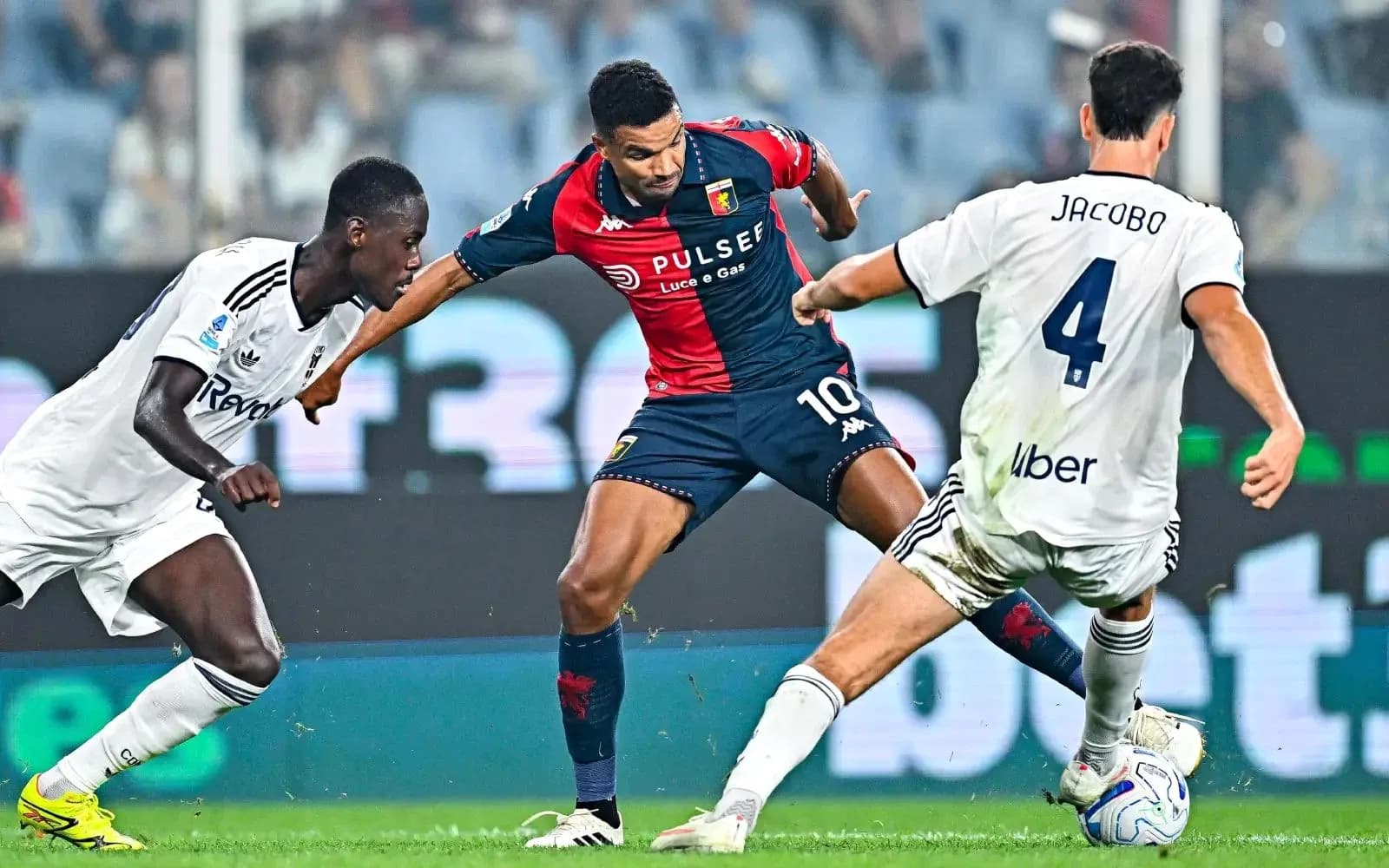
Under the lights of the Stadio Luigi Ferraris, this was supposed to be Genoa’s response game. Instead, it became a ruthless confirmation of early-season trends: a Como side that travels with purpose, and a Genoa team still searching for its identity and resilience.
I. The Big Picture – contrasting trajectories
Following this result, the table is brutally clear. Genoa sit 19th in Serie A with 0 points from 3 matches, a goal difference of -6 built from 1 goal scored and 7 conceded overall. At home, the numbers are even more alarming: 2 defeats from 2, with just 1 goal for and 6 against. The seasonal averages tell the same story – at home they score 0.5 goals per game and concede 3.0; overall that becomes 0.3 scored versus 2.3 conceded.
Como, by contrast, leave Genoa in a Champions League-chasing position. They are 3rd with 7 points from 3 games, unbeaten, with a total goal difference of +4 after 7 goals scored and 3 conceded. All their football so far has come on their travels: 3 away matches, 2 wins, 1 draw, 7 goals for and 3 against, for an away scoring average of 2.3 and an away concession rate of 1.0. In other words, Como are already a formidable away side; Genoa are a fragile home one.
Tactically, the starting shapes underlined the narrative. Daniele De Rossi doubled down on a back three with a 3-4-1-2, trusting J. Bijlow behind a line of A. Marcandalli, L. Østigård and M. Ellertsson. Width came from S. Sabelli and M. Frendrup, with D. Sow and J. Vásquez in the engine room and T. Baldanzi tasked with linking to the front pair of L. Colombo and M. Osmajić.
Cesc Fàbregas, meanwhile, stayed loyal to Como’s 4-2-3-1 that has defined their early season. J. Butez anchored a back four of Yan Couto, Jacobo Ramón Naveros, T. Chalobah and Álex Valle. In front, M. Perrone and L. da Cunha formed the double pivot, with an aggressive line of three – Assane Diao, N. Paz and M. Baturina – supporting lone striker T. Douvikas.
II. Tactical voids and absences
Genoa’s issues are not only structural but also personnel-based. They came into this fixture without C. Drameh (inactive), E. Havel (thigh injury) and L. Venturino (knee injury). None are headline attackers, but in a squad already short on stability, those absences further limited De Rossi’s options to rotate or adjust his back line and midfield balance.
Como had their own absentee in J. Addai, sidelined by an Achilles tendon injury. Yet Fàbregas could still call on a deep bench, including experienced figures like Luis Milla, M. Kempf and M. Kean, as well as technically gifted options such as M. Caqueret and A. Lahdo. That depth allowed Como to maintain intensity and control the game state, even as the minutes ticked away.
Discipline also framed the risk profiles. Genoa’s season-long yellow card distribution shows a tendency to lose control in phases: they have taken cautions in several time bands, with 16.67% of their yellows coming in each of 0–15, 31–45, 61–75 and 91–105 minutes, and a further 33.33% in unspecified ranges. L. Østigård already leads the league’s yellow-card charts with 3 bookings, while Alexsandro Amorim and D. Sow have 1 each. It is a spine that defends on the edge.
Como, in contrast, have only registered a single yellow card in the league so far, all of it between 46–60 minutes, underlining a controlled aggression that complements their structured 4-2-3-1. Neither side has seen a red card this season, and neither has taken nor missed a penalty; there is no spot-kick narrative to soften Genoa’s defensive numbers.
III. Key matchups – hunters and shields
The “Hunter vs Shield” duel tilted decisively towards Como. Their attacking trident is already among Serie A’s most productive units. M. Baturina, operating as a creative midfielder, has 2 goals and 1 assist in total this season, with 5 shots and 3 on target, plus 3 key passes and an 87% passing accuracy. Assane Diao matches that goal tally with 2 goals and 1 assist, but brings a more direct profile: 7 shots, 12 dribbles attempted with 6 successful, and 26 duels contested, winning half of them. Ahead of them, T. Douvikas has 2 goals from 9 shots (5 on target), 3 key passes and 8 fouls drawn, acting as a reference point and pressure valve.
That trio went up against a Genoa defensive unit that, heading into this game, had already conceded 7 goals overall from just 3 fixtures, including 6 at home. L. Østigård’s individual numbers are impressive on paper – 185 passes at 90% accuracy, 4 tackles, 4 interceptions and 4 blocked shots – but they speak of a centre-back constantly under siege. With Genoa failing to keep a single clean sheet and already having failed to score in 2 of their 3 matches, the margin for error at the back is non-existent.
The “Engine Room” battle was equally decisive. For Genoa, D. Sow and J. Vásquez were tasked with screening and progressing. Sow’s 91 completed passes at 91% accuracy and his ability to contribute defensively (2 tackles, 1 block, 1 interception) suggest a player capable of control, but he is often outnumbered and forced into reactive defending. On Como’s side, M. Perrone and L. da Cunha quietly underpinned the more glamorous work of Baturina and Diao, ensuring that Genoa’s attempts to spring counters through Baldanzi, Colombo or Frendrup were quickly smothered.
IV. Statistical prognosis – a widening gap
From a statistical lens, this match felt like the logical extension of both teams’ seasonal arcs. Genoa’s overall scoring average of 0.3 goals per game is simply not enough to support a defence conceding 2.3. Their home profile – 0.5 scored versus 3.0 conceded – paints a picture of a side that starts games too open and lacks the control to slow opponents down once behind.
Como, by contrast, combine an away scoring rate of 2.3 with a concession rate of 1.0. They are not watertight, but they consistently outscore their defensive flaws. Their lack of clean sheets so far hints that opponents can create chances, yet with Baturina, Diao and Douvikas all on 2 goals each, and Baturina and Diao also among the league’s top assist providers, the attacking ceiling is high.
Following this result, the tactical prognosis is stark. Genoa must tighten their structure around Østigård, reduce the exposure of their back three and find a way to translate Baldanzi’s positioning and Colombo’s work rate into clear chances. Como, meanwhile, look every inch a modern, possession-savvy away side: disciplined in cards, deep in options, and driven by a creative core that can hurt teams in multiple ways.
Unless Genoa can bend their statistical curve sharply in the coming weeks, nights like this at the Ferraris may become the rule rather than the exception. For Como, this 4-1 away win feels less like a surprise and more like an early-season statement that their place near the top of Serie A is no accident.