
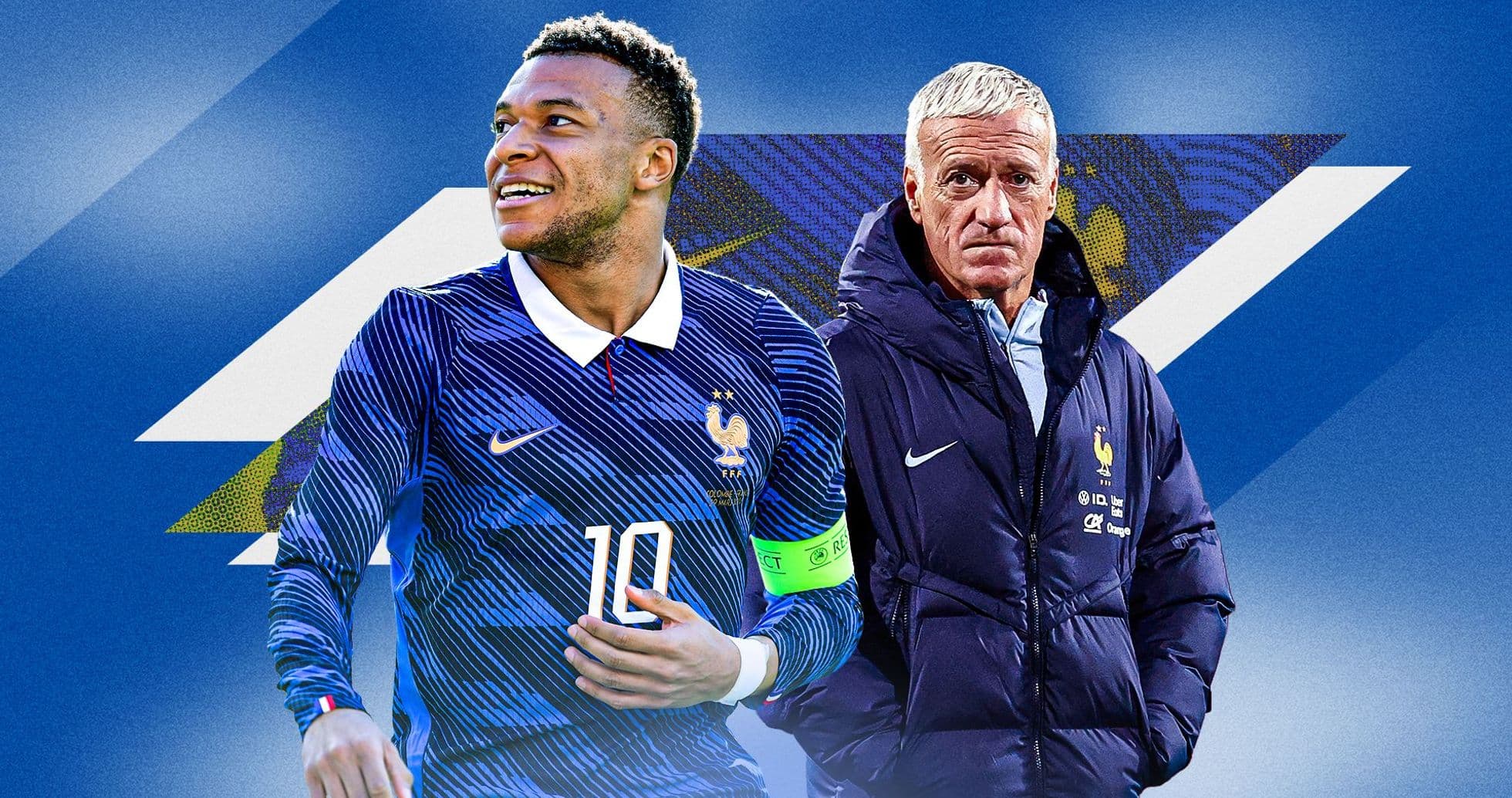
France's Quest for Glory: The Final Dance of Deschamps
France do not arrive in North America as contenders. They arrive as a looming inevitability.
World champions in 2018, runners-up in 2022, they carry the weight of recent history and the kind of squad that makes bookmakers nervous. This is a team built for the sharp end of tournaments, a group that now measures success not by progress, but by trophies.
Firepower that scares everyone
Look at the front of this France side and you see why. Kylian Mbappé remains the headline act, the captain, the No.10, the symbol of a generation. He is the constant. Around him, though, the cast has shifted into something even more dangerous.
Michael Olise arrives off a breakout season with Bayern Munich, playing like a man who has outgrown the “promising” label. Desire Doue and Ousmane Dembélé have become central pillars of Luis Enrique’s vibrant Paris Saint-Germain, bringing pace, invention and an edge that stretches defences to breaking point.
Stack those names against any other squad on the planet and France’s attacking depth stands out. Not just for the stars at the top, but for the options beneath them. Different profiles, different weapons, all capable of deciding games.
In pure attacking terms, there is no national team clearly better equipped.
A crack in the armour
The questions start further back.
France’s defence has wobbled more often than Deschamps would like, and the uncertainty around William Saliba’s fitness only sharpens the concern. When the back line has been exposed, it has looked vulnerable, especially against sides brave enough to press high and run at them in transition.
In a short tournament, one bad night at the back can undo weeks of dominance. France know that as well as anyone.
The other fault line is not tactical, but human. Keeping harmony in this dressing room has never been simple. Personalities are big, egos bigger, and the stakes enormous. If the group stays aligned, France have the quality to go all the way to the final in New Jersey. If it fractures, the exit could be as dramatic as any of their triumphs.
Deschamps’ last stand
This, too, is the end of an era.
Didier Deschamps, so often criticised for his pragmatism and his conservative streak, leaves behind a record that demands respect. When he took over in 2012, France looked like a team at the end of a cycle, scarred by controversy and short on identity after Laurent Blanc’s tenure.
Under Deschamps, they became serial contenders.
The 2018 World Cup title in Russia, with Croatia beaten in the final. The UEFA Nations League lifted in 2021 after a win over Spain in Milan. Two more major finals reached: Euro 2016, lost in extra time to Eder’s strike for Portugal in Paris; and the epic 2022 World Cup final, where Argentina prevailed on penalties after one of the greatest games the competition has seen.
His contract runs out in July. It will not be renewed. Whatever happens this summer, this is Deschamps’ last dance with Les Bleus.
He walks into his final tournament not as a coach clinging on, but as one who has already reshaped the modern history of French football.
The rise of Michael Olise
Most cameras will follow Mbappé. They always do. But the player who could tilt this tournament for France is Michael Olise.
At Bayern, he has turned potential into production. For the second straight Bundesliga season, he hit double figures in both goals and assists, and he carried that level into the Champions League with elite numbers. His performance in Bayern’s 6-1 destruction of Atalanta in Bergamo – two goals, one assist, total control – felt like a statement that he now belongs among Europe’s most decisive attackers.
He brings a devastating blend: creativity to unlock deep blocks, efficiency in the final third, and a consistency that coaches trust. His hat-trick against Northern Ireland in France’s final warm-up game underlined that he is arriving in North America in full flight.
At 24, this summer can define his status. Not just as a star at club level, but as a central figure in a national team already packed with them. If Mbappé is the face of the project, Olise might be the one who makes it unstoppable.
A new weapon: Maghnes Akliouche
Beyond the established names, there is another thread to this France story: the next wave.
Maghnes Akliouche is the one to circle. Deschamps gave the Monaco academy product his first senior call-up during qualifying, and he wasted no time. A goal against Azerbaijan, an assist against Iceland – early touches, instant impact.
Last season he truly emerged, with seven goals and twelve assists across Ligue 1 and the Champions League. Those are serious numbers for a player still carving out his place at the top level.
Akliouche operates primarily as a right-sided attacking midfielder, ideal in a 4-2-3-1, but he can also slide inside as a central playmaker. He is not the slight, featherweight winger of old stereotypes. He brings physical presence and technical quality together, a profile that modern football prizes: strong enough to ride challenges, skilled enough to decide tight games.
He will not start every match. He may not start many at all. But off the bench, with tired legs in front of him and space to attack, he could become one of Deschamps’ most dangerous late-game solutions – the kind of player who turns a tense quarter-final into a routine win with one moment of clarity.
France come into this tournament with history behind them, stars in their prime, and a coach on his farewell tour. The question is not whether they can go deep.
It is whether anyone can stop them from turning North America into the stage for one last, ruthless French procession.




