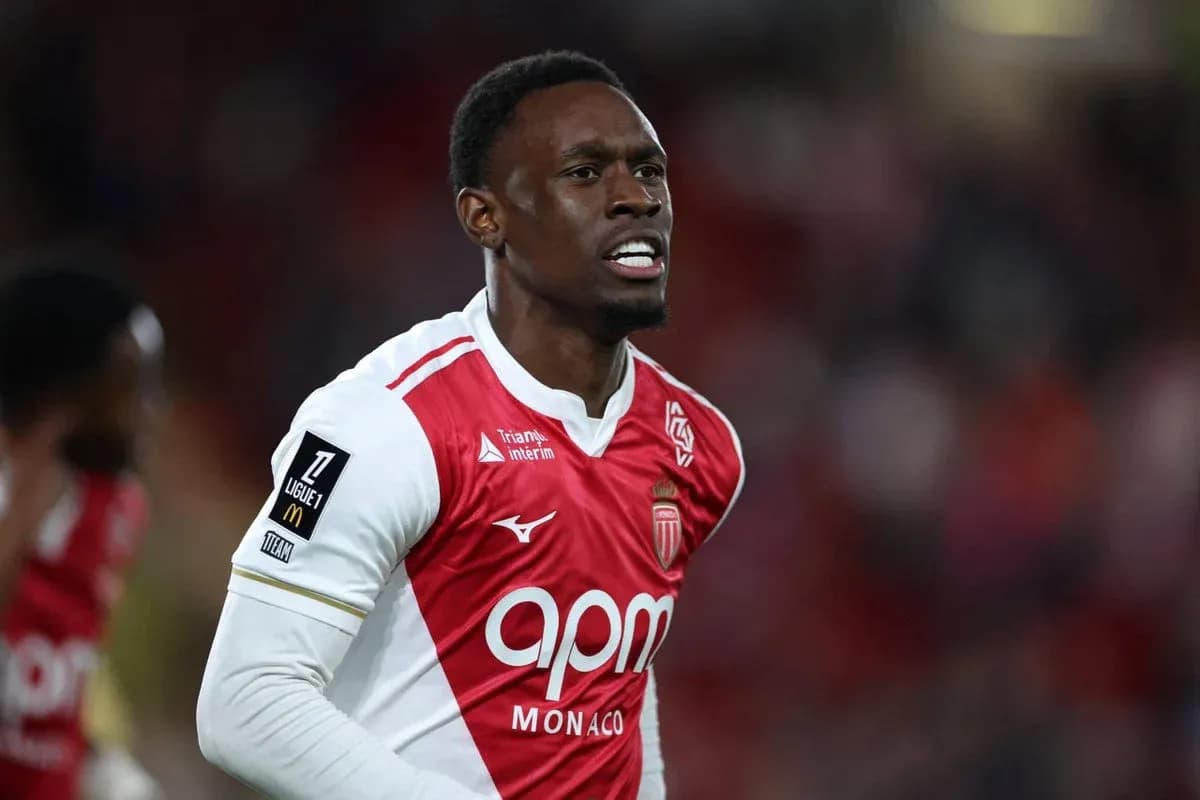
Folarin Balogun's Everton Transfer Saga: Chaos and Uncertainty
When Folarin Balogun stepped off a private jet at Liverpool John Lennon Airport on Tuesday lunchtime, it looked like the end of a chase, not the start of chaos.
Everton had their man. Or so they thought.
The night before, they had shaken hands with Monaco on a deal worth €45million (£39m, $52m), plus €5m in add-ons, for the United States striker who had lit up the World Cup. The structure was in place, the price agreed, the medical booked. All that was left were signatures and formalities.
At Finch Farm, they allowed themselves to dream.
Everton’s big bet
Inside Everton’s training ground on Tuesday, the mood was buoyant. Three deals were moving at once: Balogun, Ainsley Maitland-Niles from Lyon, and Jack Grealish returning on loan from Manchester City. All three players were in for medicals.
Balogun, though, was the jewel. He had been top of Everton’s list all summer. They had been working on his side for weeks, quietly, patiently, never quite sure a player of his profile would be attainable after his World Cup and his form in Ligue 1.
Had he signed, he would have walked into the dressing room as one of the club’s highest earners, alongside Jordan Pickford, Jarrad Branthwaite and Kiernan Dewsbury-Hall. It was that level of commitment.
Monaco were ready for this moment. They had mapped out Balogun’s departure long before deadline day. Three seasons in, 19 goals in all competitions last term, including a blistering run of 10 in 10, and three goals in four World Cup matches had convinced them he was ready to move on.
“We had already worked in advance to replace him, and we were fully ready to do this,” Monaco CEO Thiago Scuro said on Wednesday.
The plan was simple: sell Balogun, reinvest, move on.
Everton’s plan was even clearer. With Balogun seemingly on his way, they sanctioned Beto’s permanent move to Fiorentina for €18m. One striker out, a better one in. The squad, on paper, upgraded.
Then the clock, and the medical, started to bite.
Warning lights
The first hint that this might not be straightforward came before Balogun had even touched English soil. His jet from Nice, due to leave early on Tuesday, was delayed and did not land until lunchtime.
Routine checks followed. Everton requested GPS data, as clubs routinely do, to assess the player’s physical profile. What they saw raised questions. Enough, at least, to prompt concern.
By around 7pm, with the window already stretched to breaking point across Europe, Everton contacted Monaco to flag an issue from Balogun’s medical. In their view, it was serious enough to threaten the deal.
From Monaco’s side, the reaction was disbelief.
“Around 7pm we were contacted by Everton, raising questions on the medical of Balogun, which for our medical staff, and for the personal medical staff of the player, made totally no sense,” Scuro said. “The explanations were not enough to justify or bring concerns of the future of the player, which there is not.”
That crack in negotiations did not just affect Everton. It rippled straight through to London.
Chelsea smell blood
For 10 days, Chelsea had been circling another Monaco asset: midfielder Lamine Camara. Monaco’s stance was firm. Balogun could go, Camara would stay. They needed to sell one, not both.
Then Everton’s doubts over Balogun opened a door.
“And then of course, Chelsea saw the opportunity,” Scuro said. With Enzo Fernandez on his way to Manchester City, Chelsea needed midfield reinforcements. “Balogun is struggling there. Let’s go. Let’s try.”
By 8pm, Monaco and Chelsea were in active negotiations for Camara. Just over an hour later, they had an agreement: €55m (£47.2m; $63.7m). Camara accepted a six-year contract with an option for a seventh and completed his medical. From Chelsea’s perspective, the deal was done in everything but ink.
Monaco, suddenly, were on course to sell both Balogun and Camara. The financial problem would be solved in a single evening.
Everton, meanwhile, were scrambling.
With the Balogun deal wobbling, they turned to contingency plans. Joshua Zirkzee at Manchester United, once a trialist in Everton’s youth ranks, was approached. Tammy Abraham at Aston Villa was also sounded out.
Everton made initial contact with United about Zirkzee at 5pm and followed up with a formal offer at 8pm. United rejected the loan move, unconvinced they had time to bring in a replacement. Abraham, for his part, preferred to stay at Villa.
The options were closing. The clock kept ticking.
A late revival – and a dramatic refusal
Then came the twist.
Following the medical concerns, Everton and Monaco reworked the structure of the Balogun transfer. Less money up front, more performance-related add-ons. The overall value remained, the player’s personal terms stayed the same.
Suddenly, the deal looked alive again.
With Balogun apparently back on track for Goodison Park, Monaco informed Chelsea at 11pm that the Camara transfer was off. Chelsea, who believed they had their midfielder, were left furious. Camara himself had his heart set on the move. At Stamford Bridge, Monaco’s conduct is viewed as extraordinary and deeply unprofessional.
Still, Monaco pressed ahead with Everton. A dealsheet between the clubs and Balogun was lodged before the 11pm Premier League deadline, buying them an extra hour to complete the paperwork.
“The Premier League has a mechanism in which you can request one extra hour to finish the paperwork,” Scuro explained. “This was done. Five minutes to close the transfer window for us to finish all the paperwork between Monaco and Everton and Balogun. I signed the contract, Everton signed the contract.
“At the last moment, the player decided not to sign.”
Balogun’s reasoning, as relayed by Scuro, cut to the heart of the saga.
“Basically, Balogun’s allegation is that I’m not feeling well because of the way the club treated me. I’m not feeling well because Everton’s medical department raised doubts about my future or my health. I have nothing, so I’m not comfortable to sign a long contract here.”
The deal, hanging by a thread all evening, snapped. The extra hour expired. The window closed.
“It’s the first time in my career that I saw a last day like this,” Scuro said.
Chelsea could not revive Camara’s transfer. Their own dealsheet, crucially, had never been signed by Monaco. Another domino fell: Erik Lira’s move from Cruz Azul to Monaco collapsed as well, with the French club unable to free up a non-EU slot.
Nobody won.
Fallout on three fronts
By the time the dust settled, the damage was obvious.
Monaco failed to cash in on Balogun or Camara. Everton, having let Beto go, were left with one senior striker, Thierno Barry. Chelsea, who thought they had their Enzo Fernandez replacement, were left empty-handed and livid.
Camara’s camp did not stay silent. His agent, former Fulham striker Diomansy Kamara, took to Instagram to condemn the way African players can be treated in the market.
“We need to move away from this way of thinking in which an African player can sometimes be made to feel like a mere commodity: we buy him, set his price, negotiate his future, and too often, his own wishes seem to come second,” he wrote.
“A transfer should not be merely a matter between two clubs and numbers. Behind every contract, there is a person, a career, dreams, and life choices… The player must be heard and respected in the decisions that determine his future.”
At Everton, the end of the window felt bleak. Fan favourite Iliman Ndiaye left for Manchester City. A proposed sale of academy product Harrison Armstrong to Nottingham Forest was abandoned after an angry reaction from supporters. The club’s social media post about a “Toffee Doughnut” at 10.10pm on deadline day drew ridicule from a fanbase that had just watched their striker plan implode.
The Friedkin Group, who own both Everton and Roma, had their own drama in Italy. Roma head coach Gian Piero Gasperini vetoed the sale of Manu Kone to Chelsea, while Jamie Leweling’s move from Stuttgart collapsed.
Everton now intend to revisit the striker market in January. Until then, Barry is their main option through the middle, with Tyrique George a possible makeshift alternative and Brennan Johnson and Tyler Dibling also seen as options.
Monaco’s reset and Balogun’s dilemma
Monaco, still reeling from the chaos, must now walk into Paris to face PSG on Friday. At Wednesday’s press conference, Scuro cut a weary figure. He stressed he did not want to “create a war” with Chelsea or Everton.
According to French Football News, Camara returned to training on Wednesday. Balogun did not.
“For Balogun, I only spoke to him by phone,” Scuro said. “His arguments are clear. He’s coming back. I think he took the decision. There is not a big reason for him to be affected too much because it’s his decision.
“On Lamine, I really respect and understand. Because the player might have got excited during the day by conversations with the coach, by everything that a club like Chelsea can propose and promise to a player.”
Monaco head coach Filipe Luis expects Camara to play against PSG.
“He is 100% able to play, and he needs to play. His head needs to be where he loves, on the pitch,” he said.
Scuro also turned his fire on the calendar. The French window closed at 8pm, three hours earlier than in England, limiting Monaco’s ability to react.
“Maybe we should start discussing following other countries that stay one day more, two days more,” he said.
Balogun now finds himself back where he started, but in a very different light. His World Cup made him one of the tournament’s most talked-about figures, not least when his red-card suspension was overturned before a knockout tie against Belgium after an intervention from U.S. President Donald Trump.
He has changed agents in recent weeks, switching to Jorge Mendes from Eddie Bonsu at Elite Project Group. His Monaco contract runs until summer 2028. Arsenal, who sold him for €40m in 2023, inserted a 17.5 per cent sell-on clause, hoping to benefit from exactly the kind of move that has just collapsed.
The Premier League door is closed for now. The markets in Turkey and Saudi Arabia remain open, and his name will inevitably be linked there in the coming days.
After a deadline day like this, though, who can confidently predict where Folarin Balogun plays his next game?