
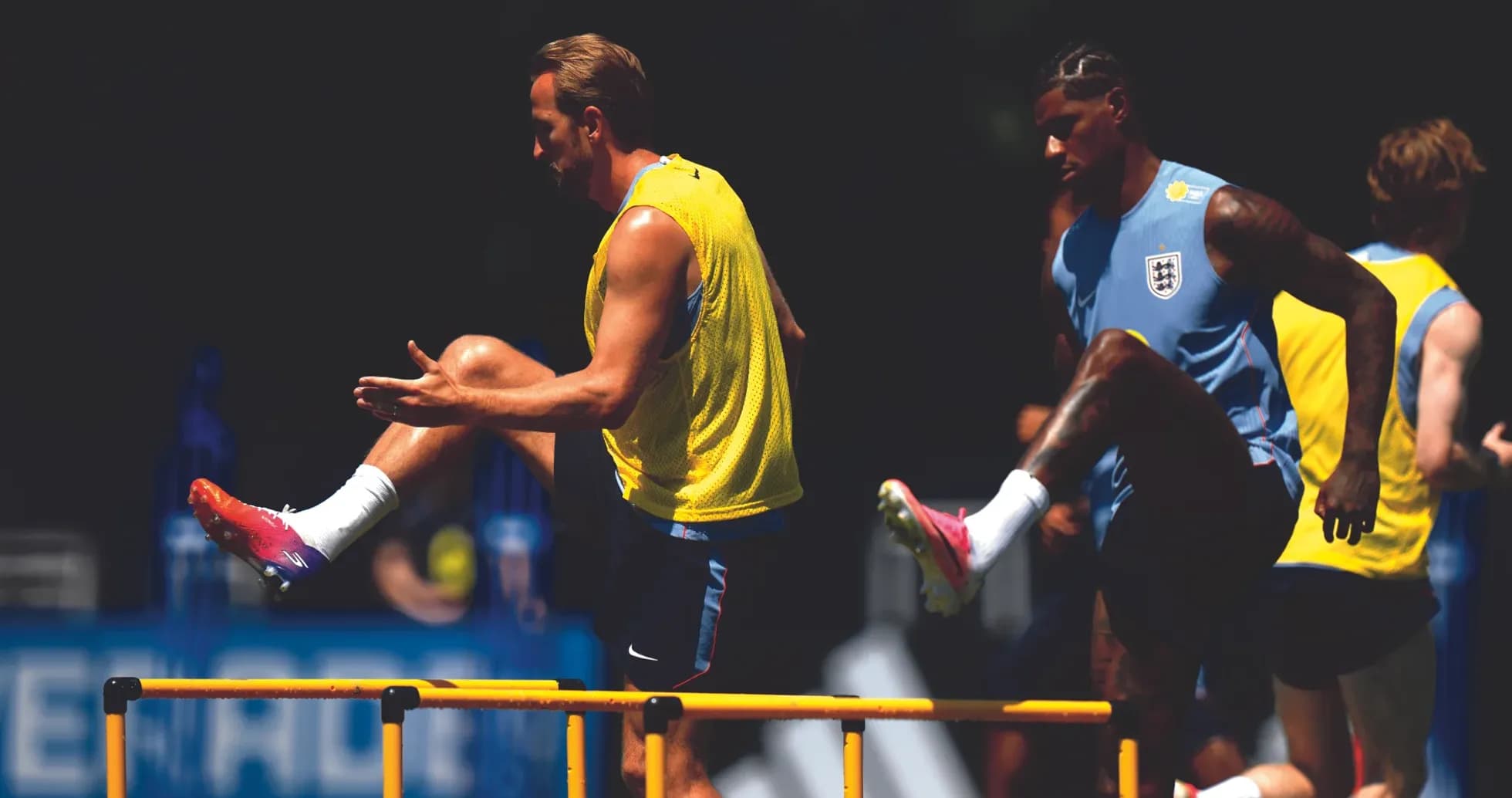
England's World Cup Campaign: Attack Shines, Defence Under Pressure
England’s attack roared into life in Arlington. The doubts did not disappear with it.
Thomas Tuchel’s side opened their World Cup campaign with a 4-2 win over Croatia in Texas, a scoreline that flatters the attack and exposes the defence in equal measure. Twice England led in the first half. Twice they were dragged back by an experienced, if ageing, Croatian side. Only when the tempo rose after the interval did the gulf in energy and invention tell.
Final Score: England 4 - 2 Croatia
Goals flow, questions remain
England’s forward line looked every inch the “much-vaunted” unit that arrived in the United States under heavy expectation. Combinations clicked, movement sharpened, Croatia’s back line finally wilted under the weight of pressure.
Yet behind them, the picture was far less assured.
This is not supposed to be a fragile defence. Tuchel’s men sailed through qualifying without conceding a single goal in eight matches, a record that usually signals steel and control. But tournament football is a harsher judge than a gentle qualifying group, and the cracks showed early in Arlington.
Croatia, short of pace but rich in know-how, found gaps. They dragged England’s back four into uncomfortable territory, testing not just their shape but their nerve. Stronger, quicker opponents are coming. France, Spain, Argentina – these are the sides waiting later in the draw, sides who will not need many invitations.
That is the context for Tuesday in Boston, where England face Ghana. Victory, combined with Panama failing to beat Croatia, would send the Three Lions through as Group L winners. The stakes are clear. So are the fault lines.
A back line built on hope, not history
Strip away the attacking fireworks and the numbers at the back are stark. The nine defenders in England’s 26-man squad share 191 caps between them. John Stones owns 90 of those. The rest are learning international football in real time, at a World Cup.
Tuchel made bold calls before a ball was kicked. He left three seasoned tournament players at home: Trent Alexander-Arnold of Real Madrid, and Manchester United duo Luke Shaw and Harry Maguire. Those omissions shifted the burden onto a younger, more brittle group.
The plan took an early hit. Tino Livramento was ruled out injured before the tournament truly began, replaced by Trevoh Chalobah, who arrived with a single cap to his name. Suddenly, the margin for error shrank again.
Against Croatia, three members of the back four were making their World Cup debuts: the injury-prone Reece James, Ezri Konsa and 21-year-old Nico O’Reilly. Talent is not the issue. Scar tissue is. This is a defence learning on the job at the sharpest end of the sport.
Former England defender Gary Neville, watching on as a Sky Sports pundit, did not hide his concern. The first-half wobble, he suggested, will force Tuchel to reassess.
“I think that it will make Thomas Tuchel adjust for maybe games two and three, and make him think slightly differently about how he sort of maybe plays that defence, and how he looks at protecting them,” Neville said. Translation: expect tweaks. Possibly big ones.
Stones, Konsa, Guehi – the central question
Everything circles back to the centre of defence.
Tuchel trusts Stones. He values the calm on the ball, the experience in high-pressure environments, even though the defender started only five Premier League games last season before leaving Manchester City. In a young group, Stones is the adult in the room.
But that loyalty is under scrutiny. The main argument now is whether Marc Guehi should come in for Konsa, or whether the bolder move is to leave Stones out altogether.
Chris Sutton has made his view clear. The former England striker believes the future – and perhaps the present – belongs to Konsa and Guehi.
“I think Konsa and Guehi have better attributes in terms of one-against-one situations than John Stones and there will be times in games when they will be isolated one-against-one against players of the highest class,” he told the BBC.
That is the crux of it. Tuchel knows that later in this tournament his defenders will be left alone, sprinting towards their own goal with elite forwards bearing down on them. Does he go with the experience of Stones or the athleticism and recovery speed of the younger pair?
One choice offers control and composure. The other, raw pace and aggression. The Croatia game did not settle the debate. It intensified it.
Attack unfazed by the noise
Up the pitch, there is far less anxiety.
Ollie Watkins, speaking at England’s base in Kansas City on Sunday, brushed aside the swirl of criticism around the back four. For the forwards, the defensive chatter is just that – chatter.
“I think people are always going to try and criticise and find certain areas they can pick on but I think defensively we’ve got world-class players at the end of the day who have won major trophies and played at the highest level possible,” he said.
His assessment of the Croatia performance was blunt and revealing.
“I think maybe we started the game a little bit nervously the other day but you’ve seen once the nerves are out of the lads’ system, I think in the second half we absolutely blew Croatia away.”
That is the dual identity of this England side in one sentence. Nerves, then ruthlessness. Wobbles, then a whirlwind.
Tuchel will love the second part. He cannot ignore the first.
Ghana next, and little room for doubt
Ghana in Boston will bring a different kind of test. Younger legs, more direct running, more chaos. The kind of game where a loose touch or a misjudged step in defence can turn quickly into a crisis.
Win, and England likely cruise through the group with momentum and a swaggering attack that few can match. Stumble, and the questions that surfaced in Arlington will grow louder, sharper, harder to park.
Tuchel has already shown he is willing to make ruthless calls with big names before the tournament. Now comes the harder task: adjusting on the fly, inside a World Cup, with everything to lose.
The goals are there. The talent is there. The path to the last 32 is clear.
The only unknown is whether this defence can grow up fast enough to walk it.




