Curaçao's Joshua Brenet Faces Germany in World Cup Opener
On Sunday night in Germany, a small Caribbean island will stare down a giant – and at right-back, a familiar face will be impossible to ignore.
Curaçao’s Dutch heartbeat
Curaçao remains part of the Kingdom of the Netherlands, but in footballing terms it has long since carved out its own identity. Since FIFA recognition in 2010, the island has quietly built a national team powered not by local academies, but by the Curaçaoan diaspora in the Netherlands.
The numbers tell the story. Of the 26 players in the current World Cup squad, only one was actually born on the island. That lone native son is Tahith Chong, once the great hope at Manchester United, now with Sheffield United, and arguably Curaçao’s most recognisable export.
The rest of the squad traces its roots through Dutch streets and Dutch clubs. Six of them have worn the colours of German sides at some point in their careers: Chong at Werder Bremen, Gervane Kastaneer at 1. FC Kaiserslautern, Riechedly Bazoer at VfL Wolfsburg, Roshon van Eijma at Preußen Münster, and both Jürgen Locadia and Joshua Brenet at TSG Hoffenheim.
For one of them, Sunday’s opener against Germany is more than a World Cup match. It is a collision with his own past.
Brenet: from Nagelsmann’s bet to Bundesliga cautionary tale
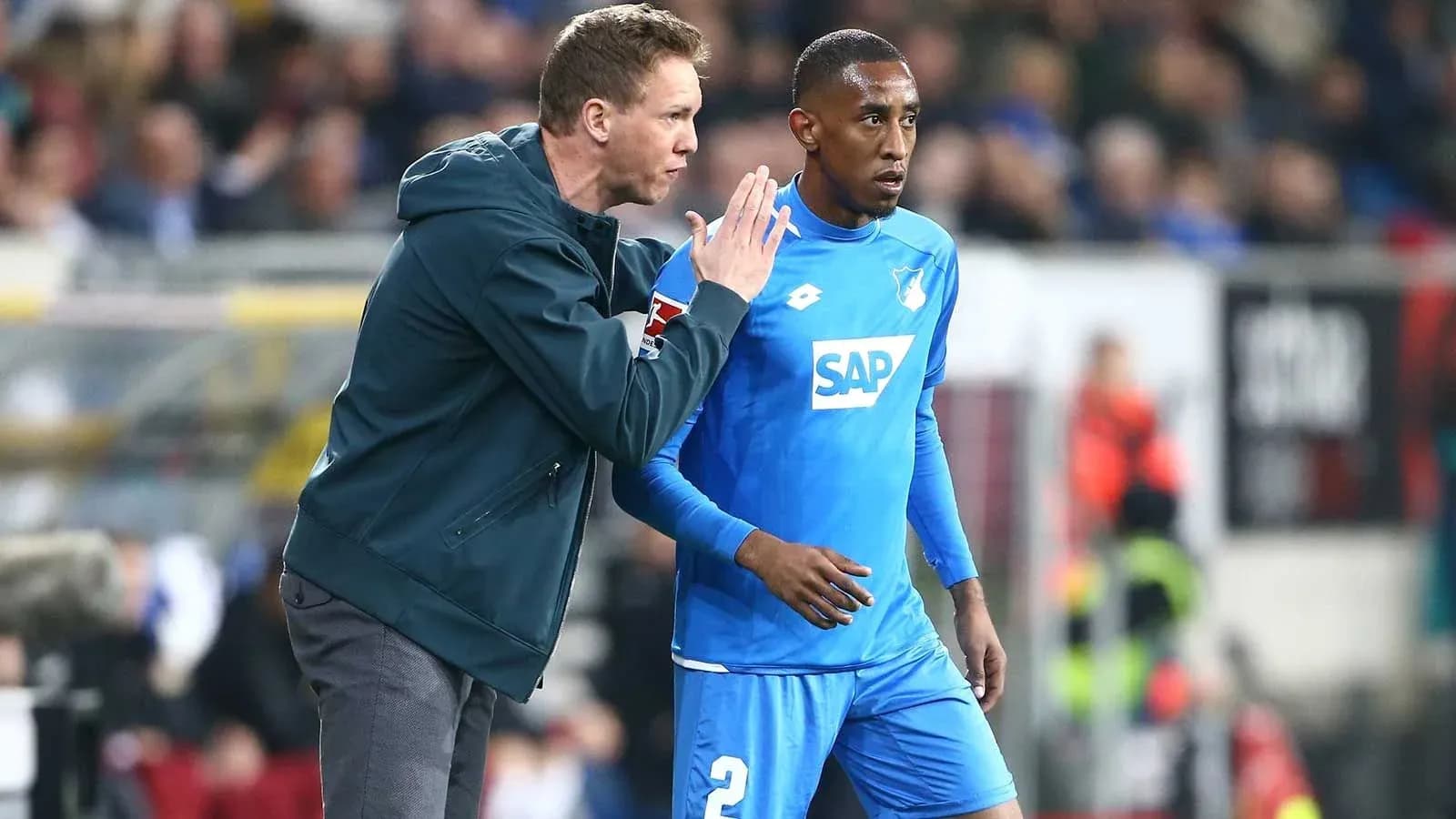
When Hoffenheim paid €3.5 million to prise Joshua Brenet from PSV Eindhoven in 2018, it looked like the next logical step in a rising career. He arrived as a three-time Eredivisie champion, with two Netherlands caps already on his CV. Julian Nagelsmann, then Hoffenheim’s head coach and now in charge of Germany, had pushed for the move.
It should have been a launchpad. It became a warning.
Brenet started his Bundesliga life on the bench, watching the early league matches rather than shaping them. Then came Hoffenheim’s first-ever Champions League game, against Shakhtar Donetsk. On the eve of that historic night, he skipped a video session. Nagelsmann’s response was immediate: Brenet was dropped from the squad.
The door was not slammed completely. Nagelsmann later brought him back into the fold, but the right-back never truly regained his footing. Appearances were rare, rhythm impossible. Once Nagelsmann left, things deteriorated further. His successor Alfred Schreuder, now Nagelsmann’s assistant with the DFB, did not use Brenet at all. Sebastian Hoeneß went a step further and sent him down to the reserves in the fourth-tier Regionalliga Südwest.
On the pitch, he drifted out of view. Off it, his reputation frayed. Repeated disciplinary problems, including persistent lateness, made Hoffenheim’s search for a buyer even harder. Only in 2022, when his contract ran down, did the club finally see him leave – on a free – to Twente Enschede.
Revival, relapse, and a courtroom reckoning
In Enschede, the story briefly changed tone. Brenet’s performances picked up; the right-back reminded people why top clubs had once chased him. For a while, it looked like a career salvaged.
Then he sabotaged it.
In January 2023, Dutch authorities caught him driving without a licence. Twice. In two weeks. He had already lost that licence in 2020 after a drink-driving offence. This time, the consequences were heavier.
“He clearly has no regard for authority. It seems to me as though he is continuing to play football after receiving a red card,” the presiding judge said, before handing down a one-month prison sentence in 2024. It was not his first brush with the law. Back in 2021 he had received a suspended sentence, including a fine and community service, for domestic violence.
On appeal, the prison term for driving without a licence was converted to community service. Twente’s verdict was harsher. The club terminated his contract.
A wandering career, a new flag
From there, Brenet’s path turned nomadic. He joined Al-Rayyan in Qatar and managed only six appearances in the 2024/25 season. By autumn he was in Scotland with Livingston FC. By the second half of the campaign he had moved again, this time to Kayserispor in Turkey.
The club badges kept changing. The chance to start over came not from a transfer, but from a switch of allegiance.
Brenet had come through the Dutch youth system and even made his senior debut for Oranje in the 2016 World Cup qualifiers. Yet FIFA eventually granted his request to represent Curaçao, the homeland of his parents. For a player whose career in Europe had stalled, the island offered something he had been missing: a central role, a clear purpose.
He took it. Since debuting for Curaçao in 2024, Brenet has scored six goals in 17 appearances – a striking return for a right-back. In the final warm-up match against Aruba, he started on the right side of defence and scored again, a reminder of his attacking instincts.
Facing the past, carrying an island
On Sunday at 7 pm, the 32-year-old will walk out for Curaçao’s first-ever World Cup match, against Germany. On the opposite bench: Julian Nagelsmann and Alfred Schreuder, the coaches who once benched him, dropped him, and ultimately moved on without him.
For Nagelsmann, it is a group-stage assignment with clear expectations. For Brenet, it is a confrontation with the most turbulent chapters of his career, played out under the gaze of the man who once believed he could thrive in the Bundesliga.
Curaçao arrive as underdogs, built on Dutch foundations but carrying the flag of a small Caribbean island that has long lived in the shadow of its former colonial power. Their squad tells that story in every line: Dutch-born, Dutch-trained, but now united under Curaçao’s blue banner.
Brenet stands at the heart of that paradox. A player who burned bridges in Europe, now entrusted with a leading role on the biggest stage of all. On Sunday night, he will not just be trying to stop Germany’s wingers. He will be trying to show his old coaches – and his new country – that his red cards, literal and metaphorical, do not have to define the final act of his career.