Croatia's World Cup Opener Against England: A Crucial Challenge
Zlatko Dalic knows exactly what is coming. England, Dallas, 17 June. A World Cup opener that could shape Croatia’s entire summer in the space of 90 unforgiving minutes.
He would never admit to fearing it. But he did admit this: a gentler start might have been nice.
“Maybe, because the first game can destroy everything,” he said, the words hanging heavily given Croatia’s recent scars. At Euro 2024, they opened with a 3-0 defeat by Spain and never truly recovered. The campaign collapsed before it had really begun. Dalic has lived that spiral and clearly hasn’t forgotten it.
This time, the stakes feel just as sharp.
A heavyweight opener, a wounded squad
Croatia arrive in the United States with pedigree but problems. Third at the 2022 World Cup, runners-up in 2018, they know how to navigate a tournament. They also know they might be walking into this one a step short.
A 2-1 win over Slovenia in Varazdin, their final friendly before flying out, offered a scoreline to cling to but not total reassurance. Dalic is juggling selection issues, and they are not minor ones.
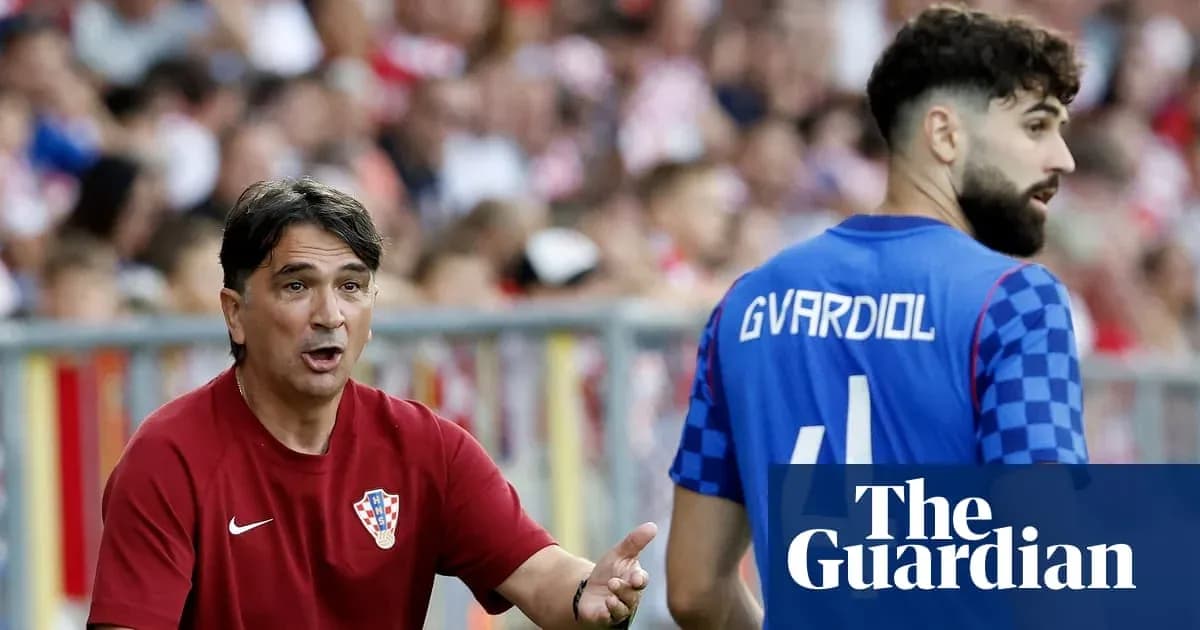
Mateo Kovacic and Josip Gvardiol, both from Manchester City, are on the comeback trail from injury. Luka Modric, still the heartbeat of this team at 38, is recovering from a fractured cheekbone and played in a protective mask against Slovenia. All three are central to Croatia’s identity. All three are short of rhythm.
“Kovacic, Gvardiol and Modric didn’t play much for a long time and they are not in optimal form,” Dalic admitted. “Especially Kovacic, he hardly played this season and now we need him. It’s not easy and we need time. Gvardiol is now back but I know they are not at the optimal level. We don’t have a big roster and these are some of our most important players.”
That last line cuts to the core of Croatia’s reality. This is not a nation that can simply rotate stars in and out. When the pillars creak, the whole structure feels it.
Modric still delivers, but time is tight
Even below full tilt, Modric still found a way to remind everyone who he is. His goal against Slovenia was classic Modric: beautifully taken, the product of technique and vision that have not faded with age. The mask on his face told one story; the finish told another.
Yet Dalic’s concern is not about one moment in a friendly. It is about whether his leaders can sustain a tournament, starting with one of the most physically demanding opponents they could face.
“We need time,” he said. Time is exactly what he does not have.
England again, but a different England
Dalic knows England well. He was on the touchline in Moscow in 2018 when Croatia came from behind to win that World Cup semi-final in extra time, a night that left England with a deep sense of what-might-have-been.
Any thought that Croatia still live rent-free in English minds, though, was brushed aside. Dalic pointed out that England have beaten Croatia twice since that night. The dynamic has shifted. The aura of psychological advantage has thinned.
What hasn’t changed is his respect for the opponent.
“A very strong team whose league is the best in the world and who play very offensive, very fast,” he said. “We will have to do something more.”
England have planted themselves in the US early, setting up camp in Miami a week before the Dallas showdown. Dalic looked approvingly on that long preparation, aware that his own side are trying to sharpen up while managing injuries and fatigue.
The first game can make – or break – them
Dalic did not try to dress it up. He called the opener what it is: decisive.
“The first game is the most important game,” he said. “Against England we’ll fight, try to do our best and try to win.”
He knows how different the tone of a tournament feels after a positive start. In 2018, Croatia beat Nigeria in their first match and rode that platform all the way to the final. In 2022, they drew with Morocco and still found a route to third place. When the base is solid, Croatia can build something.
When it isn’t, as Spain brutally reminded them at Euro 2024, everything can unravel.
This is the tightrope Dalic and his players now face. A squad with miles in the legs, carrying knocks and lacking depth, asked to go toe to toe with a fast, aggressive England side from the very first whistle of their World Cup.
The manager doesn’t get to choose the schedule. He does, however, understand the consequences. One game in Dallas will tell him whether Croatia are ready for another deep run, or whether this golden era is finally starting to fray under the strain.