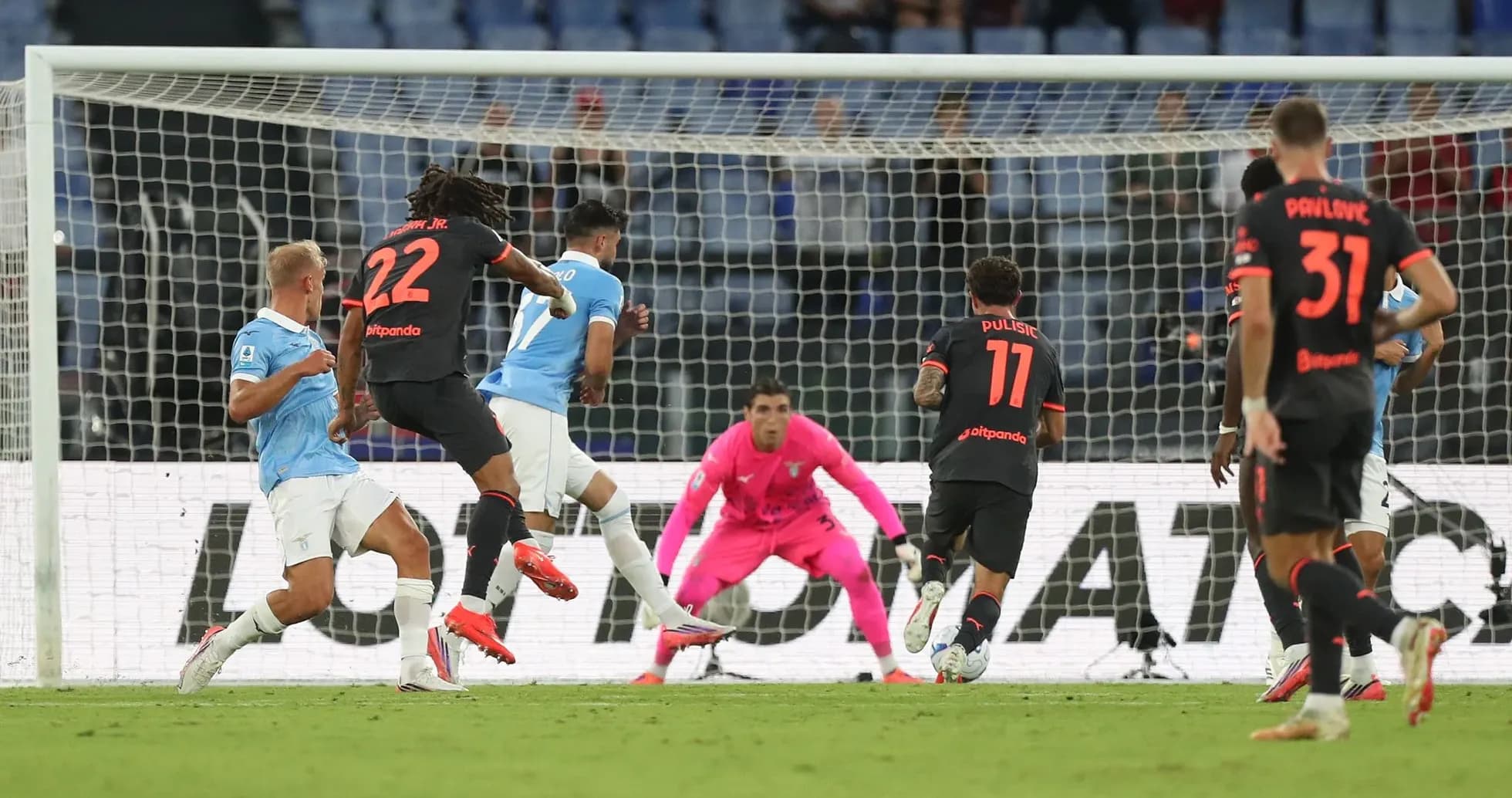
Cagliari Upsets Atalanta 2–1 in Serie A Clash
Under the Bergamo lights at New Balance Arena, this was supposed to be a statement night for Atalanta. Instead, the evening closed with a different storyline: a disciplined, streetwise Cagliari side coming from behind to win 2–1 and underline why they sit in the Champions League places while Atalanta remain a mid-table puzzle.
I. The Big Picture – Two Directions of Travel
Following this result, Atalanta’s record in Serie A stands at 2 wins and 2 defeats from 4 matches, with 5 goals scored and 5 conceded overall. The goal difference of 0 neatly captures their identity so far: balanced on paper, but volatile in reality. At home they have now played 3 times, winning 2 and losing 1, with 4 goals scored and 3 conceded in Bergamo. The 4-3-3 has been their only shape this campaign, a clear tactical signature but also a known quantity for opponents to prepare for.
Cagliari, by contrast, leave Bergamo with 9 points from 4 games, 3 wins and 1 defeat overall. They have scored 4 and conceded 2 in total, a goal difference of +2 that reflects a side built from the back and comfortable in tight margins. On their travels, they have been perfect: 2 away matches, 2 victories, 3 goals scored and just 1 conceded. They have already used three different base systems – 4-2-3-1, 4-3-2-1 and here a 4-4-1-1 – but the defensive metrics remain consistent: just 2 goals against in 4 games, with an overall average of 0.5 goals conceded per match both home and away.
II. Tactical Voids – Who Was Missing and What It Meant
Atalanta came into this fixture with a conspicuous hole in their midfield structure. Gianluca Gaetano, the league’s leading red-card recipient so far, was suspended after his dismissal earlier in the campaign. His absence matters: across his 3 appearances he had contributed 1 assist, 150 passes with 89% accuracy, 6 tackles and 5 interceptions. In Sarri’s 4-3-3, Gaetano’s blend of progression and counter-pressing would have been invaluable against a Cagliari side that thrives in transition.
Defensively, Atalanta were also without I. Hien (muscle injury) and K. Sulemana (knee injury). While neither appears in this match’s squad list, their unavailability reduced options to tweak the back line or shift to a back three mid-game. It forced Sarri to lean heavily on O. Kossounou, G. Scalvini and S. Kolasinac as the core of his defensive platform, with R. Bellanova providing width and thrust from right-back.
Cagliari’s absences were more concentrated in the attacking half. M. Felici and R. Idrissi (both knee injuries), M. Nzola (lacking match fitness) and Y. Trepy (injury) were all unavailable. Fabio Pisacane therefore leaned into a more pragmatic 4-4-1-1, with P. Mendy as the lone striker and D. Maldini operating in the seam between Atalanta’s lines. The bench was deep in defensive and midfield profiles but light on proven top-tier finishers, which made Cagliari’s efficiency in front of goal all the more striking.
Disciplinary trends framed the tone of the contest. Atalanta’s season-long yellow-card pattern shows a clear late-game spike: 50.00% of their bookings arriving between 61–75 minutes and another 50.00% between 76–90. They also have a single red card recorded between 91–105 minutes. Cagliari, meanwhile, spread their cautions across the match, with 20.00% of yellows in the first 15 minutes, 40.00% between 46–60, 20.00% from 76–90 and another 20.00% from 91–105. It set up a clash where Atalanta’s emotional surges could be exploited by a side adept at drawing fouls and slowing rhythm.
III. Key Matchups – Hunter vs Shield, Engine Room vs Enforcer
Sarri’s front three of C. De Ketelaere, G. Scamacca and J. Rowe was designed to stretch Cagliari’s back four horizontally and vertically. Scamacca’s presence as a central reference point is crucial to Atalanta’s 1.3 goals per game at home and 1.3 overall. With Atalanta yet to fail to score in any match this season, the “Hunter vs Shield” battle was always going to be their attack against Cagliari’s miserly defence.
The shield was anchored by Alessandro Deiola, who started as a central defender but defended like a hybrid stopper. Across the season he has already produced 8 tackles, 4 interceptions and 4 successful blocks, while committing just 3 fouls and collecting 2 yellow cards. His reading of the game allowed Cagliari to hold a relatively high line in phases, compressing the space Scamacca and De Ketelaere wanted to operate in. When Atalanta tried to funnel attacks down the right through Bellanova’s overlaps, Deiola’s timing in stepping out of the line repeatedly disrupted the final pass.
In midfield, the “Engine Room” duel pitted F. Kessie and Ederson against H. Winks and Michel Ndary Adopo. Adopo has quietly become one of Serie A’s most efficient facilitators: 148 passes at 86% accuracy, 8 key passes and 2 assists in 4 appearances. His role as Cagliari’s main conduit from deep allowed Winks to focus on screening and tempo, while Adopo punched vertical passes into Maldini and Mendy.
For Atalanta, Kessie’s job was to break that rhythm, but without Gaetano’s added bite and intelligence, the home side’s press often looked one step late. The result was a midfield corridor where Cagliari could play through the first wave and then attack Atalanta’s back four in semi-transition, exactly the scenario Pisacane’s 4-4-1-1 was built to exploit.
IV. Statistical Prognosis – Why the Game Tilted Cagliari’s Way
Following this result, the numbers tell a clear tactical story. Atalanta’s overall scoring rate of 1.3 goals per match remains respectable, and they have yet to draw a game, but their defensive average of 1.3 goals conceded overall and 2.0 on their travels highlights a team that lives on a knife edge. Even at home, where they concede 1.0 goal per game on average, they are vulnerable to clinical opponents.
Cagliari, by contrast, marry modest attacking output – 1.0 goal per game overall, 1.5 on their travels – with elite defensive solidity. Conceding just 0.5 goals per match overall, and the same 0.5 away from home, gives them a wide margin for error in matches like this. Their clean-sheet count of 2 in 4 games and the fact they have only once failed to score underline a team that rarely collapses at either end.
The penalty data reinforces the theme of composure: Cagliari have taken 1 penalty this season and converted it, with no misses, while Atalanta have yet to win or take a spot-kick. In tight contests, that edge in high-pressure moments can be decisive.
Narratively, this 2–1 away win fits the statistical arc. Atalanta, locked into a single 4-3-3 blueprint and missing a key midfielder, attacked with intent but left just enough space and structural looseness for Cagliari’s flexible, defensively secure unit to strike. The visitors’ ability to adapt their shape while preserving a rock-solid goals-against profile is the foundation of their early push from promising start to genuine top-four contender, while Atalanta remain a side whose attacking flair is constantly negotiating with its own instability.