Boavista: The Fallen Foe Who Shaped Celtic's European Nights
The court order came on 16 July 2026. Cold, final, and utterly at odds with the noise and colour that once poured out of the Estádio do Bessa. Boavista, champions of Portugal in 2001 and a familiar name to Celtic supporters of a certain age, were told to cease all activities by 31 July and hand over their premises. A club that had stood since 1903, gone under the weight of debts it could no longer outrun.
For Celtic fans, the news lands with more than a passing shrug. Boavista were never just another European opponent. They were a marker on the road, twice, in two very different eras.
The first encounter: numbers on the hoops, goals in Glasgow
The story starts in 1975, in the Cup Winners’ Cup. Celtic were paired with the Portuguese side and edged a tight tie 3-1 on aggregate. A 0-0 draw in Porto set things up, but it was at Celtic Park that the meeting took on its own little slice of club history.
Under the lights in Glasgow, Celtic won 3-1 thanks to goals from Kenny Dalglish, Shuggie Edvaldsson and Dixie Deans. It was a solid European performance, the kind that felt almost routine at the time. Yet that night carried a quirk that would linger in the memory: it was the first time Celtic had worn squad numbers on the back of those famous hooped jerseys.
Deans and Edvaldsson found the net, Dalglish did what Dalglish always did, and Boavista left Glasgow beaten but not forgotten. They would be back in Celtic conversations nearly three decades later, in far higher stakes.
Larsson, Porto, and a semi-final that crackled
Most Celtic supporters hear the name Boavista and jump straight to 2003. The UEFA Cup run under Martin O’Neill. The noise. The tension. The sense that something special was building.
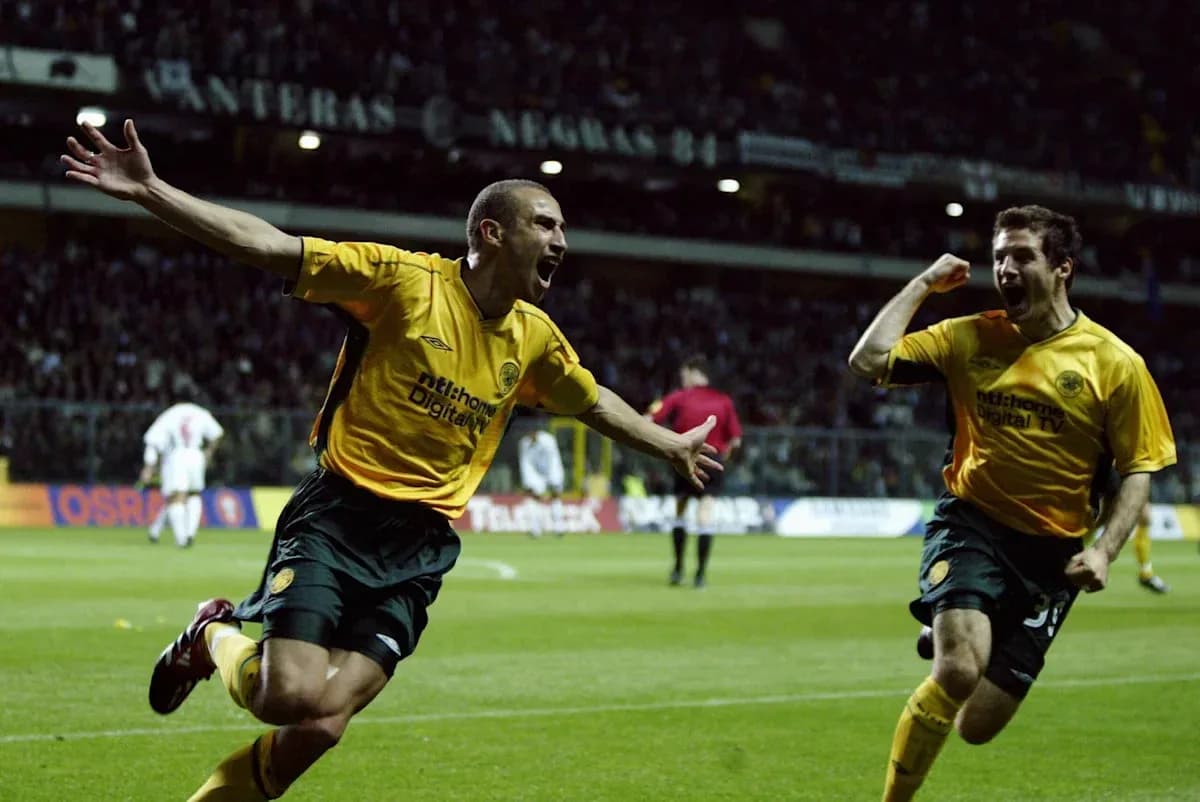
Celtic faced Boavista in the semi-finals, with a place in a European final on the line for the first time since the days of Jock Stein. The first leg at Celtic Park finished 1-1, Henrik Larsson scoring the equaliser to keep the tie alive. It was one of those Larsson nights: the pressure on, the moment big, and the Swede utterly unfazed.
The return leg in Porto was tight, nervous, and cagey. One goal was always likely to settle it. Larsson provided it again, scoring the decisive strike in a 1-0 win at the Bessa Stadium. Celtic went through 2-1 on aggregate, booking a historic final against Boavista’s city rivals, Porto.
The final in Seville still stings. The less said about that night, the more some supporters prefer it. But the semi-final, and Boavista’s part in it, remains a cherished chapter. O’Neill embracing Larsson at full-time in Porto, the away end in rapture, the sense of a club back where it believed it belonged.
A champion outside the “big three”
Boavista were never just a plucky underdog. Founded in 1903, the club carved out a serious place in Portuguese football. They won nine major honours and, in 2001, did what no one outside the “big three” of Benfica, Porto and Sporting Lisbon has managed before or since: they won the Primeira Liga.
That title win broke a stranglehold and gave Porto another heavyweight in their own city. For a time, Boavista were a symbol of possibility in a league dominated by giants. Their black-and-white chequered shirts became a familiar sight in European draws, a sign that this was no soft touch.
But success carries its own demands. Boavista’s problems did not appear overnight. Their financial troubles stretched back years, a slow drag that eventually turned into a chokehold.
A slow collapse, then the cliff edge
The warning signs were clear. Transfer bans bit hard: Boavista were prohibited from signing players in five separate windows. When the restrictions finally lifted, the response was frantic. In February 2025, they signed nine players in a single day, a desperate attempt to patch holes in a sinking ship.
It didn’t work. In the 2024/25 season, Boavista finished bottom and were relegated after a 4-1 defeat away to Arouca on the final day. Around 2,000 travelling fans saw their team dismantled, and some spilled onto the pitch in anger and despair. Relegation was bad enough. What followed was worse.
The Portuguese league authority barred Boavista from playing in Liga Portugal 2. Oliveirense, originally relegated, were handed a reprieve. Boavista were refused registration in 2025 for both the third-tier and the fourth-tier Campeonato de Portugal. The club changed company structure and found itself starting the new campaign in the Liga Pro, the elite league of the Porto Football Association, a world away from national prominence.
At the same time, the club itself entered a team in the fourth division of the district leagues, a move that opened the door for a supporters’ group of the same name to emerge. Even that flicker of continuation couldn’t be sustained. Failing to show up for fixtures led to losses by default, and by the end of October the club-run team had withdrawn from competition altogether.
The slide was no longer gradual. It was terminal.
The final whistle
Years of unpaid obligations to creditors, failed restructuring attempts, and mounting pressure in the courts brought Boavista to that brutal line in the sand: stop all activities by 31 July 2026 and hand over the premises. A club that once stood toe-to-toe with Europe’s elite, that once blocked Celtic’s path and then helped define one of their greatest modern runs, reduced to a legal instruction and a locked gate.
Strip away the legal jargon and it comes down to something stark. Boavista failed to pay their debts. The price is extinction.
For Celtic supporters, Boavista now live in memory: Edvaldsson scoring in 1975, Dixie Deans wheeling away, the novelty of numbers on the hoops; Larsson in full stride in 2003, the roar at Celtic Park, the explosion of joy in Porto as the ball hit the net and O’Neill’s men marched on to Seville.
On paper, Boavista are confined to history. But football has a habit of reviving old names, of adding a “FC” or a “1911” or a “United” and starting again from the bottom. Will there be a “The Boavista FC” rising from the wreckage?
For now, the original club is gone. The memories, especially in Glasgow, are not.