Australia 2-0 Türkiye: Efficient Victory in Group D Match
Australia 2-0 Türkiye at BC Place, Vancouver, opens Group D with a statement of efficiency from Tony Popovic’s side. Australia move to 6 points, 4 goals for and 0 against with this second straight group win, consolidating 2nd place and tightening their grip on a Round of 32 berth, while Türkiye remain on 0 points, 0 goals scored and 4 conceded, their qualification hopes already under serious pressure from 3rd place in the group.
Match Report
The game’s first decisive moment came on 27', when Australia struck against the run of possession. Australia goal — Nestory Irankunda (assisted by Paul Okon-Engstler) finished a rare early break to make it 1-0, punishing Türkiye’s high defensive line and giving the Socceroos a platform to sit deeper and protect.
At half-time, Vincenzo Montella reacted immediately. On 46', Türkiye made their first change: Kenan Yıldız replaced Barış Alper Yılmaz (Türkiye), adding a more direct presence in the final third to attack Australia’s back five.
Australia’s first response from the bench arrived on 61', with Nishan Velupillay replaced Nestory Irankunda (Australia), a like-for-like switch on the flank that kept the counter-attacking outlet fresh as Irankunda’s early energy waned.
Türkiye continued to chase control between the lines. On 62', Yunus Akgün replaced Orkun Kökçü (Türkiye), injecting more width and one‑v‑one threat on the right to stretch Australia’s compact block.
Australia then adjusted their central reference point in attack on 74'. First, Tete Yengi replaced Mohamed Touré (Australia), providing a more physical focal point to hold up rare clearances. In the same minute, Jason Geria replaced Jacob Italiano (Australia), shoring up the right side of the back line as the pressure intensified.
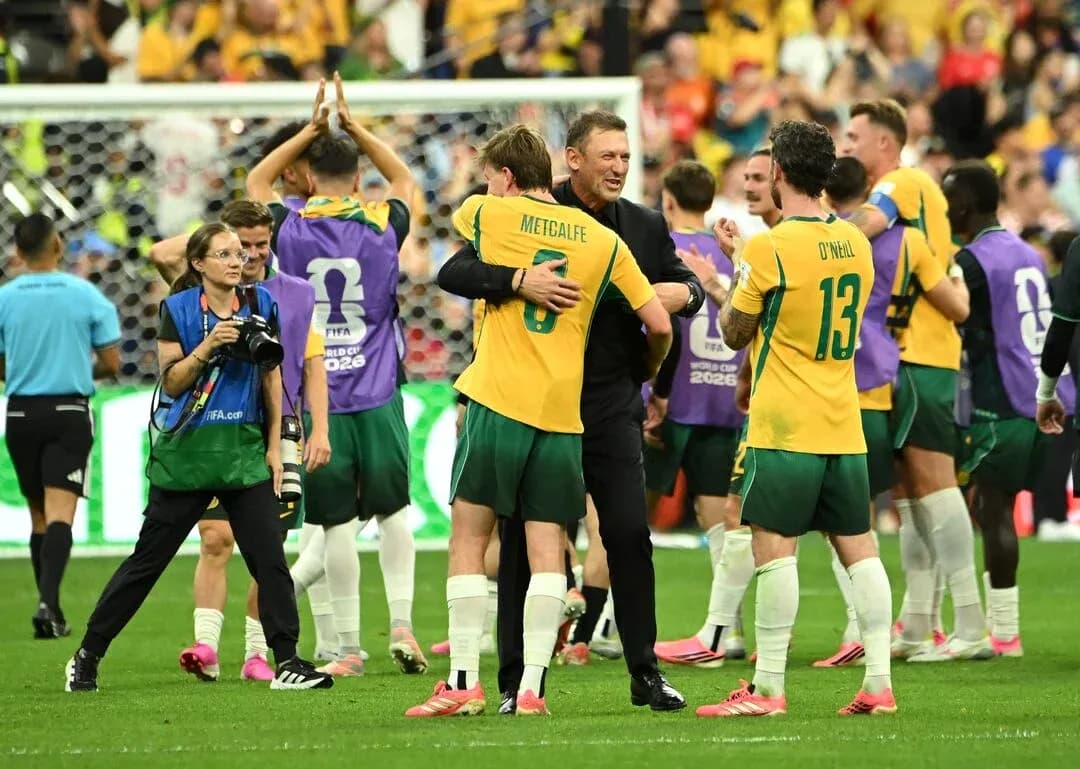
The game’s second and decisive goal followed almost immediately. On 75', Australia goal — Connor Metcalfe (unassisted) drove forward from midfield and finished a second-phase situation to make it 2-0, again capitalising on Türkiye’s numbers committed forward and giving Australia a cushion to lean even deeper into their low-block strategy.
Montella turned again to his bench on 81'. Salih Özcan replaced İsmail Yüksek (Türkiye), aiming for quicker ball circulation from the base of midfield, while Mert Müldür replaced Zeki Çelik (Türkiye), adding fresh legs at right-back to support overlapping and counter-pressing.
Popovic’s final structural tweaks came on 84'. Aziz Behich replaced Jordan Bos (Australia), adding experience and defensive nous at left-back, and Jackson Irvine replaced Paul Okon-Engstler (Australia), bringing extra height and defensive work-rate to see out the closing stages.
Türkiye’s last roll of the dice arrived on 85', with Deniz Gül replaced Kerem Aktürkoğlu (Türkiye), a straight attacking swap to maintain intensity in the front line as they pushed for a late response.
The only card of the night underlined Türkiye’s frustration. On 86', Yunus Akgün (Türkiye) — yellow card (Roughing) — was booked after a late challenge as Australia disrupted rhythm and ran down the clock in their defensive third.
Fixture Statistics & Tactical Audit
- xG: Australia 0.77 vs 1.33 Türkiye
- Possession: Australia 28% vs 72% Türkiye
- Shots on Target: Australia 4 vs 8 Türkiye
- Goalkeeper Saves: Australia 8 vs 2 Türkiye
- Blocked Shots: Australia 1 vs 12 Türkiye
The scoreline flattered Australia relative to chance quality, but it was the logical outcome of their game model. Türkiye were territorially dominant (72% possession, 30 total shots) yet often forced into low‑value efforts by Australia’s deep 5-4-1 block, as reflected in a modest 1.33 xG from such volume and 12 Turkish shots being blocked. Australia were ruthlessly efficient (2 goals from 0.77 xG and 4 shots on target), maximising transitions and set phases rather than sustained pressure. Patrick Beach’s workload (8 saves mirroring Türkiye’s 8 shots on target) was central, while at the other end Australia’s limited but cleaner looks — particularly Metcalfe’s solo strike — allowed them to convert a low-volume attacking plan into a two-goal margin. On balance, a draw would have been defensible on xG, but Australia’s compact structure and superior penalty-box efficiency justified the 2-0 outcome.
Standings Update & Seasonal Impact
Australia build on their opening win to move to 6 points from 2 games, with 4 goals scored and 0 conceded for a goal difference of +4. They remain 2nd in Group D but now sit firmly in the Round of 32 qualification zone described in the standings, with both results and defensive metrics reinforcing their status as one of the group’s most secure sides.
Türkiye stay on 0 points from 2 matches, with 0 goals for and 4 against (goal difference -4), holding 3rd place in Group D and 12th in the broader group-stage table snapshot. The gap to the qualification places is now at least two results, meaning they likely need back-to-back wins and help elsewhere to recover. Their possession-heavy but blunt attacking output in Vancouver leaves them with minimal margin for error in the final group fixture.
Lineups & Personnel
Australia Starting XI
- GK: Patrick Beach
- DF: Jacob Italiano, Alessandro Circati, Harry Souttar, Cameron Burgess, Jordan Bos
- MF: Connor Metcalfe, Aiden O'Neill, Paul Okon-Engstler, Nestory Irankunda
- FW: Mohamed Touré
Türkiye Starting XI
- GK: Uğurcan Çakır
- DF: Zeki Çelik, Merih Demiral, Abdülkerim Bardakcı, Ferdi Kadıoğlu
- MF: İsmail Yüksek, Hakan Çalhanoğlu, Arda Güler, Orkun Kökçü, Barış Alper Yılmaz
- FW: Kerem Aktürkoğlu
Post-Match Verdict
Australia delivered a clinical performance (2 goals from 4 shots on target and 0.77 xG) built on structural discipline rather than volume. Their 5-4-1 compacted central zones, forced Türkiye into low-percentage shooting (30 total shots for just 1.33 xG and only 8 on target), and relied on Beach’s sharp shot-stopping (8 saves) plus aggressive blocking (12 Turkish efforts repelled) to protect the box. In transition, they exploited the space behind Türkiye’s advanced full-backs, with Irankunda and later Velupillay providing vertical outlets and Metcalfe timing his forward run for the second goal.
For Türkiye, this was a frustratingly sterile dominance. Despite controlling possession (72%) and circulating the ball at high accuracy (90% pass completion), their attacking structure lacked incision in the half-spaces, and their shot profile was poor relative to volume. Montella’s substitutions added energy and width but did not fundamentally change the dynamics against Australia’s settled low block. Defensively, conceding twice from limited danger zones highlighted vulnerability in transition and second balls rather than sustained pressure. Unless they can convert territorial control into higher-quality chances, Türkiye’s campaign risks ending as a story of sterile control and ruthless punishment on the counter.