AS Roma Dominates Fiorentina 4-0 in Serie A Opener
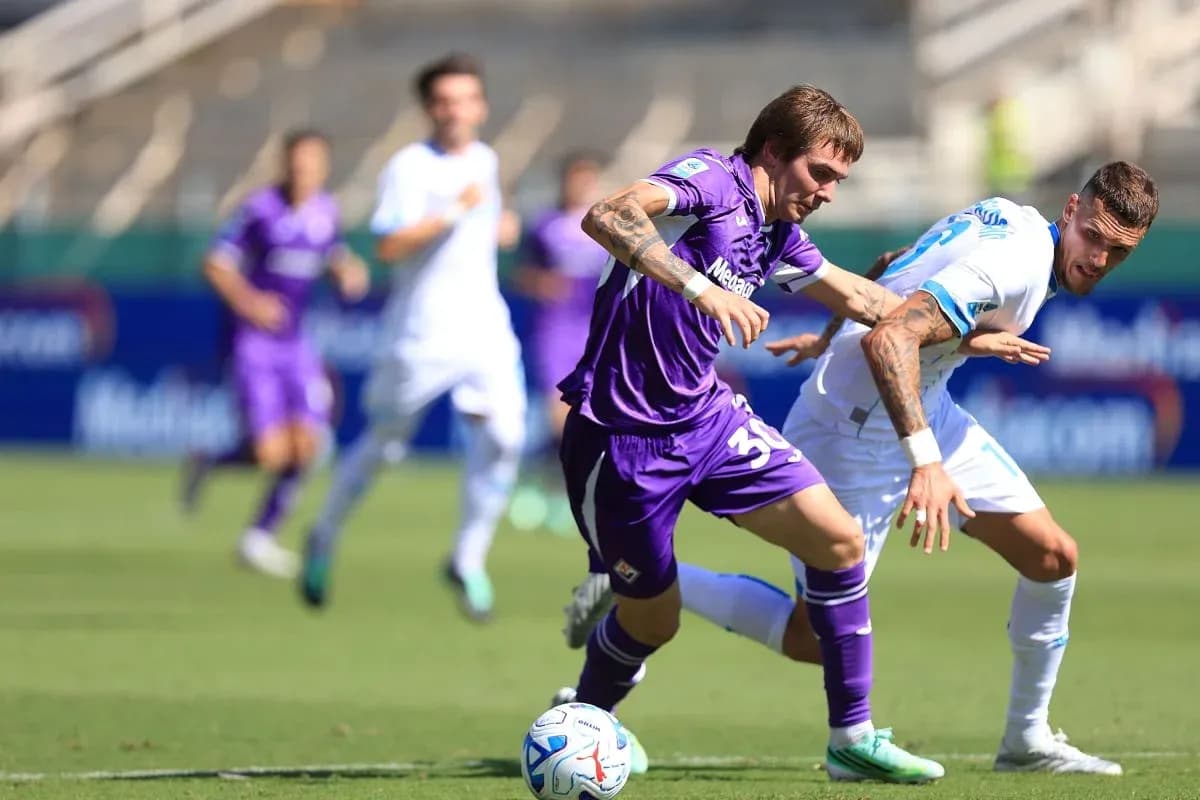
Under the Roman lights at Stadio Olimpico, Serie A’s opening night became a statement of intent. AS Roma, reshaped under Piero Gasperini Gian, dismantled Fiorentina 4–0 and, following this result, climbed straight to 1st place with 3 points and a goal difference of +4 (4 scored, 0 conceded). Fiorentina, beaten heavily on their travels, sank to 20th, with 0 points and a goal difference of -4 (0 scored, 4 conceded). For an early-season fixture in “Regular Season - 1”, the gap in tactical clarity was already stark.
Roma’s seasonal DNA, even from a one-game sample, is unmistakable: high-risk, high-reward front-foot football. At home they have played 1 match, winning it, with an average of 4.0 goals scored and 0.0 conceded. The 3-4-2-1 used here is not a conservative back three; it is an attacking trident of structures. M. Svilar stands as the lone anchor, but ahead of him a fluid lattice of movement and pressure unfolds.
The back line of G. Mancini, E. Ndicka and M. Hermoso is built for aggression rather than mere protection. Hermoso, already among the league’s most carded defenders with 1 yellow, embodies that edge: he stepped out of the line to contest duels (11 in total in his performance data) and intercept, accepting the disciplinary risk as the tax for territorial dominance. Behind them, Svilar’s night was relatively quiet, the clean sheet reflecting a collective control rather than individual heroics.
Ahead of the three, Roma’s four-man midfield is the hinge of Gasperini’s design. B. Cristante and M. Kone form the central axis, tasked with compressing space and recycling possession. Out wide, E. Lulli and Wesley Franca are not traditional wing-backs but hybrid shuttlers, stretching Fiorentina’s 4-3-2-1 horizontally and forcing their full-backs into constant two-way running. The statistical record of Roma’s cards – two yellows distributed evenly between 31-45 minutes (50.00%) and 46-60 minutes (50.00%) – tells you this team tackles aggressively in the middle phases, when the press is at full intensity.
Higher up, the “2-1” of the 3-4-2-1 is where Roma’s artistry lives. P. Dybala and R. Mora floated between the lines, unpicking Fiorentina’s midfield shield, while D. Malen provided the vertical threat. The numbers elevate Malen beyond mere finisher: in total this campaign he has 3 goals from 4 shots (3 on target), a perfect hat-trick of efficiency and movement, and a 10 rating. He duelled 8 times, winning 5, showing he is not just a penalty-box poacher but a reference point. Dybala, meanwhile, leads the league’s assist chart with 3 in total, created from 41 passes and 4 key passes. His role is that of the conductor, receiving between Fiorentina’s lines and turning the entire Roma attack towards goal.
Even the bench speaks to Roma’s depth and evolving identity. N. Pisilli, who came on and needed only 11 minutes to score and earn a 7.9 rating, offers late-game incision from midfield. N. Molina and K. Koulierakis give alternative defensive profiles if Gasperini wants to lock down a lead, while forwards like S. Castro, R. Vaz and M. Soule provide fresh legs to maintain pressing intensity. The absence of M. Bah (knee injury) and L. Pellegrini (thigh injury) could have been a creative void; instead, Roma have used it to accelerate the integration of younger and more vertical profiles.
On the other side, Fiorentina’s 4-3-2-1 under Fabio Grosso is still a sketch rather than a finished canvas. The back four of Dodo, R. Dragusin, L. Ranieri and Joao Mario was repeatedly stretched by Roma’s width and rotations. With goals against on their travels already at 4, and an average of 4.0 conceded away, the Viola’s defensive structure is fragile. Their card pattern – two yellows, split 50.00% in the 16-30 minute range and 50.00% in the 61-75 minute range – reflects a team forced into reactive, often desperate interventions once Roma’s tempo rose.
In midfield, C. Ndour, N. Fagioli and M. Brescianini were overrun. Fagioli, already on the disciplinary radar with 1 yellow card, tried to set some physical tone, making tackles and interceptions, but he was too often isolated as Roma created overloads around him. Ahead of them, F. Mastantuono and A. Atta were intended as creative links behind M. Pellegrino, yet they spent long stretches chasing shadows, unable to hold the ball long enough to relieve pressure.
The bench does offer Fiorentina some potential recalibration. Defenders like M. Pongracic and A. Jimenez can stiffen the back line, while R. Mandragora and G. Fabbian give alternative midfield profiles—one more positional, the other more box-to-box. For goals, A. Gudmundsson and M. Kean are notable options, but in this match context they entered too late, or into a game state already tilted beyond repair. The injuries to F. Parisi (knee) and R. Sottil (back) remove two important wide outlets, further limiting Grosso’s ability to stretch opponents and counter Roma’s aggressive wing play.
The disciplinary ledger is an early subplot. Roma’s willingness to accept cautions in the middle phases of games is part of their identity; Hermoso’s yellow is emblematic of a side that defends forward. Fiorentina, with Fagioli’s yellow and their own two cautions spread across key momentum swings, look more like a team fouling to survive rather than to control.
From a statistical prognosis standpoint, the early-season xG story can only be inferred from outcomes and shot profiles. Roma’s 4 goals from 4 total shots by Malen and 3 from Dybala suggest they are generating high-quality central chances, not speculative efforts. Their defensive solidity—0 goals against overall, 1 clean sheet in 1 home match—indicates that the back three plus double pivot are limiting both volume and quality of shots faced.
Fiorentina, by contrast, have failed to score in total this campaign and have already conceded 4 on their travels. Their inability to translate possession into final-third presence, combined with a defence that collapses under sustained pressure, paints a worrying early picture. Unless Grosso can tighten the distances between his lines and find a way to bring Mastantuono and Atta into more advanced, stable zones, Fiorentina will remain vulnerable to exactly the kind of structured chaos Roma unleashed here.
Following this result, Roma look like a side whose attacking patterns and squad depth can sustain a Champions League-level push, as their current 1st-place standing and +4 goal difference underline. Fiorentina, rooted to 20th with a -4 goal difference, face an immediate tactical reckoning: shore up the defensive shell, or risk being repeatedly exposed by the league’s more sophisticated attacking machines.