
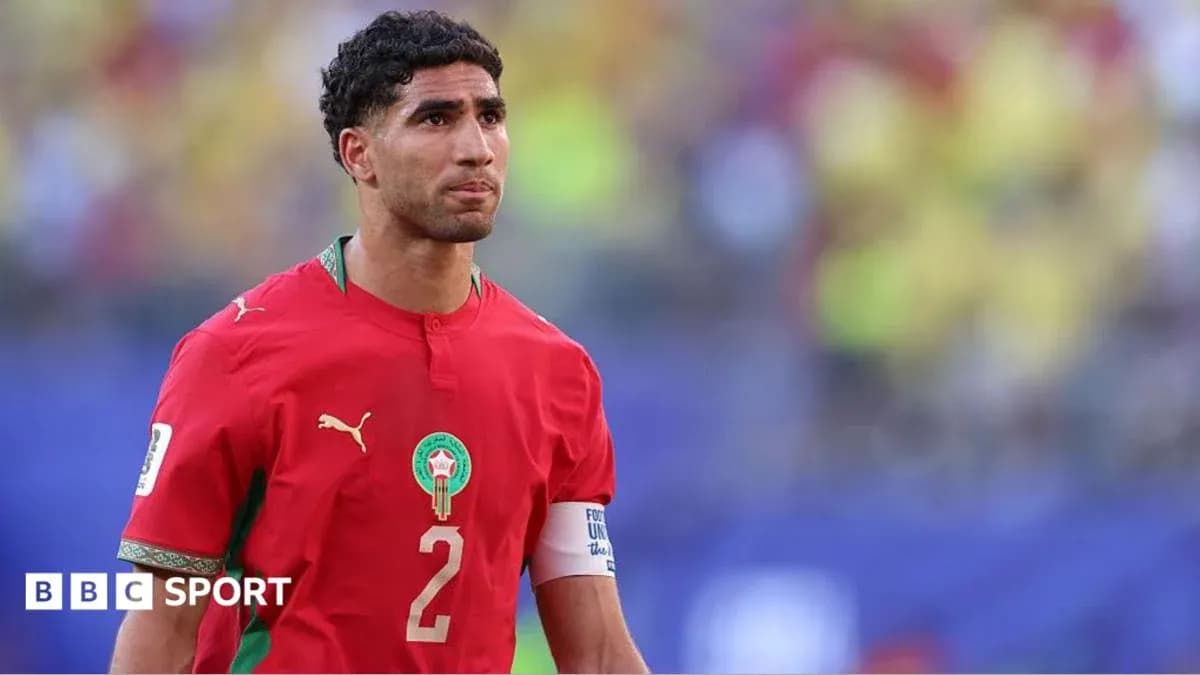
Achraf Hakimi Faces Rape Trial Amid World Cup Campaign
Achraf Hakimi, captain of Morocco and star defender for Paris St-Germain, has been ordered to stand trial for rape in France, casting a stark shadow over his World Cup campaign.
French prosecutors in Nanterre, on the western edge of Paris, confirmed that the 27-year-old will face trial over allegations he raped a 24-year-old woman at his home in 2023. A preliminary investigation began in March of that year, and an investigating judge ruled in February 2026 that the case should go to trial.
French media report that Hakimi recently failed in an appeal to have the case thrown out.
Hakimi breaks his silence
Hakimi, who has consistently denied the accusations, chose the eve of Morocco’s second World Cup fixture – against Scotland on Friday (23:00 BST) – to speak publicly in striking terms.
"The justice system looked me in the eye and said, 'If you weren't famous, there would never have been a case,'" he wrote on social media on Friday.
"I chose to remain silent for years. I believed that maintaining my dignity, being patient, and trusting in the justice system would allow the right decisions to be made.
"Today, a story that isn't mine is being told at the expense of my family, my life, and above all, the truth. I sometimes feel like I've become an easy target.
"I've been waiting for this trial since day one. And now I'm eagerly awaiting it. Finally, I'll be able to speak."
No date has yet been set for the start of the trial, but the legal battle now looms over one of African football’s most recognisable figures.
Plaintiff welcomes decision
On the other side of the case, the woman who made the complaint has taken the trial order as a vindication of her persistence.
Her lawyer, Rachel-Flore Pardo, said in a statement: "After more than three years of legal proceedings, and after my client was, in her view, defamed and dragged through the mud by Achraf Hakimi's defence, this decision brings her relief and hope.
"Relief that she has been heard by the justice system and will have the right to a trial.
"Hope that this trial will help other women and further weaken the wall of denial and impunity surrounding sexual violence, including in the world of men's football."
The clash of narratives is now set: a player insisting he is the target of a false story, and a complainant who believes the justice system has finally opened the door for her to be heard in full.
World Cup complications on and off the pitch
All three of Morocco's group matches at this World Cup are being played in the United States, where the squad is currently based. On the surface, that insulates Hakimi from immediate travel issues.
But the tournament format could change everything.
If Morocco progress to the knockout rounds, they could be scheduled to play in Canada or Mexico, the other co-hosts. Under Canadian rules, anyone who has "committed or been convicted of a crime" can be refused entry – a broad provision that has already had an impact on another high-profile international.
Last week, Ghana midfielder Thomas Partey missed his country’s opener against Panama after being denied entry to Canada. Partey, 32, has pleaded not guilty to seven charges of rape and one count of sexual assault relating to allegations from four different women between 2020 and 2022. He is due to stand trial next year.
For Hakimi, similar border issues could arise if Morocco’s route takes them north of the US border or south into Mexico, adding another layer of uncertainty to a tournament that should have been a showcase of his prime years.
The World Cup is spread across the three nations until the quarter-final stage, when it moves exclusively to the United States. Morocco’s path, and Hakimi’s availability, may hinge not only on results but on immigration decisions far from the pitch.
A career under scrutiny
Hakimi’s football story has, until now, been one of relentless ascent.
He made his Morocco debut in 2016 at just 17 and has since earned 97 caps, becoming the heartbeat of a generation that rewrote history in Qatar in 2022. His surging runs and composure under pressure helped Morocco become the first African nation to reach a World Cup semi-final, a run that electrified a continent and turned him into a global star.
At club level, his move from Inter Milan to Paris St-Germain in 2021 cemented his status among Europe’s elite full-backs. He has collected 13 trophies with the French champions, including back-to-back Champions League titles over the past two seasons, a haul that would place him in the conversation for any major individual honour.
Now, the spotlight that once shone almost exclusively on his footballing brilliance is split. On one side, the captain leading his country into another World Cup, carrying the hopes of a nation. On the other, a looming trial in France that will define how his name is remembered far beyond the touchline.
The next time Hakimi walks out in a Morocco shirt, the roar inside the stadium will collide with the noise from a courtroom he has yet to enter. How long can those two worlds remain separate?




