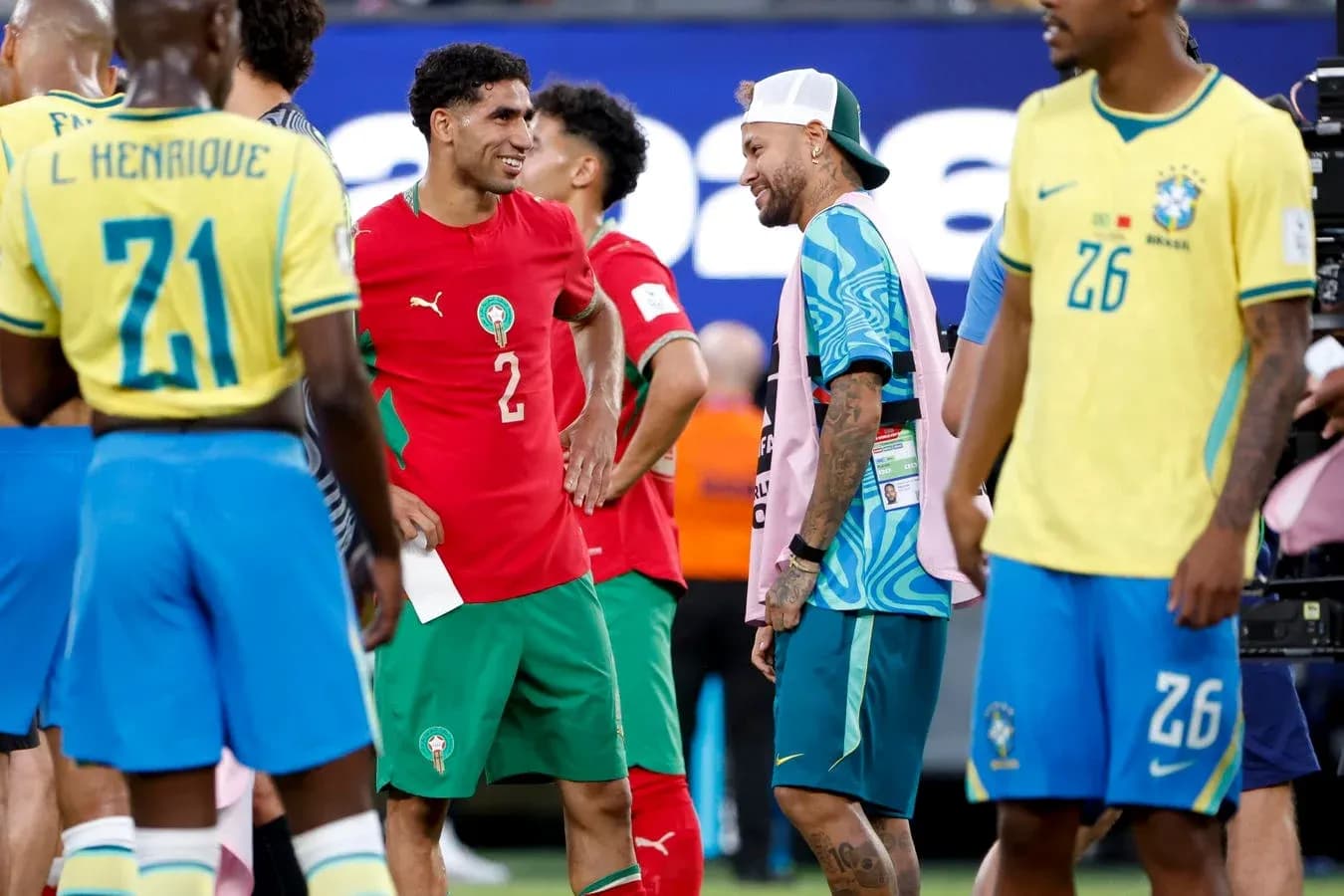
Neymar and Pulisic Injury Concerns Cloud World Cup Campaigns
The World Cup was supposed to be their stage again. Instead, two of the tournament’s marquee attackers are watching the clock and the treatment table.
Brazil’s 34-year-old talisman Neymar has already been scratched from the Seleção’s next Group C match against Haiti, still hampered by a right calf injury. On the other side of the bracket, U.S. star Christian Pulisic is fighting his own calf problem and faces a race against time to be fit for the United States’ Group D clash with Australia.
Two superstars. Two calves. One big question: when do they get back on the pitch?
Neymar Held Back As Brazil Walks Injury Tightrope
Neymar’s latest setback dates back to May 17, when he injured his right calf playing for Santos. He has been out for a month, and while there have been flickers of progress—individual work on the sideline on Tuesday, a brief session with teammates on Wednesday—he still hasn’t kicked a ball in this World Cup.
Brazil have already made the first hard call: no Neymar against Haiti.
Behind the scenes, the debate runs deeper. There is a real possibility Brazil keep him out for the entire group stage, gambling that he will be fresher and sharper for the knockout rounds. That is, of course, if the five-time world champions actually get there.
Their margin for error is already thinner than expected. A 1-1 draw with Morocco on Saturday has turned the remaining Group C fixtures into something far more serious than gentle warm-ups. Haiti on Friday, Scotland on June 24: these are now tests of nerve as much as talent.
All this comes after a brutal spell for Neymar in the famous yellow shirt. He has not played for Brazil’s senior national team since October 17, 2023, when he tore the anterior cruciate ligament and meniscus in his left knee during a South American World Cup qualifier against Uruguay. That injury ripped a hole in Brazil’s plans; this calf strain is threatening to do the same, just as the World Cup spotlight returns.
For now, the cameras keep catching him in training gear, not in the No. 10. Brazil must decide how much risk they can stomach with a player whose genius is matched only by his medical file.
Pulisic Feeling The Strain After Flying Start
Pulisic’s story is shorter, but just as pivotal for his country.
The 27-year-old initially injured his left calf in training last week. He then aggravated the problem in the USMNT’s World Cup opener, a statement 4-1 win over Paraguay that should have set the tone for a confident group campaign. Instead, it raised alarm bells.
Pulisic was forced off by halftime, his night cut short as the U.S. cruised without him on the scoreboard but not, crucially, in their long-term plans. His status for Friday’s meeting with Australia remains unclear.
Without their main attacking reference point, the U.S. lose more than goals. They lose the player who drags defenders out of position, who draws fouls in dangerous areas, who sets the tempo in transition. One match without him is a test. A group stage without him would be something else entirely.
The medical updates are cautious. The timeline is tight. The stakes are obvious.
Inside The Injury: Strains, Degrees And Timelines
Strip away the star names and the problem is brutally simple: both players are dealing with calf strains—pulled calf muscles that can turn a sprint into a season’s turning point.
A calf strain occurs when at least one of the calf muscles, or the tendons that anchor them to bone, is overstretched or torn. In a sport built on sudden bursts—soccer, football, call it what you like—the calf is constantly under stress. Every explosive run, every sharp change of direction, every leap starts with that push-off.
If the muscle isn’t flexible or ready for the force, it fails.
The severity of a strain is usually graded in three degrees:
- First-degree (mild): Less than five percent of the muscle mass is affected. Painful, but often manageable. Players can sometimes return within one to three weeks, especially when a World Cup looms and every day is maximized.
- Second-degree (moderate): A larger portion of the muscle is damaged, but it’s not a complete tear. This is reportedly what Neymar is dealing with. Recovery to full activity typically takes three to six weeks—two to three times longer than a mild strain. That’s the kind of timeline that can swallow an entire group stage.
- Third-degree (severe): A complete tear of the muscle or the muscle-tendon unit. That’s the nightmare scenario, the one that can mean months out and, often, a serious conversation about surgery.
Surgery is rarely needed unless the damage is at that third-degree level. For most calf strains, the treatment is far more familiar: rest, ice, compression, elevation.
Stop the activity. Cool the muscle with ice for about 20 minutes at a time every couple of hours. Wrap the calf to limit swelling and fluid build-up. Keep the leg elevated above the heart to help that fluid drain away. It’s basic, it’s methodical, and it’s the slow grind that decides whether a player can explode off the mark again without fear.
World Cup Stakes For Two Nations
So both Brazil and the United States wait.
They wait to see when Neymar can move from solo drills to full contact without that sharp reminder in his right calf. They wait to see if Pulisic can push off his left leg, accelerate into space, and trust that the muscle will hold.
Brazil, with five stars on the shirt and a fanbase that demands a sixth, are weighing caution against desperation. The U.S., building a generation around Pulisic’s influence, are trying to ensure this World Cup doesn’t tilt away from them before the knockout rounds even begin.
Two calves. Two campaigns in the balance.
The next scan, the next training session, the next decision—those might define how far Brazil and the U.S. really go.