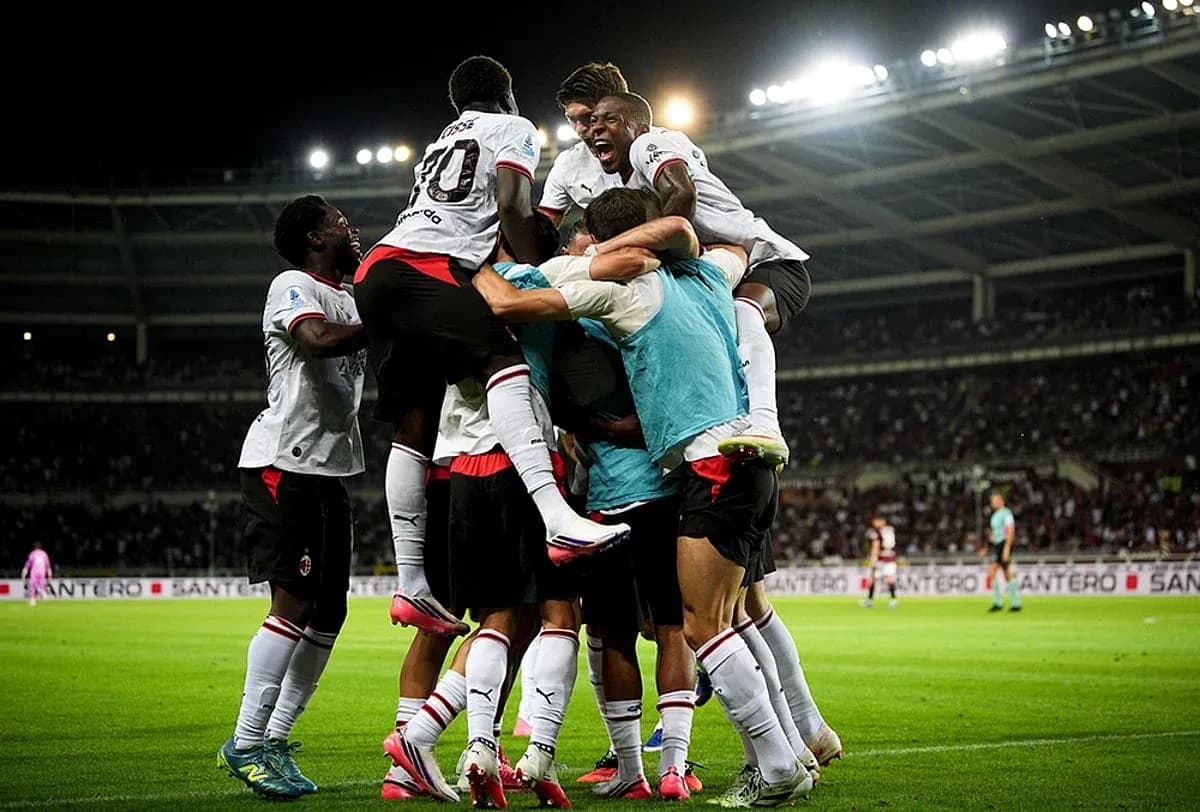
AC Milan Triumphs Over Torino in Serie A Opener
On a warm Turin evening at the Stadio Olimpico Grande Torino, Serie A’s new season opened with a tactical mirror: Torino and AC Milan both stepping into a 3-4-2-1, both trying to define their identity from the first whistle. By full time, the symmetry of the systems had given way to the ruthlessness of the visitors. AC Milan left with a 2–1 win, three points, and an early statement of intent; Torino were left with a narrow defeat and a clear sense of where their evolving project must sharpen.
Following this result, the table tells a simple story. Torino sit 13th with 0 points, their overall goal difference at -1 after scoring 1 and conceding 2 in total. At home they have identical numbers: 1 goal for, 2 against, 0 points. AC Milan, by contrast, emerge from Round 1 in 5th place with 3 points and an overall goal difference of +1, built entirely away from home with 2 goals scored and 1 conceded on their travels. It is only one match, but the early patterns are already visible.
Team Lineups
Ignazio Abate’s Torino lined up in a back three of S. Coco, A. Ismajli and P. Comuzzo in front of D. Mascardi. The structure was clear: a compact, fairly conservative defensive line, with width and energy coming from M. Pedersen and A. Cacciamani in the wide midfield roles. Inside them, G. Gineitis and K. Fitz-Jim formed the double pivot, tasked with both screening and progressing play. Ahead, the trio of N. Vlasic, C. Casadei and G. Simeone provided a blend of creativity between the lines and penalty-box presence.
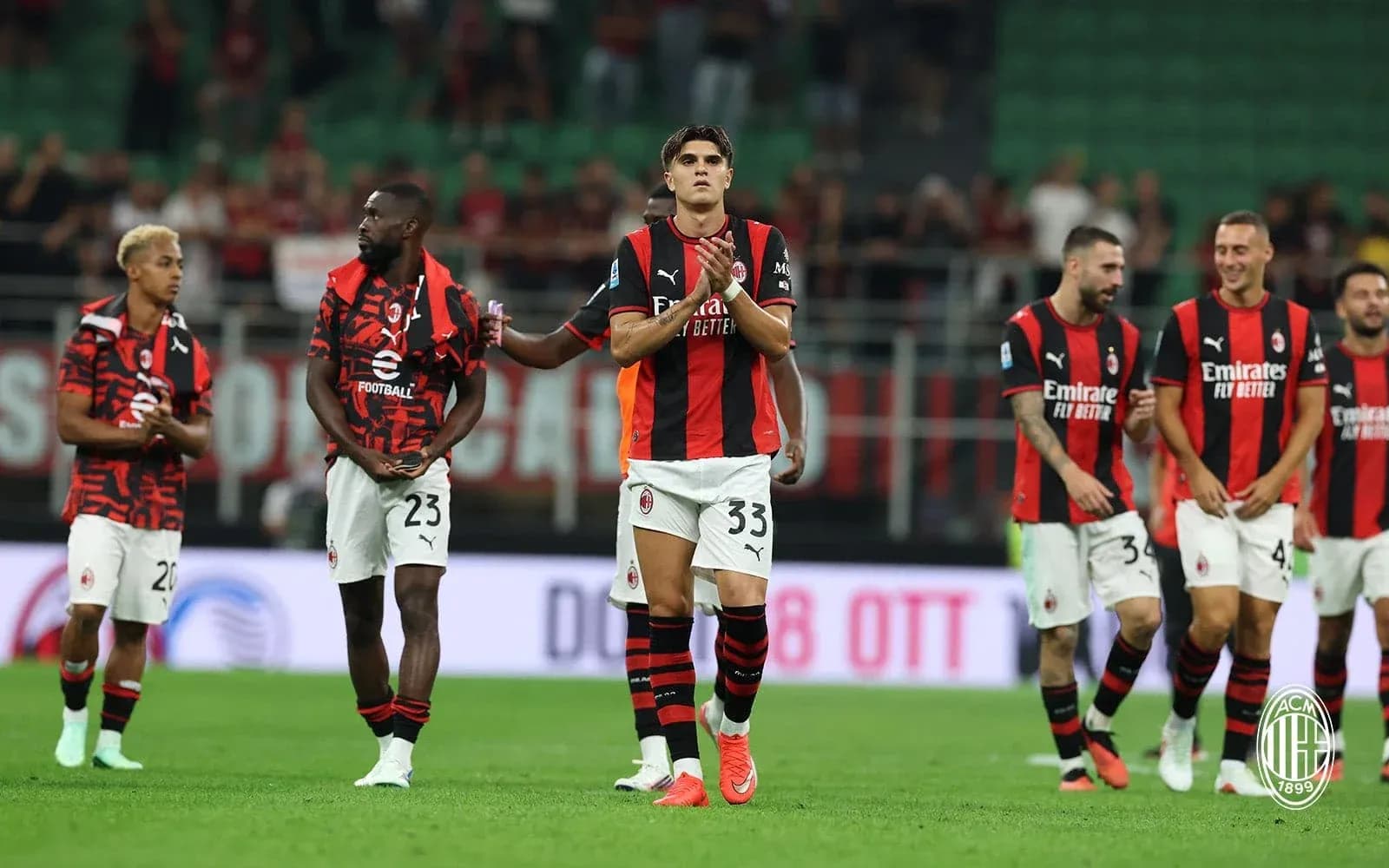
Ruben Amorim’s Milan mirrored the shape but not the intent. With M. Maignan behind a back three of M. Gila, K. De Winter and S. Pavlovic, Milan built from a stable base. The wing corridors belonged to P. Estupinan and S. Chukwueze, the latter effectively a wide playmaker from the right, while Y. Musah and A. Jashari patrolled the central lanes. R. Loftus-Cheek and A. Cisse floated as hybrid forwards behind G. Ramos, constantly looking to exploit the half-spaces.
Absentees Impact
The absentees framed the tactical choices. Torino were without F. Anjorin (hip injury), E. Comert (suspended after a red card), F. Israel (shoulder injury) and P. Pellegri (knee injury). The missing Comert, in particular, shaped the back line: Abate had to trust the relatively young Comuzzo and the versatile Coco to manage Milan’s movement. Higher up, the absence of Anjorin and Pellegri reduced Torino’s options between the lines and in pure striking depth, placing more creative responsibility on Vlasic and Casadei and more finishing burden on Simeone.
Milan’s list of missing stars was even more eye-catching. Y. Fofana, S. Gimenez, R. Leao, C. Nkunku and F. Tomori all missed the fixture through a mix of injuries and inactivity. That forced Amorim into a more collective, less star-driven attacking structure. Without Leao’s explosiveness or Nkunku’s improvisation, the creative burden shifted onto Chukwueze and Loftus-Cheek, with A. Cisse asked to be both runner and finisher. The absence of Tomori meant the new-look trio of Gila, De Winter and Pavlovic had to gel quickly under pressure.
Discipline and Tactical Dynamics
Discipline also told its own story. Across the league data so far, Milan’s only recorded yellow card in this young season came between 46–60 minutes, a phase that aligns with Loftus-Cheek’s profile as both a physical presence and a magnet for duels. He already appears in the disciplinary charts with 1 yellow card, underscoring how his role at the edge of the press can tilt into risk. Torino, by contrast, have no yellow or red card distribution recorded yet this season, reflecting a side that, at least statistically, is not yet overstepping the line—even as they miss Comert through a previous dismissal.
Within this framework, the “Hunter vs Shield” dynamic is already emerging. For Milan, A. Cisse and A. Rabiot share early billing as finishers: Cisse has 1 goal from 3 shots and a strong 7.9 rating, while Rabiot, in just 34 minutes, delivered 1 goal and 1 assist, hitting the target with his only shot. Chukwueze, meanwhile, has already crafted 1 assist from 4 key passes and 2 shots, shaping up as the primary supply line from the right.
Torino’s response lies in their own budding weapons. C. Adams, coming from the bench, has 1 goal from 1 shot and a 7.2 rating, immediately inserting himself into the conversation as a decisive impact option. Gineitis, with 1 assist, 30 completed passes at 86% accuracy and 3 duels won from 3, has quietly become the metronome in midfield, also blocking 1 shot in his defensive work. These profiles suggest that Torino’s “hunter” may not be a pure number nine alone, but a combination of Adams’ finishing and the supply lines from Gineitis and Vlasic.
Engine Room Duel
In the “Engine Room” duel, the contrast is sharp. For Milan, Rabiot and Musah offer verticality and ball-carrying, while Jashari provides balance. Rabiot’s 12 passes, 1 key pass and 1 assist in limited minutes show how efficiently he can tilt games when introduced. Musah’s presence as a box-to-box shuttler gives Milan the legs to sustain Amorim’s aggressive press and quick transitions.
Torino answer with Gineitis and Fitz-Jim. Gineitis’ all-round contribution—passing security, duel dominance and defensive blocking—hints at a midfielder capable of both protecting the back three and feeding the advanced trio. Fitz-Jim’s role, while less statistically defined so far, is to complement that by breaking lines and supporting Casadei and Vlasic between the lines. If Torino are to climb from 13th, this central pairing must become the stabilising axis around which Abate’s system turns.
Defensive Statistics
Defensively, the numbers are blunt. Overall, Torino have conceded 2 goals from 1 match, both at home, for an average of 2.0 goals against per home game and in total. Milan, on the other hand, have allowed just 1 goal in total, all away, for an average of 1.0 goal conceded on their travels. The goal difference math is straightforward: Torino at -1 (1 scored, 2 conceded), Milan at +1 (2 scored, 1 conceded). Clean sheets are still absent for both sides, but Milan’s away defensive record—1 goal against in 90 minutes—already looks more robust than Torino’s home resistance.
From a statistical prognosis standpoint, even without explicit xG values, the contours are clear. Milan’s overall scoring rate of 2.0 goals per match and their away average of 2.0 suggest an attack that, despite missing marquee names, is already efficient and varied. Torino, with 1.0 goal per home game and overall, are not blunt, but their margin for error is slimmer given the 2.0 goals they concede on average at home.
Tactical Intersection
The tactical intersection is likely to revolve around Milan’s right side and Torino’s left defensive channel. Chukwueze’s blend of 4 key passes, 2 shots and 1 successful dribble points to a persistent threat in the 1v1 and in early deliveries. That places heavy responsibility on Coco and Pedersen to manage those overloads, while Gineitis must slide across to plug the half-space. On the other flank, Estupinan’s presence will test Cacciamani’s defensive concentration and transition speed.
For Torino, the counter-punch lies in how they use Adams and Simeone. Adams’ clinical cameo suggests that late-game introductions, when opposition lines stretch, could become a pattern. Simeone’s movement, combined with Casadei and Vlasic finding pockets between Milan’s midfield and back three, offers a route to destabilise even a disciplined block like Gila–De Winter–Pavlovic.
Following this result, the early verdict is that Milan are already closer to their competitive ceiling: a compact, physically strong side with multiple scorers and creators, even without their headline names. Torino, though defeated, showed enough structure and individual flashes—especially from Gineitis and Adams—to suggest that their 3-4-2-1 can grow into a coherent, dangerous unit. The numbers underline the gap; the performance hints that it may yet narrow as Abate’s project matures.