2026 World Cup: A Tournament of Excess and Anticipation
The World Cup that wouldn’t stop growing is finally here.
In less than 12 hours, the 2026 tournament kicks off with Mexico against South Africa at 8pm, the opening act in a marathon of 104 games that will stretch from curiosity to overload. It could be the boldest World Cup ever staged. It could be the most bloated. It will not be forgettable.
A swollen giant of a tournament
Forty-eight teams. Twelve groups. Two-thirds of the field guaranteed a place in the knockouts. This is football’s biggest show, re-cut for the streaming era: endless content, not all of it must-watch.
There will be nights when it crackles. Germany against Curacao on Sunday, Spain facing Cape Verde on Monday – on paper, they look less like contests and more like target practice. Qatar v Switzerland and Uzbekistan v Colombia are unlikely to stop traffic outside their own borders. The early stages feel padded, the jeopardy dialled down.
The format makes that inevitable. The top two in each group go through, along with the eight best third-placed sides. A team can lose twice and still stumble into the round of 32. That might be a comfort to the sponsors and the traditional powers, but it strips away some of the edge that defined previous group stages.
Ireland fans know all about sneaking through. Their Italia 90 feat – reaching the knockouts without winning a game – suddenly doesn’t look so unique. This time, it might not even be a curiosity. It could be a trend.
So the real tension, the kind that tightens stomachs and shreds nerves, may not arrive until the last 32. For the giants, this extended warm-up is a safety net. For the spectacle, it’s a risk.
Heat, fatigue and the long road
The demands on players are brutal. Eight games for those who go all the way, tacked onto the end of another punishing club season. The calendar leaves no room for romance; it’s all about load management.
FIFA has already built in hydration breaks at the 22nd and 67th minutes of every match. Day games lean towards air-conditioned stadiums. Even so, cities like Miami, Houston, Guadalajara and Mexico City will test lungs and legs as temperatures climb in June and July.
On paper, that should tilt the balance towards Spain, Brazil, Argentina and Mexico – nations more accustomed to playing in oppressive heat. In practice, it may simply reward the deepest squads and the shrewdest rotation.
Expect stars to be wrapped in cotton wool early on. Lionel Messi, Neymar, Lamine Yamal, Bukayo Saka, Nico Williams – names that sell the tournament – are more likely to be carefully rationed than flogged from the first whistle. The group stage becomes a chessboard: rest here, risk there, survive, then strike.
Spain lead the chase
Spain arrive as bookmakers’ favourites and reigning European champions, with a squad that looks built for this kind of grind. Their midfield options would make most coaches envious. They can control games, slow the tempo, suffocate opponents and conserve energy.
Yet even they have a question mark. Yamal’s hamstring problem hangs over their start. His availability for the group stage is uncertain, but the format gives Spain the luxury of patience. They don’t need to rush him. They can ease him in, then unleash him when the stakes rise.
If Spain are the benchmark, France are the looming shadow just behind them.
Deschamps’ last dance
Les Bleus bring a squad that can terrify anyone. Kylian Mbappe, Ousmane Dembele, Michael Olise, Desire Doue – pace, flair and incision across the front. Add the depth that carried them to back-to-back finals and you have a team that expects to be playing at the sharp end again.
This is Didier Deschamps’ final tournament in charge. He leaves having already delivered a World Cup and a runners-up finish. One more step, one more trophy, and his era ends on a note that would be hard to match.
If both France and Spain win their groups, they can only meet in the semi-finals. As potential showdowns go, that one already feels like a date the tournament is quietly moving towards.
England roll the dice
Then there is England, still nursing the bruise of their Euro 2024 final defeat to Spain but arriving with something unfamiliar: conviction.
Thomas Tuchel has replaced Gareth Southgate and with him has gone the cautious, often joyless approach that defined so many England nights. In its place: a more fluid, high-intensity game that demands bravery on and off the ball.
Tuchel has not tiptoed into the job. He has left Phil Foden, Cole Palmer and Trent Alexander-Arnold at home, choosing players he believes fit his system over those whose names dominate shirt sales. It’s a ruthless call. If England falter, those omissions will be dragged out as evidence. If they fly, it will be the moment the old deference to star power finally died.
For now, England travel with a plan, a manager unafraid of the fallout, and the sense that they are closer than ever to turning “years of hurt” from a slogan into a memory.
South American royalty under scrutiny
Brazil and Argentina arrive as ever-presents in the conversation, but neither comes in untouched by doubt.
Carlo Ancelotti now leads Brazil, a coach whose calm authority and tactical clarity are beyond dispute. He has Vinicius, Raphinha, Marquinhos and a back line with genuine quality. He does not yet have a midfield that convinces in the same way. Qualification was stuttering, the aura slightly dimmed. This is still Brazil, still the Selecao, but not quite the irresistible force of old.
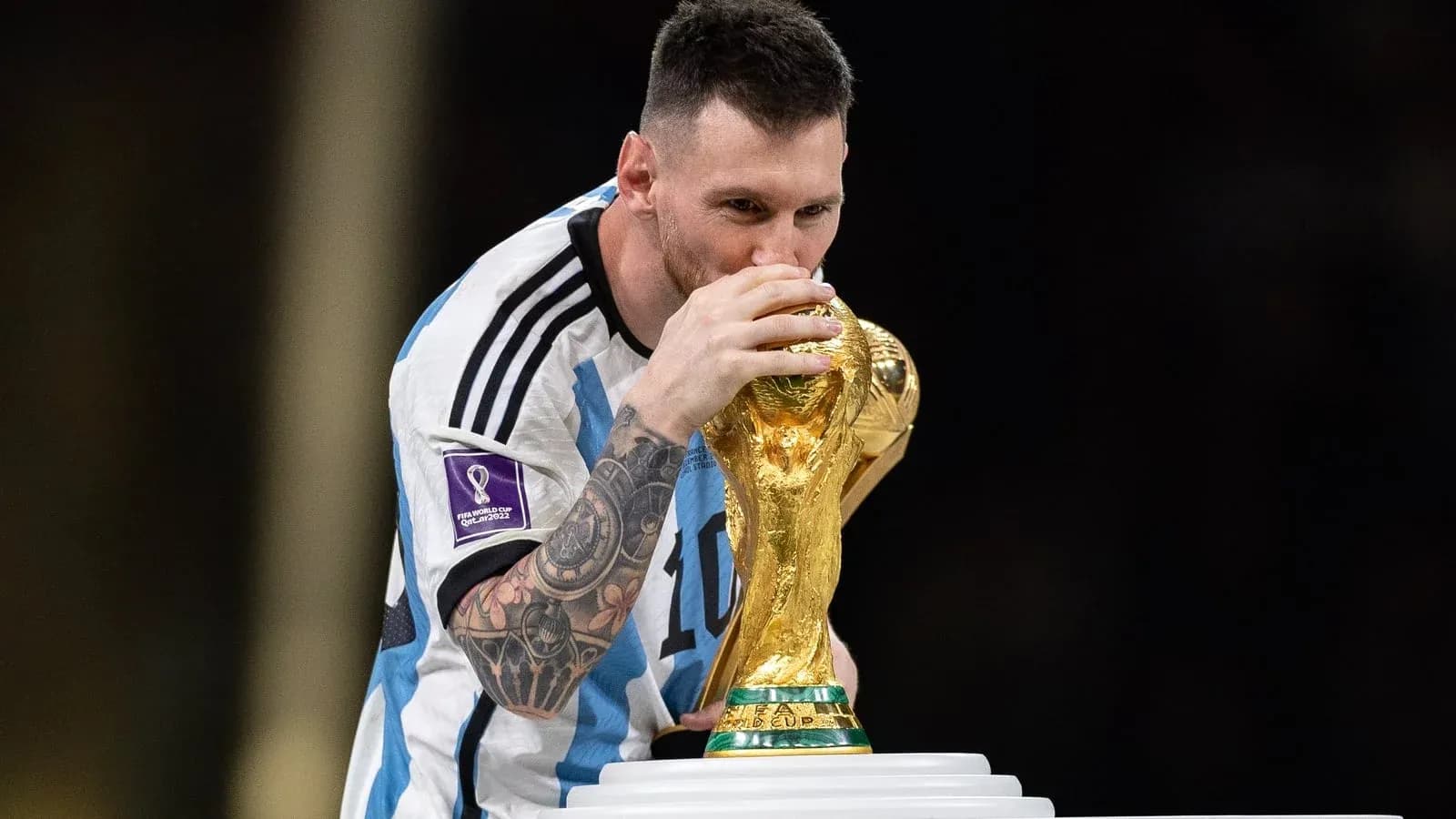
Argentina’s questions are different, and more romantic. They are defending champions, chasing what no one has achieved since Brazil in 1962: back-to-back World Cups. At the heart of it all, still, is Messi.
Now 38, he is stretching his prime into something that feels almost supernatural. Yet the reality of time cannot be wished away. How often can he summon it? How much can he still carry? Argentina’s ceiling may rest on his ability to turn back the clock one more time.
The lurking threats
The old line about never writing off Germany still holds. Under Julian Nagelsmann, they have structure, energy and a manager unafraid to reshape tradition. They may not come in as the bookmakers’ darlings, but they never really need to.
Around them, the field is dotted with danger. Colombia, Senegal, Morocco – all have the talent and cohesion to ambush a heavyweight. For them, the expanded format cuts both ways: a longer road, but more room to build momentum and belief.
Cristiano Ronaldo’s Portugal sit in that same cluster of contenders with a twist. For their captain, this is the last chance to claim the one major trophy missing from his career. Whether that subplot lifts Portugal or weighs them down is another story waiting to be written.
A tournament that asks a lot
For fans, especially those watching from awkward time zones, this World Cup is a test of endurance as much as devotion. Irish supporters face late nights and bleary mornings: Brazil v Morocco kicks off at 11pm on Saturday, Argentina start their defence at 2am on a Wednesday. Alarm clocks and coffee will become unofficial sponsors.
The stadium experience will also demand patience. Heat, travel, sprawling schedules – this is not a compact festival of football but a continental trawl.
Yet for all the caveats, the questions and the compromises, the game itself still holds the power to cut through. A Messi surge, a Mbappe sprint, a Yamal moment of audacity, an underdog’s late winner – those are the snapshots that justify the excess.
On 19 July, when the last of the 104 matches finally ends and the trophy is lifted, one question will linger over this vast experiment: did the football make it all worthwhile?