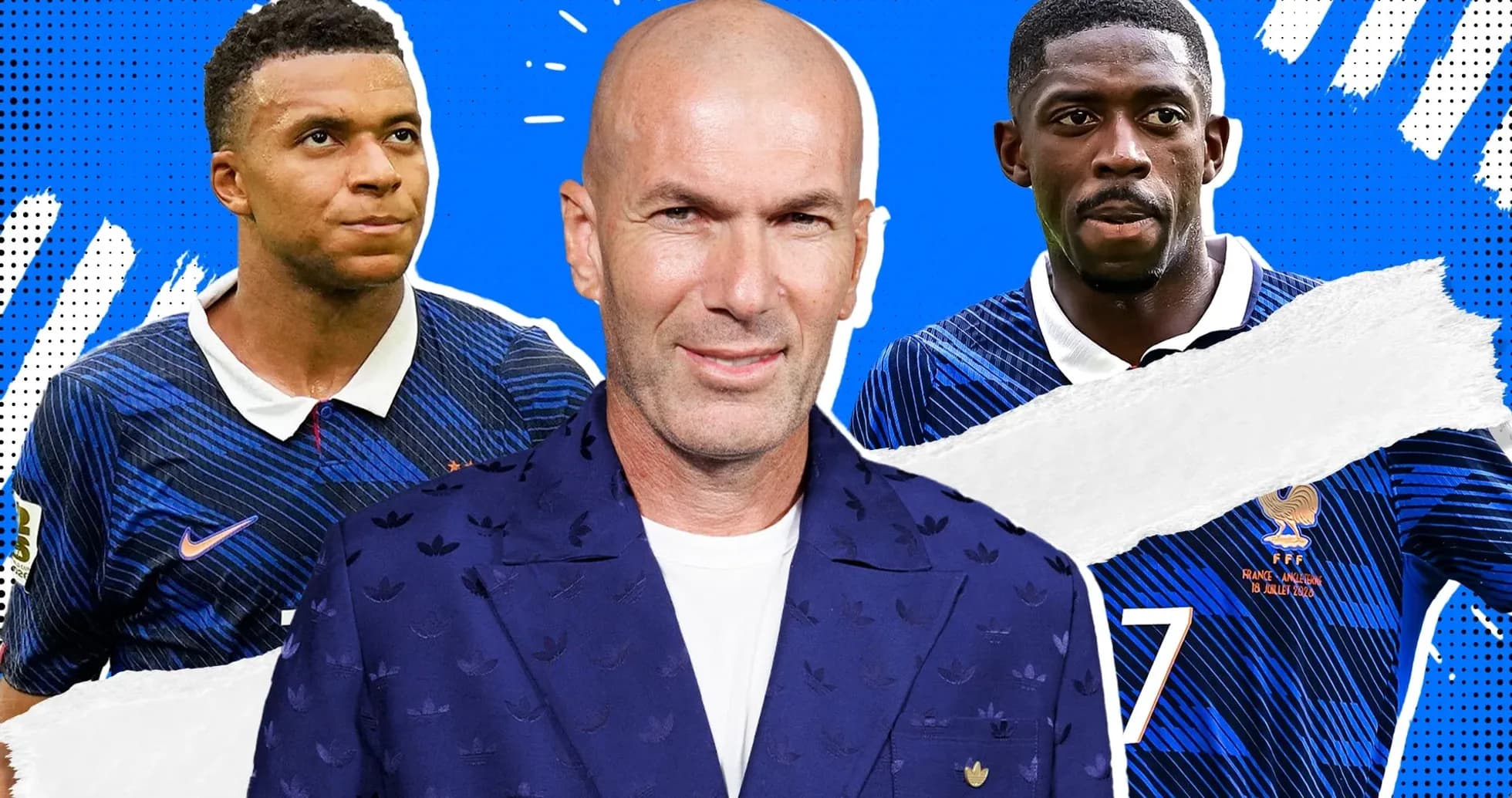
Zinedine Zidane Returns as Head Coach of France
Zinedine Zidane comes home. Not to Turin, not to Madrid, but to the one shirt he has always called “the greatest”: France.
After years of waiting, speculation and polite denials, the French Football Federation finally made it official on Tuesday morning. Zidane replaces his former team-mate Didier Deschamps as head coach of Les Bleus, ending a 14-year reign and beginning one of the most intriguing managerial chapters in international football.
The end of an era, the start of another
Deschamps leaves behind a giant footprint. A World Cup winner as captain in 1998, he returned as manager to lift the trophy again in 2018 and took France to multiple finals, restoring both results and reputation after the chaos of the late 2000s. Fourteen years at the helm, two World Cup finals, a European Championship final, and a team re-established as a global benchmark.
Philippe Diallo, president of the French Football Federation, framed the moment with a mixture of gratitude and anticipation. He called it “an exceptional moment,” stressing how rare it is for the federation to appoint a new head coach and paying tribute to Deschamps for taking France “to the top” and restoring the image of Les Bleus.
Now the torch passes to a man whose mere presence changes the temperature of a room.
Zidane’s return from the shadows
Zidane has been out of the dugout since leaving Real Madrid in 2021. Five years without a team, five years of rumours. Every vacancy at an elite club or major national side seemed to come with his name attached. Yet he stayed still, waiting.
On Tuesday, he explained why.
He spoke of “a great source of pride” in taking the job. He repeated, as he has for years, that “there’s nothing greater than the French national team.” This, he made clear, was not just another step in a glittering career. This was the job.
Zidane revealed that he had turned down several offers during his hiatus because he was holding out for France. The only thing that truly motivated him after Madrid, he said, was the chance to work for his country again, to see this team “continue to win.”
He thanked Diallo, the executive committee and the federation, and he did not forget Deschamps, acknowledging the 14 years of work done by the outgoing coach and his staff. He also nodded to the managers who shaped him, saying he had “a special thought” for all his coaches, and made no attempt to hide his ambition for what comes next.
“I am truly happy. I am ready for the challenge, it motivates me,” he said. The words were calm. The intent behind them was anything but.
From icon on the pitch to giant in the dugout
If any figure can step into a role this big without being swallowed by its history, it is Zidane.
As a player, he defined a generation. World Cup winner with France in 1998. Ballon d’Or in the same year. The man of the final in Paris, the face of a multicultural team that reshaped the country’s sporting identity.
As a manager, his record at Real Madrid speaks with the same authority. Three consecutive Champions League titles. Two La Liga crowns. Two UEFA Super Cups. Two Club World Cup trophies. In an era of hyper-competition at the top of European football, Zidane built a side that not only won, but dominated.
That is the pedigree France are buying into. Not nostalgia. Not sentiment. Cold, hard success.
A familiar shirt, a new responsibility
Zidane’s relationship with the French national team runs far deeper than a famous volley in a World Cup final or a red card in Berlin. He grew up in the youth teams, climbed every rung, and reached the pinnacle as a player. Now he returns at the summit again, this time with a clipboard instead of the No10 on his back.
“It’s also a responsibility,” he admitted, underlining the weight of the role. He spoke of starting in the youth ranks and going “through every stage until reaching the senior national team, the pinnacle.” That journey now repeats itself in a different form.
He will not be given a gentle introduction. France remain one of the strongest squads on the planet, but they arrive at this turning point on the back of a World Cup semi-final exit. The expectation is simple and ruthless: win. Compete for every trophy. Do it with authority.
Zidane has never shied away from that kind of demand. At Madrid, he walked into a dressing room full of egos, legends and Ballon d’Or winners and turned it into a machine. With France, the dynamic is similar, but the stakes are more emotional. This is not just a club. This is the country.
Eyes on Euro 2028
The new coach will now begin preparing for Euro 2028, to be held in the UK and Ireland. That tournament becomes his first major benchmark, the first chance to put a stamp on a team already packed with stars and scarred by near-misses and glorious runs.
The blueprint is not yet public. The expectations are. France do not hire Zidane to rebuild from rubble; they hire him to elevate an already elite side, to turn consistency into domination.
Deschamps restored the image of Les Bleus and brought them back to the summit. Zidane’s task is different, and in some ways even harsher: keep them there, and push them further.
He has waited five years for this. He has turned down the world for this. Now the job he always wanted is his.
The only question left is whether the man who once carried France on his shoulders can do it again from the touchline.