
World Cup Drama: Storms, Historic Wins, and Political Tensions
The World Cup caravan rolled across North America on Sunday with a little bit of everything: lightning threats in Philadelphia, political tension in Los Angeles, a historic night for Egypt in Vancouver and Uruguay dragged into a dogfight by debutants Cape Verde. Even England found themselves at the centre of a storm over a banned flag before a ball was kicked in Boston.
This tournament is starting to snarl.
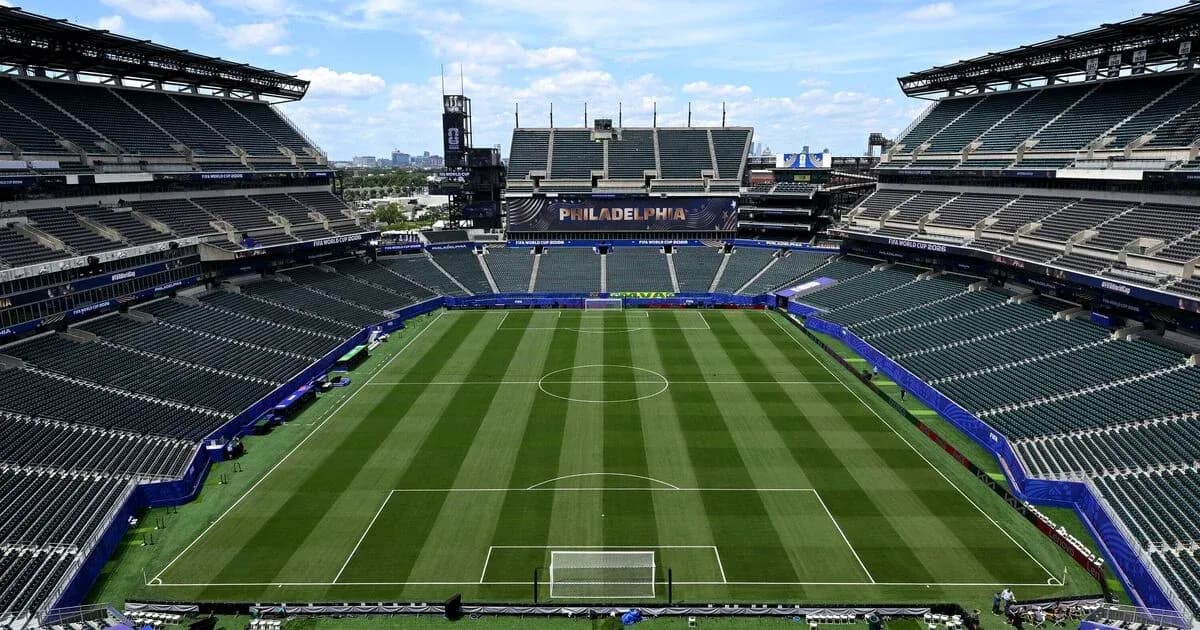
Storms threaten France–Iraq in Philadelphia
France’s late kick-off against Iraq in Philadelphia is under a very real cloud. Local forecasts are warning of “apocalyptic” conditions, with several severe thunderstorms expected, intense lightning, damaging winds and even the risk of isolated tornadoes.
Under FIFA regulations, a single lightning strike within eight miles of the stadium will stop everything. Players off. Fans off. Silence.
“They'll start to evacuate the stadium to the main concourse and seek emergency shelter,” explained Lauren Lambrugo, chief operating officer of Philadelphia Soccer 2026. “And then it has to wait 30 minutes prior to them bringing everybody back on the field.”
If the storm lingers, so will the delay. The match is at serious risk of disruption, and even postponement is on the table if conditions turn as ugly as predicted.
Salah drags Egypt into World Cup history
In Vancouver, the night belonged to Mohamed Salah and a country that had waited far too long for this feeling.
Egypt, without a World Cup win in their history, trailed New Zealand at half-time after Finn Surman’s towering header. It was the sort of goal coaches use in tutorials: lose the marker, rise highest, bury the corner. Egypt looked flat. Salah had come closest with a free-kick that curled wide, but the script was not following the star.
Then the second half started, and Egypt tore it up.
Ziko struck first, levelling as the pressure finally told. From the moment New Zealand scored, the game had tilted towards the Pharaohs; now the scoreline matched the pattern. One-way traffic, and the dam finally broke.
Then came the inevitable. Salah, still searching for his first goal of the tournament, played a sharp one-two on the edge of the box and drilled low. New Zealand’s resistance snapped. Egypt, suddenly, were in the driving seat, surging towards that elusive first win.
Trezeguet finished the job, making it 3-1 and turning a nervy evening into joyous chaos. “Joyous scenes,” as the on-the-whistle report put it, barely covered it. This was a nation stepping through a door it had been rattling for decades.
Later, footage emerged of Salah in the streets of Vancouver, singing and dancing with fans. No stage, no studio lights. Just a superstar folding himself into a crowd that finally had a World Cup win to celebrate.
Cape Verde refuse to blink against Uruguay
In Miami, another underdog refused to bow. Cape Verde’s debut campaign has become one of the tournament’s gripping subplots, and their 2-2 draw with Uruguay only deepened the intrigue.
Kevin Pina lit the fuse with a ferocious free-kick from around 30 yards, a laser that screamed into the net and stunned Uruguay. It was the sort of strike that stops conversations in the stands.
The South Americans responded with the fury of a wounded heavyweight. A ball into the box was nodded against the post and rebounded to Araujo, who threw himself into a diving header to equalise. Cape Verde complained, pointing to a player down with cramp, but the referee was unmoved.
Moments later, Uruguay flipped the scoreline. A deep cross, Araujo again involved, heading across the six-yard box, and Canobbio tucked it away. Quickfire double. Stadium roaring. Order, it seemed, restored.
Cape Verde had other ideas.
Helio Varela came off the bench and, three minutes later, punished a catastrophic misjudgement from Fernando Muslera. The veteran goalkeeper got caught in no man’s land, Varela pounced and rolled the ball into an empty net. Uruguay had “shot themselves in the foot,” as the live text put it, and Cape Verde had another historic moment.
The 2-2 final score leaves Marcelo Bielsa under pressure. Two draws, no wins, and a fractured camp by local reports. With Spain up next, Uruguay might need a performance of the old, snarling kind. Cape Verde, meanwhile, know that a win over Saudi Arabia would send them through. From debutants to disruptors in the space of a week.
Spain wake up, Yamal delivers
In Atlanta, Spain finally looked like European champions again.
After a flat 0-0 draw against Cape Verde in their opener, they tore into Saudi Arabia from the first whistle. Lamine Yamal, restored to the starting XI, changed the entire mood. Spain “look SO much better with Yamal in the side,” came the verdict, and the teenager backed that up with his first World Cup goal.
Mikel Oyarzabal whipped a teasing ball across the box; Yamal arrived on cue to tap in. One-nil, and the tension from that opening draw evaporated.
Oyarzabal then took centre stage. First, he turned provider. Then he turned finisher, adding Spain’s second and third before the first hydration break. Two goals, one assist, and a total transformation from his “woeful” display against Cape Verde.
By half-time it was 3-0, Spain cruising, the early flurry giving them the luxury of easing through the gears. A fourth arrived in the second half when Marc Cucurella’s shot was turned into his own net by Hassan Al Tambakti – the eighth own goal of these finals.
Spain even had a fifth chalked off after a long VAR check ruled Ferran Torres offside. It barely mattered. They “didn't really have to get out of third gear,” and now have one foot in the knockouts.
Afterwards, Yamal reflected on his moment with DAZN: being at a World Cup, scoring on his first start, and remembering how he watched the last tournament in class at school. The generational baton has moved.
Belgium and Iran grind to a halt in LA
Los Angeles hosted one of the tournament’s least inspiring contests, and Roy Keane did not bother to sugar-coat it.
Belgium and Iran played out a goalless draw that left both sides on two points from two games in Group G. Iran had the ball in the net through Mehdi Taremi, but VAR ruled it out for offside. It was the sharpest moment of a drab first half.
The second period briefly flickered into life. A wild goalmouth scramble saw three Belgian players swing at the ball from close range, only for Iran’s defenders to somehow keep it out. Later, Maxim De Cuyper had a golden chance but fired straight at Alireza Beiranvand.
Then came the flashpoint. Nathan Ngoy hauled down Taremi just beyond the halfway line, with no other defender close. Denial of a goalscoring opportunity, said the referee. Red card, confirmed by VAR. Belgium, already struggling for rhythm, had to hang on with ten men.
Keane, speaking on ITV, delivered his verdict: “In terms of the quality of the game, I thought it was rubbish. Really bad.” Passing, movement, decision-making – “so poor,” he said. Hard to argue.
Belgium now face New Zealand, Iran meet Egypt. Both know that anything less than a win could be fatal.
Anthem boos and political fault lines
Away from the football, Iran’s matches continue to be shadowed by politics. The national anthem was booed for a second successive game, and captain Alireza Jahanbakhsh tried to steer the conversation back towards unity.
He spoke of playing “for all the Iranians in Iran, outside Iran, with whatever ideology, whatever preferences they have,” stressing respect for differing views and insisting the team’s job is to “put our heart on the pitch” and make people happy.
Outside the stadiums, dissenting Iranian voices see it differently. Protesters in Los Angeles have been clear that, to them, the team represents the regime, not the people. One fan told the Daily Mirror they want “the fall of the Islamic Republic” and that “that team is not our team and they don't represent us.”
The split is raw, and every Iran game is now carrying a weight far beyond group permutations.
England: injuries, curfews and a banned flag
England’s World Cup story has barely started on the pitch, but it is already busy off it.
Thomas Tuchel’s side head into Tuesday’s clash with Ghana in Boston with concerns over key players. Declan Rice remains a doubt after hobbling off in the opener against Croatia. Bukayo Saka, managing an Achilles issue, trained alone on Saturday but then completed a full session on Sunday, handing Tuchel a welcome boost. The England manager had hinted he might not risk Saka until the final group game against Panama; now that decision looks less clear-cut.
Saka insists the problem has not deteriorated, but it will need careful handling through Arsenal’s title run-in and this World Cup campaign.
Tuchel has also imposed a strict curfew on the squad. Defender Dan Burn revealed players had to leave a concert early to make it back on time, even on a friends-and-family day. Cowboy hats, boots and country music in West Palm Beach were cut short to satisfy the schedule.
The fans, meanwhile, ran into their own rulebook. An England flag featuring a submarine was blocked from entering the stadium for the opener against Croatia. FIFA’s regulations on military imagery are uncompromising, and security staff enforced them. Barrow FC, whose identity is tied to a submarine nickname, later posted a tongue-in-cheek image with the submarine blurred out.
All of it adds to the sense of a tightly controlled England camp walking a narrow line between focus and freedom.
Doku’s dilemma and a pundit’s suspension
The World Cup has also become a stage for a modern football debate: family versus duty.
Jeremy Doku, absent from Belgium’s draw with Iran due to a chest infection, has been at the centre of a storm after making clear he wants to leave the tournament early for the birth of his first child.
“It only happens once, your first child,” said England’s Ollie Watkins, speaking from his own experience as a father of two. “Welcoming them into the world is a blessing, and you don't get that opportunity (again).” He described the long periods away from family during the season and backed Doku’s right to choose. “I don't think it's anyone else's business. If he goes back and does that, that's fair enough.”
Not everyone agreed. L’Equipe presenter France Pierron launched a fierce on-air criticism, calling the World Cup a “privilege” and describing the birth of a child as a “disgusting moment” where the father is “useless… just an extra.” The backlash was immediate. She has since apologised and, according to reports in France, has been suspended.
The episode has exposed a sharp divide over what players owe club, country and family when the biggest tournament in the sport collides with the biggest moment in their personal lives.
Uruguay’s walking wounded and the road ahead
As if Uruguay did not have enough problems on the pitch, Marcelo Bielsa confirmed that Giorgian de Arrascaeta and Ronald Araujo have “no chance” of featuring in the final group game against Spain. Neither has played a minute so far and will be unavailable until at least a potential round-of-32 tie.
That “potential” is doing a lot of work. Lose to Spain, and if either Cape Verde or Saudi Arabia win their match, Uruguay will finish third on two points – a total unlikely to be enough to sneak through as one of the best third-placed sides.
The margins are brutal. The same is true across the board now. Spain are stirring, Egypt have finally broken through, Cape Verde refuse to blink, and storms – meteorological and political – are circling.
The World Cup in North America has moved past its polite introductions. From here, every decision, every tackle, every lightning bolt in the sky could change the shape of the tournament.




