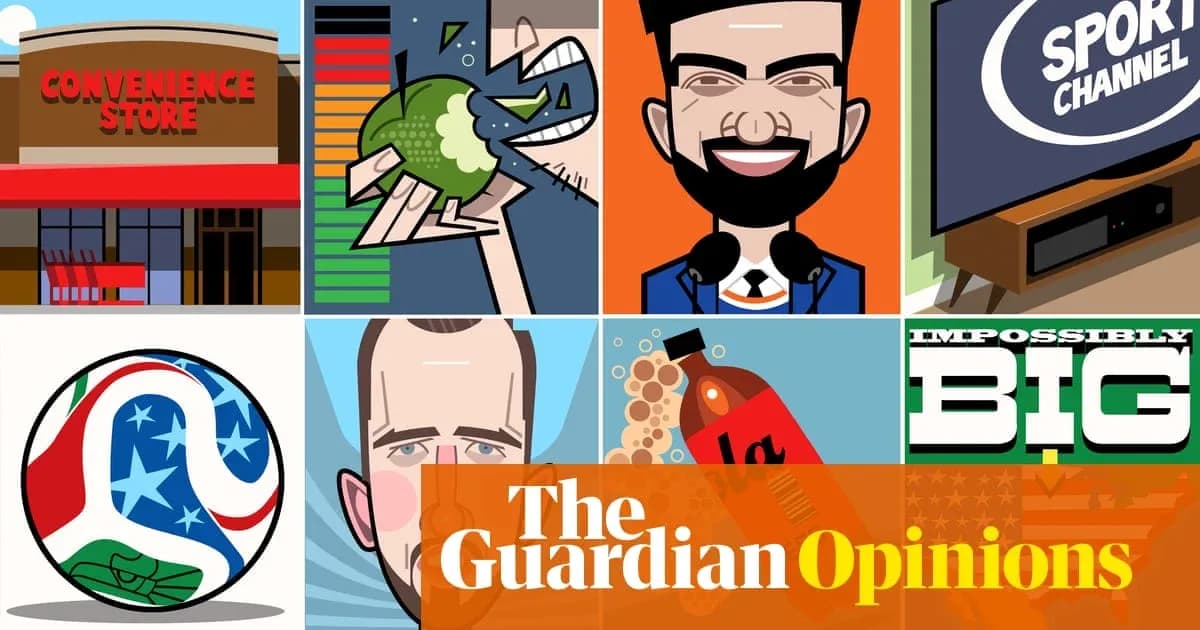
A World Cup Experience in Los Angeles
Los Angeles doesn’t so much welcome you as swallow you whole. Freeways loop into freeways, palm trees blur into one another and the city just keeps going, a concrete horizon that never quite arrives. Somewhere inside it all, between a Trader Joe’s, a hotel pool and a television studio, there’s a World Cup going on.
It’s been 20 years since I last lived inside a tournament like this outside England. Germany 2006 was a different life: four blokes in a car – Ian, Matt, Oli and me – drifting from city to city, measuring time in steins and kick-off times. We danced with Trinidad and Tobago fans, missed Brazil v Australia because the hangover outmuscled the sun, and didn’t feel remotely guilty about it.
This is not that. This is work. Sort of.
A World Cup in a country doing something else
Back home the question keeps coming: “Is there World Cup fever in the States?” The honest answer is complicated. The US is too big for a single mood. Ask Los Angeles if it’s in love with football and you might get the same blank look a local TV crew received in Cambridge in 1990, when they wandered around the city on the eve of an FA Cup quarter-final against Crystal Palace and discovered that plenty of people didn’t even know Cambridge had a football team.
Here, life just carries on. It’s like being asked from Melbourne during the Ashes, “What’s the atmosphere down there, Max?” while you’re on your hands and knees scraping rice off the floor with a wet wipe, two under-fives oblivious to the concept of Bazball, never mind its flaws.
That’s the hidden side of these tournaments. Players, coaches, journalists, officials all chasing a dream or a deadline, while partners at home hold everything together – kids, jobs, illness, the lot. My 18‑month‑old, Willie Rushden, has chosen this precise moment to get hand, foot and mouth. If he ever reads this, he should know: the guilt travels faster than any plane.
Trapped between kick-offs
The geography doesn’t help. The US is impossibly big, and Los Angeles feels like a parody of itself. The other day I tried to LimeGlide – a bike with no pedals and too much optimism – from West Hollywood to Santa Monica. One minute I was coasting along, wind in my hair, sun on my face. The next I’d rolled into a non‑cycling zone on a dual carriageway, dragging a dead lump of metal through a hedgerow like an idiot who’d confused urban mobility with The Oregon Trail.
With only an hour between games, our world shrinks to a tiny triangle: Trader Joe’s, the cafe opposite, the hotel pool. The pool is full of influencers with washboard stomachs, discussing their next TikTok series or whether they’re on the guest list for the opening night of Nylon nightclub. We’re on our laptops, trying not to spill hummus on the keyboard.
Yet football is here. The games beam out from bars in West Hollywood. US shirts dot the pavements. A Bosnian wanders past and someone calls out, “Good luck later.” It’s not a takeover, but it’s present, like a frequency you can tune into if you know where to listen.
Basketball first, then the release of football
For the first few days, though, this city belonged to basketball. You couldn’t avoid it. By osmosis I briefly became a Knicks or Spurs fan, the way you half‑adopt a club on a stag do because you like their away kit. Spurs felt right. Naturally, they then blew the biggest lead in NBA finals history, or close enough that it didn’t matter. It felt reassuringly familiar.
The speech that cut through all the noise came from Zohran Mamdani – Guardian Football Weekly listener, and, less significantly in this context, mayor of New York – at the Knicks parade. He reeled off names of basketball players I’d never heard of and still managed to send the hairs on the back of my neck bolt upright. Passion translates, even if the references don’t.
Football had its own release valve in the US win over Paraguay. The reaction wasn’t about tourists or curious neutrals. It came from the people who have carried this sport here for years – the writers, broadcasters, coaches and diehards who have pushed football uphill in a country ruled by other games. Their joy felt almost relieved. Validation, at last, that this thing they love can grip a nation that often barely notices it.
Stakes that go beyond the scoreboard
If England win this World Cup or go out in the last 32, the Premier League will still sell out, kids will still wear shirts, and the game will still dominate the sporting landscape. The country’s relationship with football is secure enough to withstand another glorious failure or even a triumph.
For the US and Australia, the stakes are different. A deep run – a quarter-final or better – can shift the sport’s place in the national psyche. It can change funding, media coverage, participation, the way kids argue in playgrounds about which sport matters most. That’s a lot of weight to drop on the shoulders of 11 players who already have a few things to worry about.
Those images from Fed Square in Melbourne captured it perfectly. Thousands of people crammed together, living and dying with every touch. Nestory Irankunda, a refugee, taking that touch and scoring that goal for Australia – a country built on immigration, like the US – felt like a story that cut straight through the noise of rising populism and nationalism. This is what football does at its best: it hands the microphone to someone whose family fled conflict and lets them speak in the only language that matters, in front of the world.
Connor Metcalfe, watching his goal back in the mixed zone, was as Australian as a sausage sizzle. “Far out that was far out, that was ick!” – or something very close to that. No media training, no polish, just raw delight. I don’t fully understand why I love the Socceroos in a way I absolutely do not love Australia’s cricketers. I just know that I do.
England at arm’s length
Being on the other side of the world from England has its advantages. You miss the worst of the noise. No need to listen to angry callers on the radio demanding to know if Thomas Tuchel belts out the national anthem with sufficient gusto. I’d be amazed if King Charles is losing sleep over it, so why should anyone else?
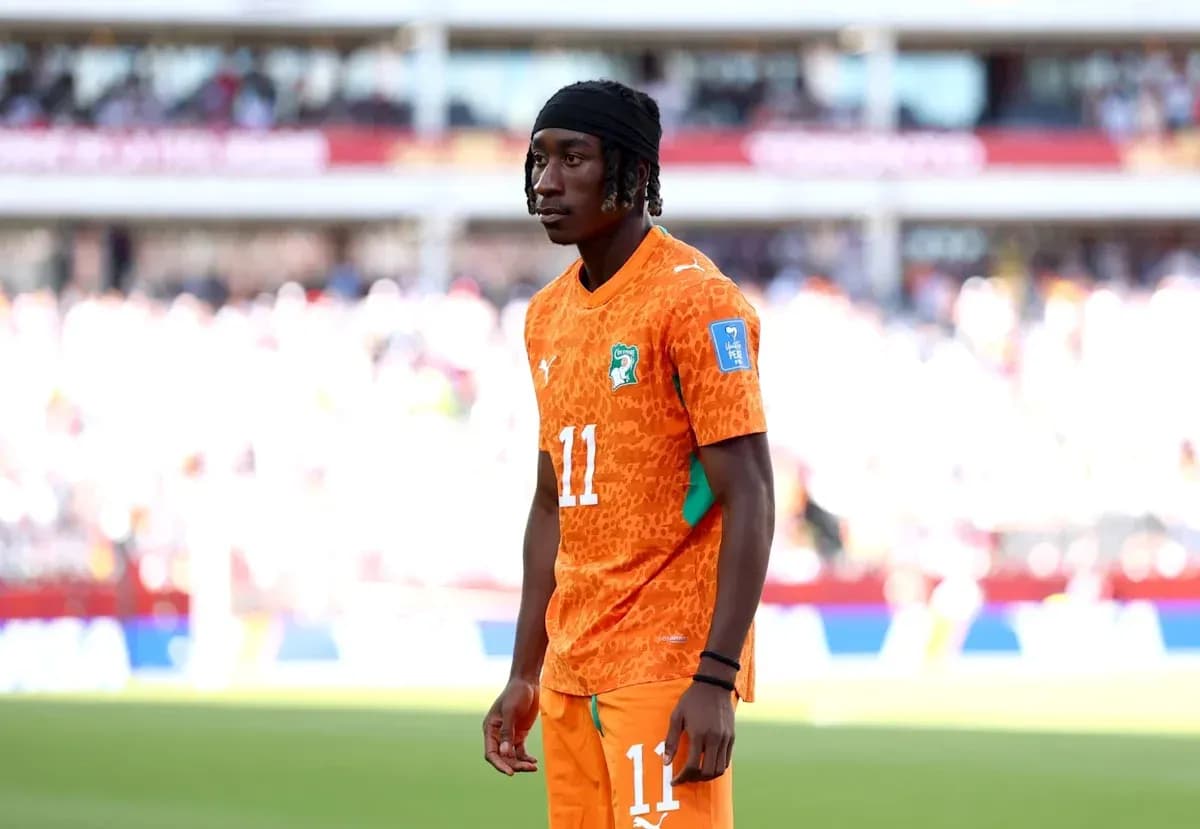
The football itself is the point. England are good. More than that, they’re fun. Harry Kane finally has pace around him. Noni Madueke is playing with a grin. Elliot Anderson is popping up in all the right spaces. Djed Spence suddenly looks quicker than Road Runner. There’s hope, but not the familiar, suffocating, terror‑based hope that has wrapped itself around so many previous campaigns. Not yet, anyway.
Life with Barry and the spectre of Zlatan
Most days here blend into a loop: watch Fox Sports, argue with Barry Glendenning, go to work, repeat. The key dramatic tension of the tournament is not whether England can defend a lead, but whether Zlatan Ibrahimovic will eventually throttle Alexi Lalas on live television before Barry kills me.
The US coverage has been largely decent. There’s a lot of entry‑level “soccer” chat, but that’s no different to the BBC or ITV back home when England play. A World Cup match attracts people who don’t watch Crystal Palace v Brentford on a Monday night. Not everyone knows their xG from their elbow. That’s fine. I could just do without seeing Christian Pulisic sell me a Wells Fargo account every time there’s a hydration break.
As for Barry and me, we’re discovering the limits of friendship in a shared space. Would we choose to live together for ever? Absolutely not. Are we surviving? Just about.
I say that knowing I have, apparently, committed a series of domestic crimes: eating an apple too loudly; failing to screw the lid on a bottle of Coke Zero tightly enough; offering unsolicited advice on how to chop a chilli; asking if he needed the big saucepan; putting yoghurt into a bowl; doing too much laundry; and criticising his unapologetic flatulence, from both ends of the spectrum. If there’s a World Cup for minor irritations, we’re into the knockout rounds.
Content, content everywhere
Somehow this chaos has become content. People watch it on Instagram, listen to it on the pod, click on it on YouTube – OR WHEREVER YOU GET YOUR CONTENT, as the phrase now legally requires us to say. We joke about pilot season. Could two middle‑aged men bickering over cookware and Coke Zero finally crack America?
Barry has already helped the star of Selling Sunset with her key fob – not a euphemism, sadly – so who knows. In a city that runs on unlikely pitches and improbable dreams, that probably counts as momentum.
The football will decide how far this story runs. The rest of it – the bike mishaps, the hotel pool, the late‑night arguments about full-backs and flatulence – will just be the scenery.