
Will Keane's Journey: From Injury to Resilience in Football
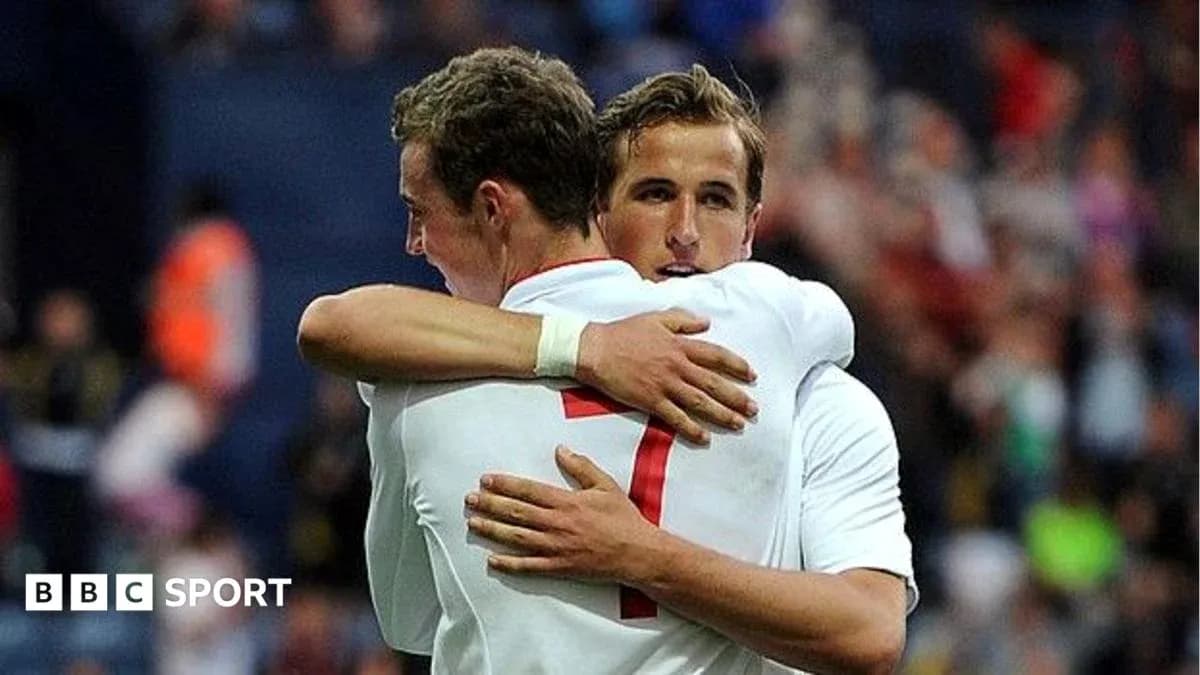
There is a photograph from May 2012 that feels almost unreal now. England Under-19s lining up against Switzerland in a European Championship qualifier. Two centre-forwards. Two careers about to split.
On one side, Will Keane, the Manchester United prodigy with the smooth path and the clean bill of health. On the other, Harry Kane, the loanee still trying to convince people he belonged at the top level.
If you were picking then which one would be tuning up for a World Cup semi-final against Argentina in 2026, you probably wouldn’t have gone for the kid bouncing between Norwich and Leicester.
Keane certainly wouldn’t have.
"When you're young, you're fearless," he tells BBC Sport. "The whole trajectory of my career was up. I made my senior debut for Manchester United. We won the Youth Cup. I was doing well for England. Everything was taking off."
Then, late in that Switzerland game, everything stopped.
A door closes
Keane’s knee went. Not a niggle, not a tweak. A major injury that cost him 16 months of football at the very moment careers tend to be decided.
In those 16 months, Kane’s story accelerated. Loan spells, hard yards, then a breakthrough at Tottenham. While one Kane climbed, the other was learning how quickly football can strip everything away.
"It's timing," Will says. "Some lads go their whole career and have a few niggles, but nothing derails them too much.
"That first injury was at a crucial time. I had my foot in the door. The feeling was I would probably have been around the first team.
"If the injury had happened a couple of years later, I might have been an established squad player. When I had it, I missed 16 months at a crucial part of the transition from reserves to seniors."
Those are the margins. One man’s window closes; another walks straight through.
Now, as Harry Kane leads England towards another defining week, Will Keane is in Leicestershire, at Champneys Springs, working, waiting, and refusing to accept that his own story is done.
Life on the other side of the dream
Keane is 33 now. He has eight clubs behind him, 335 senior appearances, 85 goals and a body that has taken more punishment than most. He is one of 45 players at the PFA’s 12-week pre-season camp, a lifeline for those out of contract and still chasing the next deal.
"A couple of lads I know did the camp last season and spoke really highly," he says. "I almost feel like I'm part of a squad, and we're away for pre-season.
"There are so many staff; medical, coaching, administrative, media. It's quite competitive and there are seven or eight games, so clubs can see you're playing."
The set-up is modern, data-driven, unapologetically serious.
"There's an app clubs can sign up to. It's like a PFA transfer list – all our training data goes on it. Clubs can contact us directly, so hopefully if you go somewhere, you can go straight in."
This is the other side of the game. No fanfare, no cameras. Just players fighting to stay in the industry they grew up in.
Keane has been here before. In 2020, as Covid ripped through football’s finances, Ipswich decided not to trigger a one-year option. He drifted into the unknown, then found his way back to Wigan.
It was at Wigan that something shifted. Not in his legs. In his head.
The injury that changed everything – and then another
The first ACL tear was brutal. The second was crushing.
Between them, there was another cruel twist. In February 2016, Keane started an FA Cup tie for United at Shrewsbury. It should have been a stepping stone. Instead, he "ripped his groin".
Three days later, with Keane in a different world, Anthony Martial pulled up in the warm-up before a Europa League game against Midtjylland. Louis van Gaal turned to a 17-year-old from the academy.
Marcus Rashford scored twice that night. Then two more against Arsenal in the league. A star was born.
Keane was in the United States, about to go under the knife.
"I went to America for an operation, landed in Philadelphia, turned my phone on and saw he scored two more," he recalls.
At 23, he knew. That was the end of his Manchester United story. The club he supported, the one where he and his twin brother Michael had come through, the place that once felt like a certainty.
He moved on, and on paper, it looked like a break. Hull City, newly promoted to the Premier League. A fresh start.
Six games in, another ACL. Fourteen months out. Hull went down. The squad broke apart.
"I missed the whole season, and we got relegated," Keane says. "A lot of the young lads still got good moves; Harry Maguire went to Leicester, Andy Robertson went to Liverpool, Sam Clucas to Swansea."
He watched others climb as he learned how deep the game can cut.
Rewiring the mind
By the time he reached Wigan, Keane realised he couldn’t treat this as just bad luck and bad knees.
"I'd used sports psychologists before and always tried to be positive and optimistic," he says. "But I started working with someone at Wigan who hadn't worked in football before.
"He's a bit more of a spiritual psychologist. We focus on positive intentions, manifesting, visualisation.
"I'd tried everything in the box, and kept breaking down, so I wanted to do something a bit different."
It wasn’t about clichés or slogans. It was about rebuilding belief.
"I wish I'd had that when I was younger, especially with the setbacks I had early on. It might have got me back into the right frame of mind.
"For any player if you've not got belief in yourself, and you're lacking confidence, you're not going to perform the way you can."
He is honest about how far his confidence fell.
"I was around the first team at United, then I got the injury, had a few loans in the Championship where I didn't do very well and I started to doubt myself. Wigan catapulted me.
"Before that I should have backed myself. I played with a lot of those lads all the way through, and that's where I was potentially heading.
"If I'd focused on the mental part earlier, it might have been a different outcome.
"Even at times when I picked up injuries, maybe I had a bit of self-doubt which led to something going wrong. If I was in the right frame of mind, maybe one of those bad injuries wouldn't even have happened."
It is a striking admission from a player still in the game. Not many will say it out loud: that self-doubt can be as dangerous as a mistimed tackle.
Kane, certainty and the thin line at the top
If Will Keane has wrestled with belief, Harry Kane has come to embody it.
"His old strike partner," as the story is often framed, is now the captain of his country and the face of a generation. Keane remembers the doubts that once swirled around him.
"I remember when we were young, people said he wasn't mobile," he says. "But technically, the time he put into his finishing and his obsessiveness to be the best in terms of shooting, you see it don't you?
"He's so sure of himself, because he's put the work in. He knows he's a complete striker.
"He's obviously got that belief in himself. He might miss one, but he's not going shy away from it. If he didn't have certainty in his mind, he wouldn't be as prolific.
"He's not arrogant, he's just got the confidence that sets top players apart."
Same age, similar youth pedigree, shared England age-group dressing rooms. Two forwards shaped by tiny shifts in timing, health and headspace.
One is preparing for Argentina. The other is preparing for his next trial game.
Between two flags, and still moving
Keane’s international journey tells its own story. England at youth level, all the way up to Under-21s. Then a change of shirt, a change of anthem. Five caps for the Republic of Ireland, the country of his father’s birth.
"It's a hard one because I played for England up until Under-21s, and then seniors for the Republic of Ireland, so I've got a foot in both camps," he says.
"I am proud to represent Ireland. My dad was born there and moved to England. But I've also been born and raised in England, and my family's English."
He has not given up on adding to those Irish caps. He has not given up on the club game either.
After ending last season on loan at Reading, his contract at Preston expired. He is back on the market, but not panicking.
"There's been a few chats," he says. "I'm sure they're aware of me. They might be looking for A, B and C targets, but when the season does start, if a club doesn't have a great start, there's a bit of panic and maybe things open up."
For now, it is early mornings, double sessions, practice games, data uploaded to an app and quiet belief that someone will pick up the phone.
The sliding door that once swung so violently in his face is still there. It may not lead to World Cup semi-finals or Premier League titles anymore, but it still opens onto something he clearly isn’t ready to leave behind.
The question now is simple: in a sport that rarely looks back, how many more chances will it give a striker who refuses to stop looking forward?




