
West Ham United Faces Reality in the Championship
Ten summers into life at the London Stadium, West Ham United find themselves staring at a reality that once felt unthinkable. The Carabao Cup first-round tie against Portsmouth on Saturday is not just an early-season run-out; it is a blunt, fluorescent reminder that this is now a Championship club, stripped of Premier League sheen and back among the also-rans.
The winters of discontent have arrived in midsummer.
A club in the Championship, a club in limbo
Some clubs use relegation as a reset. West Ham did it in 2011-12 under Sam Allardyce, powering straight back up and rebuilding on the fly. The Championship became a springboard.
This time, the mood is very different.
On paper, West Ham are short-odds favourites to go up. On the pitch, Nuno Espírito Santo remains in the dugout, a steady hand in a storm-prone club. Off it, the summer has been a brawl. Boardroom manoeuvres, ownership questions, and a fanbase at open war with its most powerful figure have turned the close season into something darker than any relegation hangover.
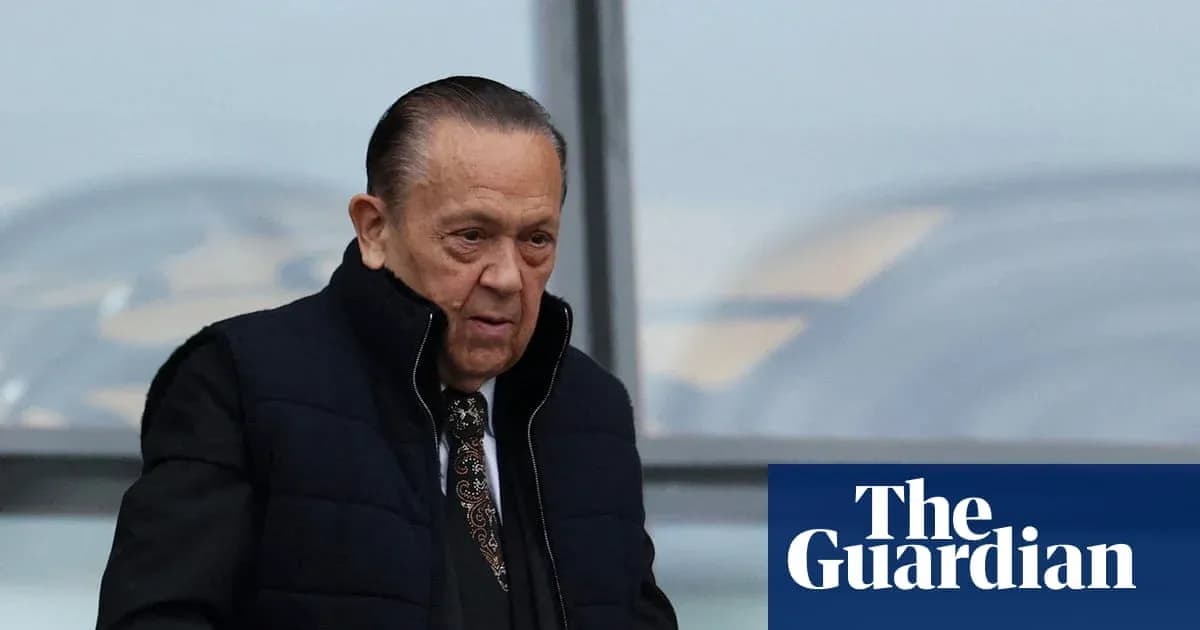
Portsmouth will bring 9,000 supporters to east London, a travelling army relishing the occasion. The more pressing question is whether David Sullivan will walk through the same turnstiles.
Stadium operators have advised the former joint-chair, still the club’s dominant co-owner, to stay away, citing the “potential for demonstrations and anti-social behaviour by some spectators”. The club’s fans advisory board went further, warning his presence would cause “offence and upset”.
Yet the expectation is that Sullivan will still turn up. He is said to want to experience this season as a fan, content to wait before any move to sell his 38.8% stake. Given the context, it would be a brazen, confrontational act. On 25 May, as relegation was confirmed despite victory over Leeds, he was hurried out of the stadium early for his own safety.
Sullivan under siege
The hostility around Sullivan is no longer just about football decisions or a stadium deal signed a decade ago. In early June, a BBC Panorama documentary detailed allegations of sexually exploitative and predatory behaviour towards women over several decades. Sullivan denies the claims, but he stepped down from his role on the eve of the broadcast, saying he wanted to “avoid disruption to the club while he addresses the matter privately”.
Even before those allegations, he was a lightning rod. West Ham’s trajectory since lifting the Europa Conference League in May 2023 has been vertiginous, the high in Prague followed by a steep, chaotic drop. The £100m banked from Declan Rice’s departure that summer was squandered. The squad frayed. The decline accelerated.
Jarrod Bowen, captain and symbol of that Prague triumph, has committed to stay and lead the fightback. His loyalty offers a thread of continuity, a reminder of what the club recently was. It also highlights what has been lost.
For years, Sullivan operated as a de facto director of football, his influence reaching deep into recruitment and strategy. That approach angered those on the football side of the club. His closest ally, Karren Brady, stepped down in April as the pressure intensified, ending a working partnership that stretched back to 1990.
New money, old power
Despite the rancour, demand for West Ham has not evaporated. Around 50,000 season tickets have been sold for this promotion bid. The stands will be full. The songs will be loud. The message will be louder: many supporters want Sullivan gone completely.
His decision to step aside from day-to-day duties had briefly lifted spirits. A new era seemed possible. Potential buyers circled. The picture has since blurred.
Daniel Kretinsky, the Czech billionaire who owns Royal Mail and has held 27% of West Ham since 2021, looked the likeliest successor. Instead, this week he trimmed his stake to just under 25%, a move framed as part of a broader strategy rather than a retreat.
At the same time, a familiar face has reappeared on English football’s takeover radar. Amanda Staveley, who left Newcastle United in July 2024 after playing a central role in bringing in the Saudi Arabian Public Investment Fund, now wants back in. She was linked with a move for Tottenham last September; now West Ham is her target, with suggestions she would lean on similar sources of funding to engineer a deal.
Her name still carries weight. Newcastle fans, watching their club adjust to new realities, speak of her drive and relentlessness. Some West Ham supporters hope she might provide the same jolt of energy, the same sense of possibility.
The key lies in the 25% stake once owned by the late David Gold. His daughter, Vanessa Gold, now co-chair, controls that block of shares. Kretinsky has first refusal on buying it. If he added that 25% to his original 27%, he would sail beyond the 50.1% threshold and trigger a formal takeover bid.
He has sidestepped that obligation. By moving 2% of his holding to Czech associate Jakub Havrlant, he has dropped below that line. Any purchase of the Gold stake would still give him huge influence but not force him into a full bid. It also complicates Staveley’s ambitions.
Through all of this, Sullivan’s 38.8% remains decisive. He still holds the balance of power. Staveley’s next move will show how serious she is about dislodging him.
Selling to buy, and selling the future
While the boardroom turns, the squad rebuild has barely begun. Joël Veltman, the experienced former Brighton and Ajax defender, has arrived on a free transfer, the first significant addition of the summer.
The outgoings tell a harsher story. Mateus Fernandes has gone to Tottenham and Crysencio Summerville to Al-Hilal, the pair generating around £140m between them – roughly a year’s worth of Premier League broadcast money in one hit. Financially, it is a lifeline. Emotionally, it stings.
Freddie Potts, a youth product and a symbol of the academy pathway, has left for Club Brugge in a £10m deal that disappointed many supporters. The logic is cold: needs must if more players are to come in. The Championship offers a smaller shop window and a tougher sell. Targets like Troy Parrott, Ireland’s World Cup playoff hero currently at AZ Alkmaar, may hesitate over dropping a division, even for a club of West Ham’s size.
Nuno, who many expected to leave after relegation, has stayed. His composure and measured presence will be vital at a club where panic is almost a reflex. The vacuum created by Sullivan’s situation, the lack of transfer momentum and the sting of the drop have amplified every anxiety.
The fixture list offers little comfort. By 1 September, West Ham will have faced Burnley, Charlton, Watford and Wolves in the league, a run that could either steady the ship or deepen the crisis.
Behind the scenes, Karim Virani has returned as interim chief executive. A former club employee who left in 2020 and later worked at Rangers, he has been brought back to help pull the pieces together. The task is blunt: stitch West Ham into something resembling unity.
A home that never quite felt like home
All of this plays out in a stadium that still does not feel entirely theirs. The London Stadium has hosted Take That and Metallica this summer. In July, it staged a Diamond League meet where Josh Kerr broke the world mile record. This week, a bid was confirmed to bring the 2029 World Athletics Championships back to the venue, a move that had been held up by wrangling between the club and the stadium’s owners.
Each event underlines the same truth: ten years after leaving the Boleyn Ground, West Ham remain tenants in a multi-use arena. The terms agreed by Sullivan, Gold Sr and Brady still rankle. The sightlines, the running track, the branding – all constant reminders that this is not a bespoke football home.
On Saturday, Portsmouth’s 9,000 will roar into that bowl, sensing opportunity. West Ham’s 50,000 will respond, fuelled by pride, anger and something closer to defiance.
Somewhere in that swirl, perhaps in a directors’ box he has been urged to avoid, David Sullivan may take his seat. The club he has dominated for so long stands at a crossroads: promotion favourites on the pitch, a power struggle off it, and a fanbase that wants the future without the man who still controls it.
The season starts now. The real question is whose club West Ham will be by the time it ends.




