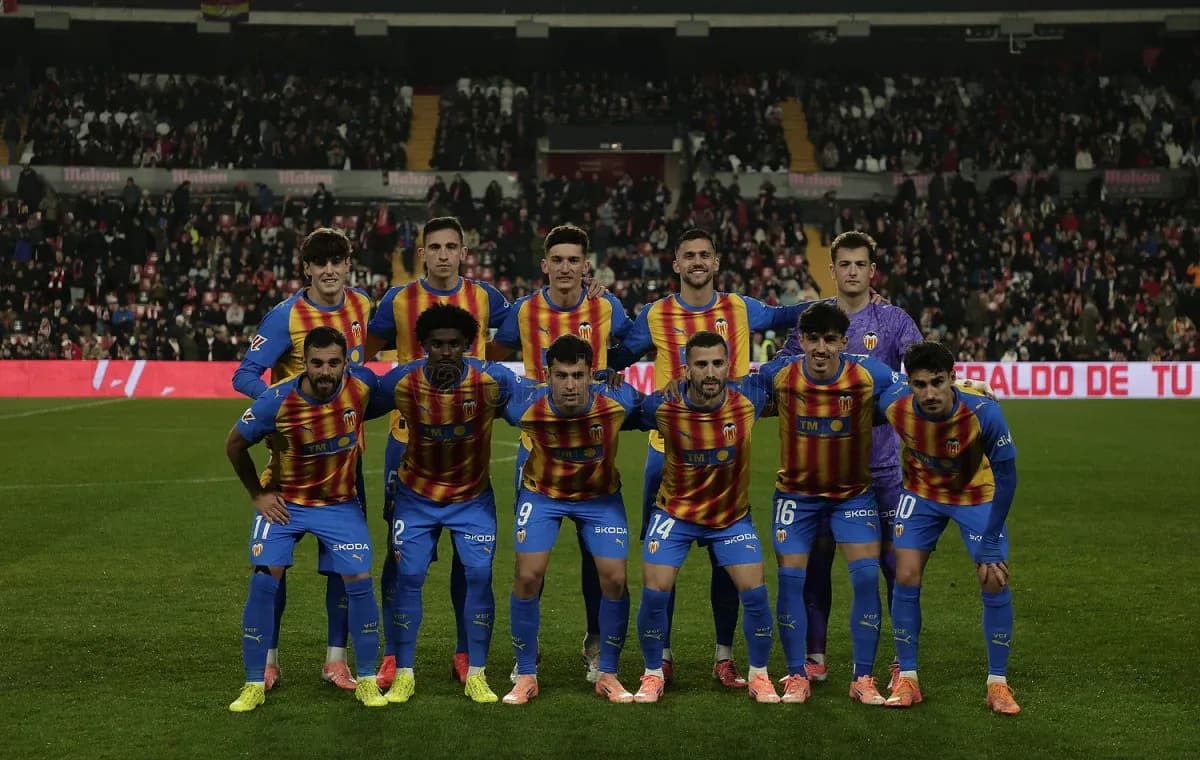
Valencia vs Rayo Vallecano: Key La Liga Clash at Mestalla
Estadio de Mestalla hosts a mid-table La Liga meeting on 14 May 2026 as Valencia welcome Rayo Vallecano in Round 36 of the 2025 season. With only one point separating the sides – Rayo 10th on 43 points, Valencia 12th on 42 – this is a direct duel for top-half status and late-season momentum rather than survival.
Both teams are safely clear of the drop but still have something tangible to chase: a finish in the top 10 and the financial and sporting prestige that comes with it. With three matches left, a win here would give either side a strong platform to close the campaign on their own terms.
League context and form
In the league, Valencia’s season has been uneven. They sit 12th with 11 wins, 9 draws and 15 defeats from 35 games, a negative goal difference of -12 (38 scored, 50 conceded). Their recent form line of “WLWDL” in the standings reflects a stop-start pattern that is echoed in their broader form string across all phases, which is heavy on draws and isolated wins.
At Mestalla, though, Valencia have been relatively solid. In the league they have taken 26 of their 42 points at home: 7 wins, 5 draws and 5 defeats from 17 home fixtures, scoring 23 and conceding 21. They average 1.4 goals for and 1.2 against per home match across all phases, and they have kept 4 clean sheets at Mestalla while failing to score there only 3 times. Their biggest home win this season is 3-0; their heaviest home defeat is 0-2, suggesting that even when they lose at Mestalla, the scoreline tends not to be catastrophic.
Rayo Vallecano arrive slightly higher in the table but with a similar profile. In the league they are 10th with 10 wins, 13 draws and 12 losses, goal difference -6 (36 for, 42 against). Their form line “DWDWL” shows a side that is hard to beat but also struggles to put long winning runs together. Across all phases their season has been streaky: they have had runs of three straight wins and three straight defeats.
Home form has underpinned Rayo’s position – 6 wins, 10 draws and just 2 losses in Vallecas – but away from home they have looked far more vulnerable. In the league they are 4-3-10 on the road, with 14 goals scored and 27 conceded. Across all phases that translates to 0.8 goals for and 1.6 against per away game, with 4 away clean sheets but 9 occasions where they failed to score. Their biggest away win is 0-3; their heaviest away defeat is 4-0.
The table, then, pits Valencia’s respectable home record against Rayo’s fragile away numbers, with only a single point between them and both sides carrying mixed recent form.
Tactical tendencies and key figures
Valencia’s tactical identity this season has been relatively stable. Across all phases they have most often lined up in a 4-4-2 (21 matches), with 4-2-3-1 (9 matches) as the main alternative. That points towards a side that values structural stability, two banks of four, and either a strike partnership or a lone forward supported by a central attacking midfielder.
In a 4-4-2, Valencia are likely to prioritize compactness between the lines, using the wide midfielders to support both full-backs and forwards. Their numbers suggest a team that is not especially prolific (1.1 goals per game overall) but can be efficient when on top. The biggest win of 3-0 at home and a “goals for” home maximum of 3 indicate that when they do break opponents, they can add to the lead.
Defensively, conceding 50 goals in 35 matches (1.4 per game) shows vulnerability, particularly away, but at Mestalla they have been closer to mid-table average. Nine clean sheets across all phases and 9 matches without scoring underline their streaky nature: they are as capable of shutting opponents out as they are of being shut out themselves.
Rayo, by contrast, are more flexible in their structure but share some of Valencia’s scoring limitations. Their most-used formation is 4-2-3-1 (21 matches), with 4-4-2 and 4-3-3 each used 5 times, and occasional switches to 4-1-4-1 and 4-4-1-1. The 4-2-3-1 base suggests a focus on a double pivot to protect the back four, with creative responsibility falling on the three attacking midfielders behind the striker.
Rayo average 1.0 goals per game overall and only 0.8 away, which, combined with 11 clean sheets across all phases, points to a cautious, risk-managed approach. They are comfortable in tight contests and have drawn 13 league games – more than a third of their fixtures. Their defensive structure is generally solid, but the away goals-against figure of 27 and a worst away defeat of 4-0 show that when the block is broken, they can unravel.
The standout attacking figure in this match, based on available data, is Rayo’s Jorge de Frutos. The 28-year-old attacker has 10 league goals and 1 assist in 32 appearances (29 starts, 2,250 minutes) this season, making him Rayo’s primary goal threat. He has taken 47 shots, 26 on target, and created 26 key passes, which underlines his dual role as a finisher and chance creator from advanced positions. His dribbling numbers (50 attempts, 23 successful) and 36 fouls drawn show he is adept at carrying the ball and provoking contact in dangerous zones.
De Frutos has also won 3 penalties this season and scored 1 from the spot, with no misses recorded in the data. That makes him a reliable option in decisive moments, even if Rayo as a team have only taken 3 penalties in total, scoring all of them.
Valencia’s top scorers are not listed in the provided data, which limits individual profiling on their side, but their goal distribution – 38 in 35 – suggests a more collective attacking output rather than reliance on a single marksman. The use of 4-4-2 also hints at shared scoring duties between two forwards and late arrivals from midfield.
Discipline could be a quiet subplot. Valencia’s yellow cards are spread across the 90 minutes, with a noticeable rise after half-time, while Rayo’s bookings spike between minutes 61-75 and 91-105. Rayo also show a notable concentration of red cards late in games (especially 61-90 and 91-105), which could matter if this fixture becomes tense in the closing stages.
On penalties, both sides show a 100% conversion rate in the data provided (Valencia 5 scored from 5, Rayo 3 from 3), with no recorded misses. That adds weight to the importance of penalty-box incidents in what is likely to be a close contest.
No injury or suspension list is available for either team, so selection issues cannot be specified from the data.
Head-to-head: tight and low-scoring
The last five competitive meetings between these sides, all in La Liga, underline how fine the margins have been:
- On 1 December 2025 at Estadio de Vallecas, Rayo Vallecano 1-1 Valencia – draw.
- On 19 April 2025 at Estadio de Vallecas, Rayo Vallecano 1-1 Valencia – draw.
- On 7 December 2024 at Estadio de Mestalla, Valencia 0-1 Rayo Vallecano – Rayo win.
- On 12 May 2024 at Estadio de Mestalla, Valencia 0-0 Rayo Vallecano – draw.
- On 19 December 2023 at Estadio de Vallecas, Rayo Vallecano 0-1 Valencia – Valencia win.
Across these five matches, each side has 1 win, with 3 draws. No team has scored more than once in any of these games, and three of the five finished either 0-0 or 1-0. The pattern is clear: this fixture has recently been extremely tight, low-scoring and often decided by a single moment.
The verdict
The data points towards another finely balanced encounter. Valencia’s home advantage and slightly better attacking output at Mestalla are offset by Rayo’s marginally higher league position and strong overall defensive record. Rayo’s away frailties – 10 league defeats and only 14 goals scored on the road – give Valencia a statistical edge, but the head-to-head record warns against expecting a high-scoring home win.
Tactically, expect Valencia to lean on their familiar 4-4-2 or 4-2-3-1, looking to use width and crosses to trouble a Rayo back line that can be exposed away from home. Rayo’s 4-2-3-1 should focus on compactness and transitions, with Jorge de Frutos the main outlet and goal threat, especially cutting inside or attacking space behind Valencia’s full-backs.
Given the recent history (three draws in the last five, and no side ever scoring more than one), plus both teams’ modest scoring averages and Rayo’s tendency to draw, the most logical forecast is a low-scoring game that could again be decided by a single goal or end level. A narrow Valencia edge at Mestalla is plausible, but the statistical profile of both sides makes another draw a very realistic outcome.