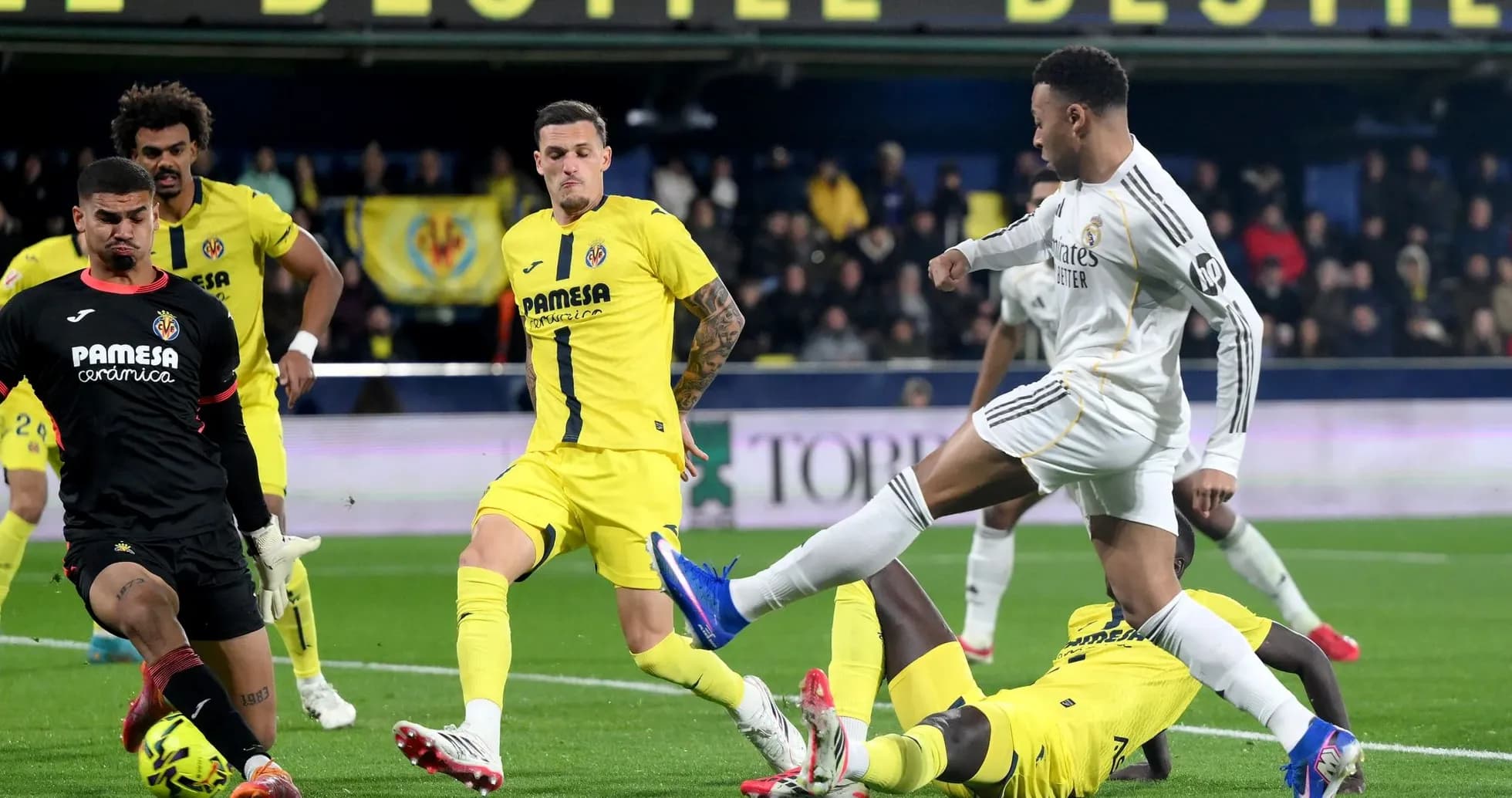
Valencia vs Rayo Vallecano: Tactical Summary and Seasonal Impact
Valencia host Rayo Vallecano at Estadio de Mestalla in a late-season La Liga fixture in 2026 that is more about securing mid-table stability than chasing Europe or fighting relegation. In the league phase, both sides come into Round 36 locked on 42 points, with Rayo 11th and Valencia 12th on goal difference. With three games left for Valencia (35 played) and four for Rayo (34 played), this head-to-head is a direct battle for top-half positioning and prize-money leverage rather than a decisive clash for the title or survival.
Head-to-Head Tactical Summary
Across the last five La Liga meetings provided, this has been a finely balanced matchup with a slight edge to Rayo Vallecano and a clear pattern of tight margins:
- On 1 December 2025 at Campo de Futbol de Vallecas in Madrid, Rayo Vallecano drew 1-1 with Valencia. Rayo led 1-0 at half-time before Valencia equalised for a share of the points.
- On 19 April 2025 at Estadio de Vallecas in Madrid, Rayo Vallecano again drew 1-1 with Valencia, with the home side 1-0 up at half-time and Valencia levelling after the break.
- On 7 December 2024 at Estadio de Mestalla in Valencia, Rayo Vallecano won 1-0. They were 1-0 ahead at half-time and held that advantage through full time, underlining their capacity to manage a lead away from home.
- On 12 May 2024 at Estadio de Mestalla, Valencia and Rayo Vallecano played out a 0-0 draw, a cagey encounter with no goals either before or after the interval.
- On 19 December 2023 at Estadio de Vallecas, Valencia won 1-0 against Rayo Vallecano, with the game goalless at half-time before Valencia found the decisive goal.
The tactical story from these fixtures is one of low-scoring, control-oriented games: three of the five ended 1-1 or 0-0, and no match in this sequence saw either side score more than once. Rayo have shown they can both protect a lead away at Mestalla (1-0 in December 2024) and start strongly at home, while Valencia’s points have come from staying in games and striking in the second half.
Global Season Picture
- League Phase Performance:
Valencia: In the league phase, Valencia sit 12th with 42 points from 35 matches (11 wins, 9 draws, 15 losses). They have scored 38 goals and conceded 50, for a goal difference of -12. At Mestalla they have been relatively stronger: 7 wins, 5 draws, 5 losses, with 23 goals for and 21 against.
Rayo Vallecano: In the league phase, Rayo are 11th, also on 42 points but with a better goal difference of -6 from 34 matches (10 wins, 12 draws, 12 losses). They have scored 35 and conceded 41. Their home record (6 wins, 9 draws, 2 losses, 21 scored, 14 conceded) is solid, but away they mirror Valencia’s inconsistency: 4 wins, 3 draws, 10 losses, 14 goals for and 27 against. - Season Metrics: In the league phase, the team statistics mirror the standings data (games played align: 35 vs 35 for Valencia, 34 vs 34 for Rayo), so we remain in a league-only context.
- Valencia: They average 1.1 goals scored and 1.4 conceded per match (38 for, 50 against over 35 games), pointing to a slightly vulnerable defensive structure compared to their attack. Their clean-sheet count (9) is balanced by 9 matches where they failed to score, underlining inconsistency in both boxes. Discipline-wise, yellow cards are concentrated from minute 46 onwards, especially between 46–90 minutes, indicating rising aggression and fatigue in second halves. Red cards are rare but present, with one dismissal in the 16–30 minute range and one in an unspecified period, suggesting occasional lapses that can destabilise match plans.
- Rayo Vallecano: Rayo average 1.0 goals scored and 1.2 conceded per match (35 for, 41 against over 34 games), slightly more conservative than Valencia in attack but somewhat tighter defensively. They have 11 clean sheets but have failed to score in 12 games, which indicates a risk-averse or low-output attack, especially away. Their yellow cards are spread across all phases of the match, with a noticeable accumulation from 46–75 minutes and again in added time (91–105), pointing to a combative approach as games progress. Red cards are more frequent than Valencia’s, particularly late (61–105 minutes), which can heavily influence close contests.
- Form Trajectory:
- Valencia: In the league phase, the recent form string “WLWDL” shows a volatile pattern: win, loss, win, draw, loss. They oscillate between positive results and setbacks, with no sustained run to push higher up the table. This inconsistency is consistent with their season-long profile of a negative goal difference and mid-table ranking.
- Rayo Vallecano: In the league phase, the form “WDWLW” is notably stronger: win, draw, win, loss, win. Three wins in the last five give them upward momentum and a platform to consolidate or improve their top-half position. Their ability to convert tight games into victories has been better than Valencia’s in the recent block of matches.
Tactical Efficiency
Using the available team statistics as proxies for tactical efficiency, we can frame the matchup in terms of how each side converts its overall play into goals and results.
For Valencia, the profile is of a side that is moderately effective going forward but compromised defensively. In the league phase, 38 goals from 35 games (1.1 per match) against 50 conceded (1.4 per match) suggest that when they open up to attack, they leave space behind. Their biggest home win (3-0) and heaviest away defeat (6-0) underline this volatility. The frequent use of a 4-4-2 (21 matches) and 4-2-3-1 (9 matches) points to a structure that tries to balance width and central protection, but the goals-against figures indicate that the block is often broken, especially away from Mestalla.
Rayo Vallecano’s tactical efficiency skews the other way. In the league phase, they score slightly less (35 goals in 34 games, 1.0 per match) but concede fewer (41, or 1.2 per match). Their 11 clean sheets highlight a more compact, organised defensive approach, particularly at home. Away, however, the 27 goals conceded in 17 matches (1.6 per game) show that their defensive structure becomes more fragile when they cannot control territory. Their predominant 4-2-3-1 (21 matches) suggests a focus on double pivot stability and controlled transitions rather than high-tempo attacking football.
If we map this onto an implied “Attack/Defense Index” from the comparison perspective, Valencia’s attack index would sit slightly higher than Rayo’s (1.1 vs 1.0 goals per game), but their defense index clearly lower (1.4 conceded vs 1.2). That means:
- Valencia’s best route to efficiency is to increase shot volume and leverage home advantage, accepting some defensive risk.
- Rayo’s best route is to compress space, keep the game low-scoring, and rely on set pieces or transition moments, a pattern consistent with their 1-0 win at Mestalla in December 2024 and multiple 1-1 draws in Madrid.
Discipline may also shape efficiency. Rayo’s higher red-card exposure in later phases of games can quickly erode their defensive edge if the match becomes stretched or emotionally charged. Valencia, with fewer dismissals but heavy yellow accumulation after half-time, risk giving away dangerous free-kicks and losing control of tempo in the closing stages.
The Verdict: Seasonal Impact
In pure table terms, this is not a title or relegation decider, but its seasonal impact is still significant for both clubs’ trajectories in 2026.
For Valencia, a home win would lift them above Rayo Vallecano and potentially into the top half depending on other results, turning a volatile season with a -12 goal difference into something closer to a platform for 2027. It would also reinforce Mestalla as a relative stronghold (already 7 wins at home in the league phase) and ease any residual pressure from a choppy form line. Dropped points, especially a defeat, would confirm a flat mid-table finish and raise questions about the balance of their 4-4-2/4-2-3-1 structures and defensive reliability.
For Rayo Vallecano, arriving with better recent form and a stronger overall goal difference, this fixture is a chance to consolidate themselves as the more stable mid-table project. An away win would put clear daylight between them and Valencia, strengthen their case for a top-half finish, and partially offset their poor away defensive record (27 goals conceded in the league phase). Even a draw keeps them ahead and maintains momentum from the “WDWLW” trajectory.
Looking forward, the result will shape the narrative of each club’s 2026 campaign:
- A Valencia victory reframes an inconsistent year as a step forward, with top-half positioning and a strong home record as selling points for recruitment and tactical evolution.
- A Rayo win or draw underlines their defensive solidity and resilience, confirming them as a difficult, organised side capable of finishing above traditional names like Valencia despite limited attacking output.
In summary, this is a mid-table six-pointer: not decisive for titles or relegation, but crucial in defining who finishes the year as a credible top-half operator and who is filed as merely safe, mid-table, and still searching for a clearer identity going into the next cycle.