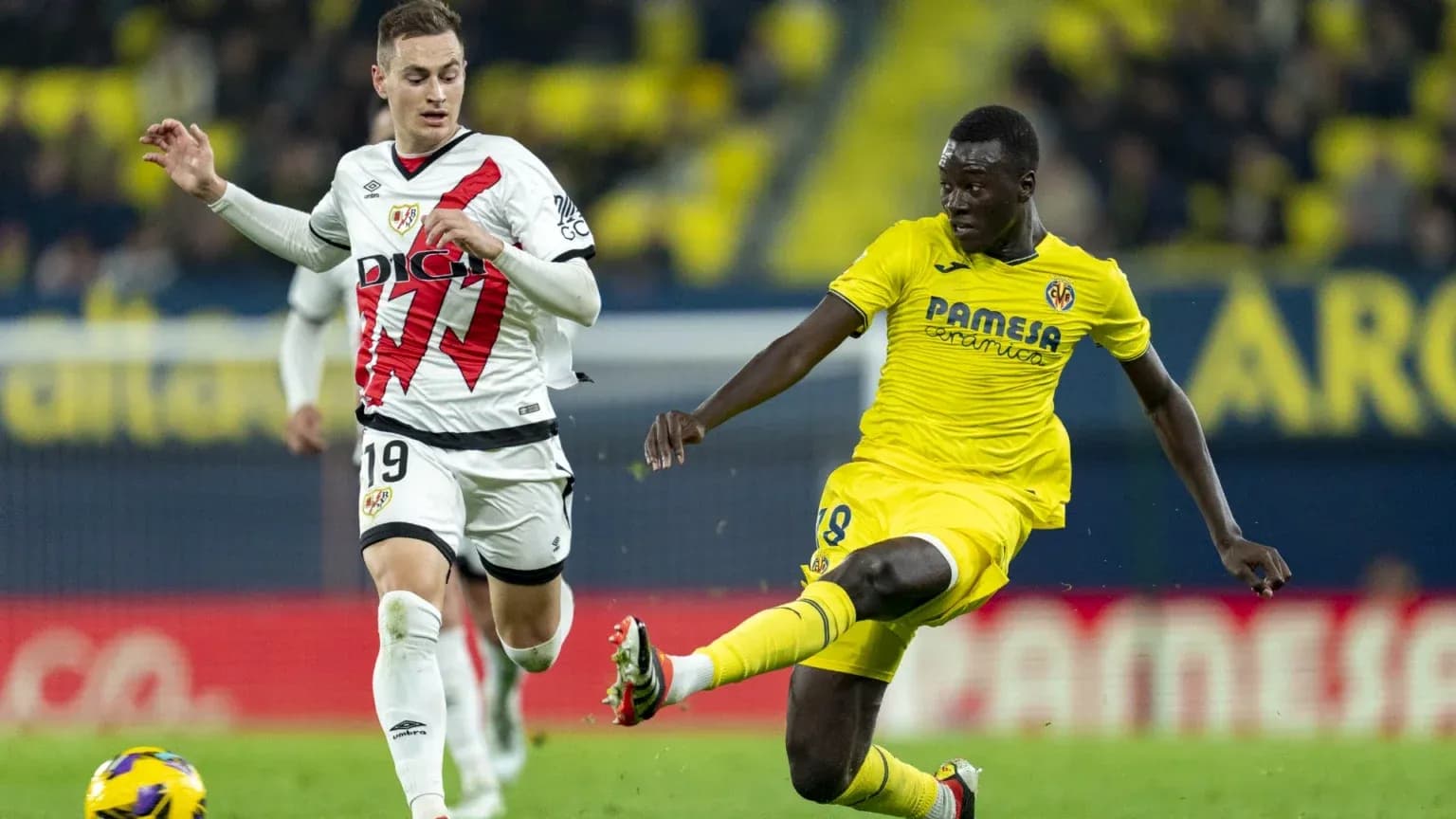
Rayo Vallecano vs Villarreal: La Liga Showdown
On the evening of 17 May 2026, the tight stands of Campo de Futbol de Vallecas in Madrid will lean over the pitch for a meeting of very different ambitions: mid-table security against a push for the summit. Rayo Vallecano, safely lodged in the middle of La Liga, seek one last statement in front of their own crowd, while high-flying Villarreal arrive chasing a strong finish befitting a side in the Champions League places. Under the spring sky in the capital, this feels like a free swing for Rayo and a must-not-slip occasion for Villarreal.
Season Context
For Rayo Vallecano, the numbers tell of a solid, if uneven, campaign. Sitting 11th with 43 points from 35 matches, they have combined resilience with occasional cutting edge, scoring 36 goals and conceding 42. A negative goal difference of -6 underlines that they have often been on the edge in games, but 10 wins and 13 draws from those 35 outings have kept them clear of danger and within sight of the top half.
Villarreal travel to Madrid as one of La Liga’s leading sides. Third place, 69 points from 36 matches and a healthy goal difference of +24 reflect a team that has married attacking threat with enough defensive stability, scoring 67 and conceding 43. With 21 wins already on the board, and a description that confirms they are in the “Promotion - Champions League (League phase)” zone, this trip is about consolidating a high finish and maintaining momentum at the sharp end of the table.
Form & Momentum
Rayo Vallecano’s recent league form string reads “DWDWL”, a sequence that speaks of inconsistency but also stubborn competitiveness (three results from five). With 36 goals across 35 matches, their attack has been modest but functional (around 1.0 goals scored per game), while 42 conceded in the same span shows a defence that has generally held up but can be exposed (around 1.2 goals conceded per game). They come into this with enough positive results sprinkled through their run to believe they can trouble a heavyweight at home.
Villarreal’s form line of “LDWWD” is that of a side largely in control, with only one defeat in their last five and three matches taken at least to a positive result (four games without losing in that stretch). Over the full campaign, their attack has been impressive (67 goals in 36 games, around 1.9 per match), while 43 conceded (around 1.2 per game) underlines a back line that, though not watertight, has been strong enough to support an aggressive approach. The balance of that recent “LDWWD” pattern suggests they are arriving in Vallecas with confidence.
Head-to-Head Patterns
The recent history between these sides leans towards Villarreal. On 1 November 2025, Villarreal dismantled Rayo Vallecano 4-0 in La Liga (La Liga, season 2025, November 2025), a ruthless display at Estadio de la Ceramica that underlined the gap on that day. Earlier in the same calendar year, on 22 February 2025, Villarreal had already edged a tight contest 1-0 away at Estadio de Vallecas (La Liga, season 2024, February 2025), showing they can grind out results in Madrid as well. Going back to 18 December 2024, the sides shared a 1-1 draw at Estadio de la Cerámica (La Liga, season 2024, December 2024), a reminder that Rayo can compete when they find defensive solidity. The pattern is clear: Villarreal have often found a way to take points, but Rayo have occasionally managed to drag the contest onto more level terms.
Tactical Preview
Rayo Vallecano are built around structure and work-rate, and their season data backs that up. With 36 goals scored and 42 conceded over 35 matches, they have typically kept games tight (goal difference -6) and leaned on collective organisation. Their most-used shape has been a 4-2-3-1 (21 matches), with alternative looks in 4-4-2 and 4-3-3 (five matches each), underlining a preference for a back four and a double pivot to shield the defence. Wide players such as Jorge de Frutos, an attacker with 10 league goals and 1 assist, give Rayo a direct outlet on the break, while creative midfielders like Isi Palazón, who has 3 goals and 3 assists, provide delivery and set-piece threat despite a combative edge that has brought 10 yellow cards and one red card (discipline that can both energise and endanger the team).
Defensively, Rayo’s reliance on full-backs and centre-backs comfortable in duels is clear. A. Rațiu, a defender with 66 tackles and 38 interceptions, embodies their aggressive approach on the flanks, while P. Ciss, listed as a defender in the squad and carrying 49 tackles and 32 interceptions, offers ball-winning presence and progression from deeper zones, even if his 2 red cards highlight a risk of disciplinary trouble. The use of the 4-2-3-1 and occasional 4-1-4-1 suggests Rayo will try to crowd central areas, deny Villarreal space between the lines and spring forward through De Frutos and the likes of Sergio Camello or Alemão when chances arise.
Villarreal, by contrast, have been one of La Liga’s most dangerous attacking outfits (67 goals in 36 games) and their tactical blueprint reflects that. Their dominant shape is a 4-4-2 (35 matches), with a sprinkling of 4-3-3, pointing to a team that wants two forwards high and wide players who can both attack and track back. In the final third, G. Mikautadze has been a key figure, scoring 11 goals and adding 5 assists, backed by 50 total shots and 28 on target, making him a constant penalty-box threat. Around him, Alberto Moleiro has contributed 10 goals and 4 assists from midfield, with 700 completed passes and 35 key passes (creativity and end product from advanced positions).
On the flanks and in transition, N. Pépé is a central weapon: 8 goals, 6 assists, 53 key passes and 114 dribble attempts with 56 successes point to a winger who relentlessly attacks full-backs and can unlock deep defences. Behind them, S. Mouriño anchors the back line, with 98 tackles, 28 interceptions and 9 yellow cards showing both his defensive influence and his willingness to play on the edge. Santi Comesaña, with 6 assists, 45 tackles and 30 interceptions, knits midfield together, offering both ball progression and protection. With a goal difference of +24 and that “LDWWD” form, Villarreal are likely to impose themselves with aggressive wide play, overlapping full-backs and combinations between Mikautadze, Moleiro and Pépé, forcing Rayo’s double pivot into constant defensive work.
The clash of styles is stark: Rayo’s compact 4-2-3-1 and counter-attacking thrust against Villarreal’s expansive 4-4-2 and multi-pronged attacking unit. If Rayo can keep the game close, their home record of 22 goals scored and 15 conceded in 18 home matches suggests they can frustrate and counter. But Villarreal’s attacking metrics and recent head-to-head edge hint that the visitors will create the more dangerous chances if the match opens up.
Statistical Snapshot
- Competition: La Liga, season 2025 — 17 May 2026.
- Venue: Campo de Futbol de Vallecas, Madrid.
- Prediction: Win or draw — Double chance : draw or Villarreal.
- Win Probabilities: Home 10% / Draw 45% / Away 45%.
- Model: Rayo Vallecano 37.3% — Villarreal 62.7%.
Betting Verdict
The prediction model leans clearly towards Villarreal avoiding defeat, with the away side and the draw each given 45% probability against just 10% for a home win, and the overall comparison rating Villarreal at 62.7% to Rayo’s 37.3%. That view is reinforced by Villarreal’s stronger season-long attack (67 goals) and their recent head-to-head record, including the 4-0 and 1-0 wins in 2025. With bookmakers generally pricing Villarreal around the 2.60–2.90 range away and Rayo roughly between 2.30 and 2.50 at home, the safer angle aligns with the model’s advice: backing “Double chance: draw or Villarreal” looks justified by both form and historical matchups. For those seeking value, a cautious stance that favours Villarreal not to lose, rather than an outright away win, best reflects the balance of probabilities in a tricky late-season fixture.