Villarreal vs Sevilla: A Tactical Analysis of La Liga's Dramatic Comeback
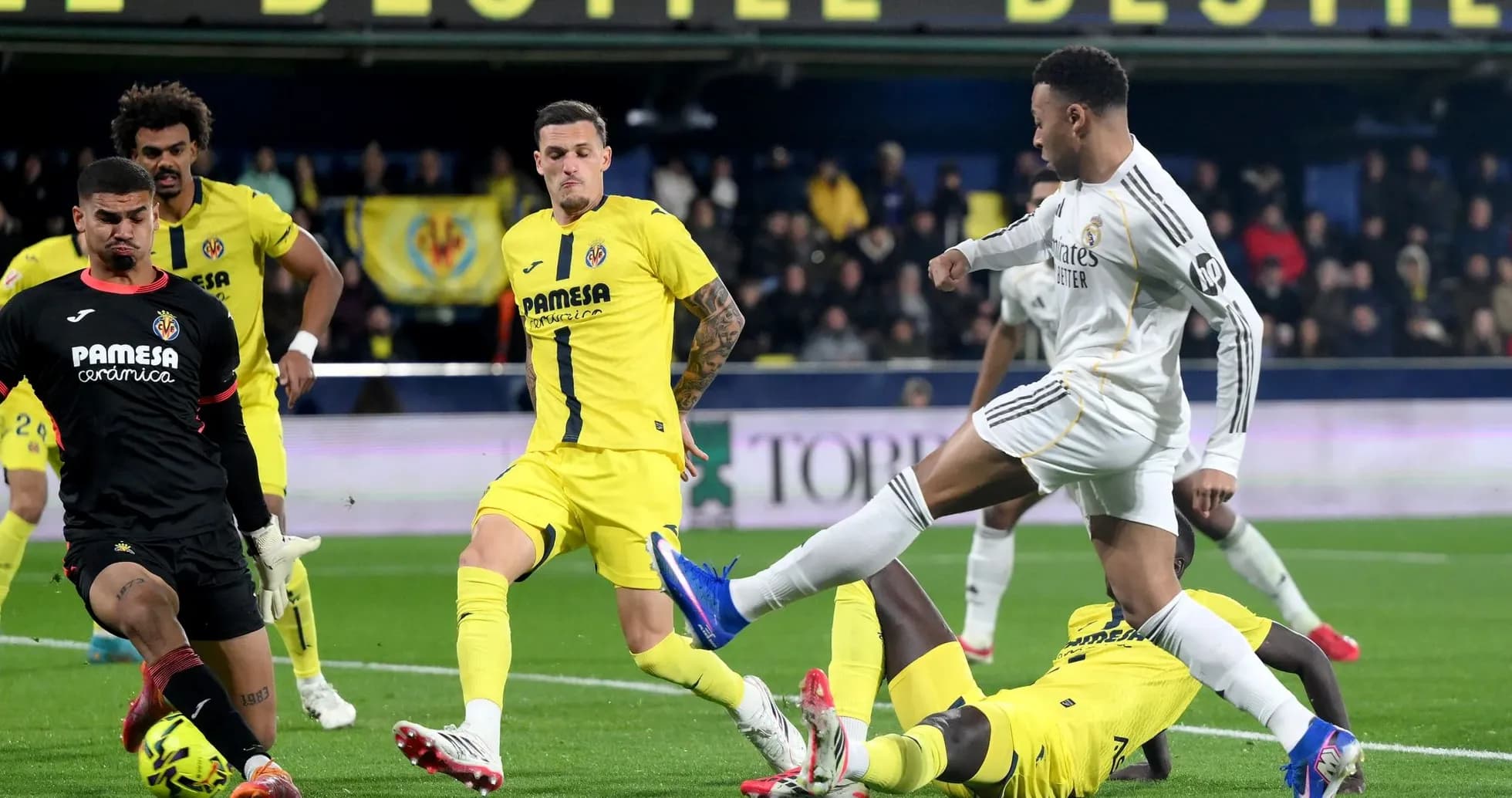
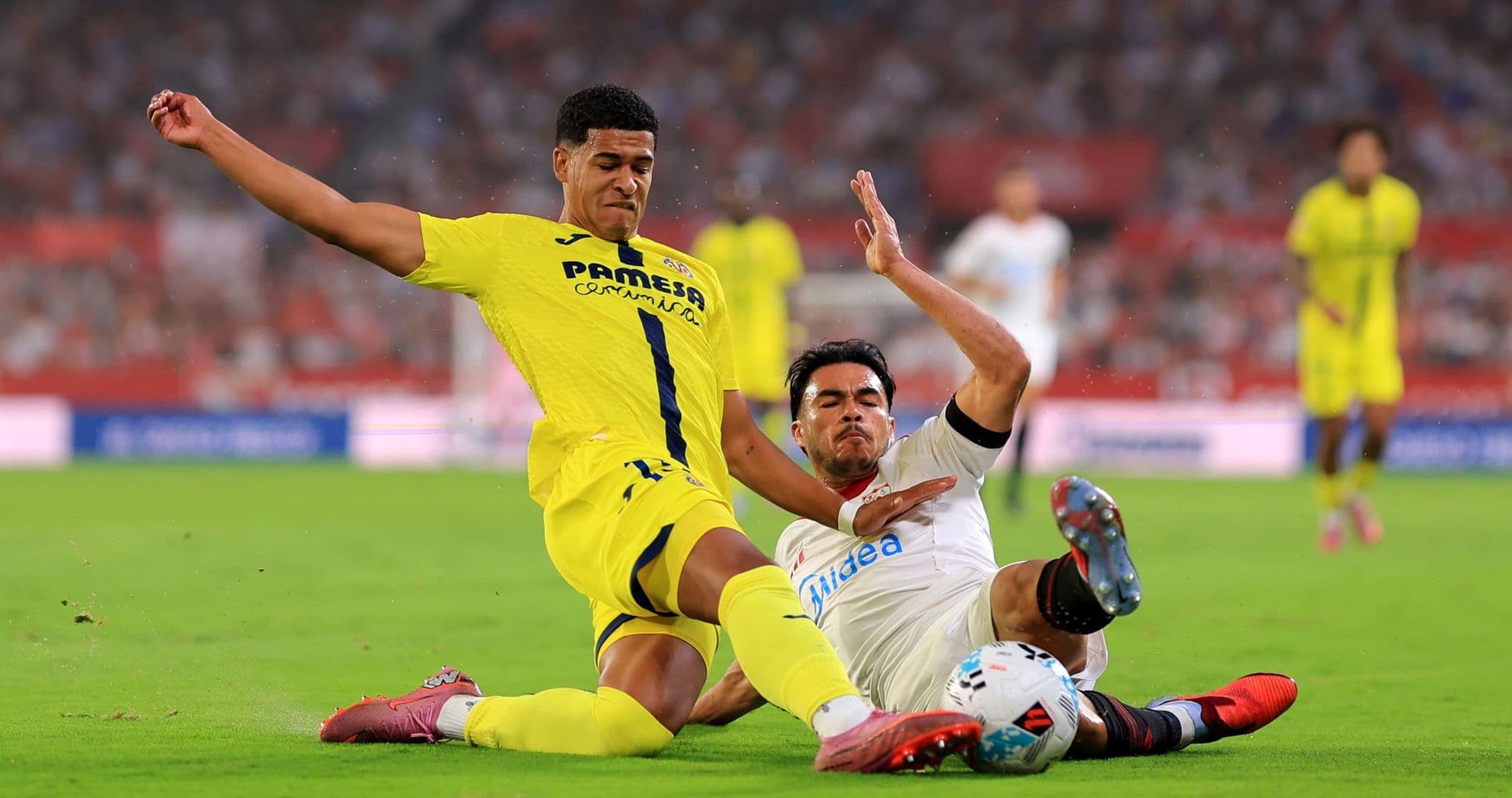
Villarreal’s 2-3 home defeat to Sevilla at Estadio de la Ceramica was a lesson in game management and structural adaptation. In a La Liga fixture where Marcelino’s side controlled the ball and the early scoreboard, Luis Garcia Plaza’s Sevilla gradually bent the game towards their preferred rhythm, exploiting transitional moments and set defensive mechanisms in a 5-3-2 to overturn a 2-0 deficit by half-time and then win it after the break. The numbers underline the paradox: Villarreal had 63% possession, more passes and higher accuracy, yet Sevilla produced more shots, better field occupation in key zones, and the decisive third goal.
Executive Summary of Scoring and Discipline
The scoring opened on 13' when Gerard Moreno (Villarreal) finished a move assisted by Georges Mikautadze, a classic pattern of 4-4-2 interplay with the second striker dropping and combining. On 20', the roles inverted: Mikautadze (Villarreal) struck for 2-0, assisted by Alberto Moleiro cutting in from midfield. Villarreal’s early two-goal lead reflected their positional dominance and clean occupation of the half-spaces.
Sevilla’s response was structural rather than frantic. On 36', Oso (Sevilla) scored, assisted by Lucien Agoume, capitalizing on a rare spell of sustained possession and a better use of wing-back height. At 45', Kike Salas (Sevilla), assisted by Rodrigo Vargas, converted for 2-2, punishing Villarreal’s set-piece and box-occupation vulnerabilities. The halftime score was Villarreal 2-2 Sevilla, despite Villarreal’s control of the ball.
The decisive moment came on 72', when Andre Adams (Sevilla), assisted by Djibril Sow, completed the comeback for 2-3, a goal born from Sevilla’s improved verticality and more aggressive forward pairing once Villarreal’s structure had been altered by substitutions.
Disciplinary log (chronological, with reasons)
- 81' Ayoze Pérez (Villarreal) — Foul
- 90+2' Renato Veiga (Villarreal) — Foul
- 90+3' José Ángel Carmona (Sevilla) — Time wasting
Totals: Villarreal 2 yellow cards, Sevilla 1 yellow card, overall 3 cards.
Tactical Breakdown & Personnel
Marcelino set Villarreal in a 4-4-2 with A. Tenas in goal; a back four of A. Pedraza, Renato Veiga, P. Navarro and A. Freeman; a midfield line of A. Moleiro, P. Gueye, Dani Parejo and N. Pepe; and Gerard Moreno alongside Georges Mikautadze up front. The shape was clearly possession-oriented: Villarreal completed 554 passes, 499 accurate (90%), with 63% ball possession. Their 4-4-2 functioned more like a 2-4-4 in settled attacks, full-backs pushing high and Moleiro stepping inside to create a three-man central platform with Gueye and Parejo.
Early on, this structure overwhelmed Sevilla’s first line. Mikautadze’s tendency to drift between the lines created overloads against Sevilla’s midfield three, and Villarreal’s first two goals came from precisely these dynamics: quick vertical links into feet, followed by third-man runs. The downside was defensive exposure. With only six total shots and 0.81 xG, Villarreal’s chance creation was efficient but not sustained; they relied on early precision rather than volume.
Luis Garcia Plaza’s Sevilla started in a 5-3-2: O. Vlachodimos in goal behind a back five of Oso, G. Suazo, Kike Salas, Cesar Azpilicueta and José Ángel Carmona; a midfield trio of R. Vargas, L. Agoume and Djibril Sow; with A. Adams and Neal Maupay as the front two. Initially, the 5-3-2 sat deep, allowing Villarreal to circulate. But the wing-backs’ starting positions were conservative, leaving Sevilla with difficulty pressing Villarreal’s build-up.
The match turned when Sevilla began to push the outer center-backs and wing-backs higher, especially on the left with Oso and Suazo. Their 13 total shots (5 on target) and 0.88 xG, compared to Villarreal’s 6 shots (4 on target), show how they gradually shifted the game towards more dangerous zones despite having only 37% possession and 325 passes (276 accurate, 85%).
Substitutions were tactically decisive. On 60', T. Partey (IN) came on for P. Gueye (OUT), and T. Buchanan (IN) came on for N. Pepe (OUT), altering Villarreal’s midfield balance. Partey offered more positional discipline but less box-arrival threat, while Buchanan provided width but removed some of the interior control Villarreal had earlier. At 70', S. Comesana (IN) came on for Dani Parejo (OUT), and A. Perez (IN) came on for Mikautadze (OUT). Losing Parejo’s tempo control and Mikautadze’s between-the-lines presence reduced Villarreal’s ability to stabilize possession under Sevilla’s growing pressure.
Sevilla’s bench management was more aligned with the match’s tactical direction. At 68', J. Sanchez (IN) came on for R. Vargas (OUT), refreshing the midfield energy. On 72', A. Sanchez (IN) replaced N. Maupay (OUT), immediately preceding Adams’ winning goal assisted by Sow. Later, N. Gudelj (IN) came on for Sow (OUT) and Castrin (IN) for Adams (OUT) at 86', solidifying the defensive block and adding height and aggression for the closing phase, which directly connects to Carmona’s 90+3' yellow for Time wasting: Sevilla were fully in game-management mode.
In goal, A. Tenas for Villarreal registered 2 goalkeeper saves with goals prevented at -0.22, indicating he conceded slightly more than the model would expect from the shots faced. O. Vlachodimos for Sevilla made 1 save, also with -0.22 goals prevented, but crucially he was less busy; Sevilla’s block limited Villarreal to low shot volume, prioritizing shot suppression over shot-stopping heroics.
The Statistical Verdict
The statistical pattern is clear: Villarreal’s higher possession, superior pass completion and territorial control did not translate into sustained chance creation. Their 6 total shots, 4 on target, and 0.81 xG underscore a side that struck early but then failed to reassert attacking dominance once the game state changed. Their Overall Form in this match reads as technically sound but tactically fragile once forced to protect a lead.
Sevilla, with 37% possession, 13 shots (5 on target), and 0.88 xG, displayed a stronger Defensive Index and transition profile. The 5-3-2, once pushed higher, allowed them to compress central spaces and attack quickly into the channels vacated by Villarreal’s advanced full-backs. The card distribution — Villarreal 2 yellows, Sevilla 1 — reflects Villarreal’s increasing desperation in the final phase and Sevilla’s late-game management, culminating in Carmona’s Time wasting caution.
Ultimately, the match at Estadio de la Ceramica showcased a classic contrast: a possession-heavy side undone by structural tweaks and more incisive, vertically oriented football from a compact, well-drilled 5-3-2.