Thomas Tuchel Reflects on England's World Cup Semi-Final Decision
Thomas Tuchel has refused to back down over the defensive switch that haunted England’s World Cup semi-final – but he admits the moment he “played for survival” came too soon.
England were 1-0 up on Argentina, five minutes plus stoppage time from a first World Cup final since 1966, when Tuchel dropped his team into a back five. The game slipped away in a blur: Enzo Fernandez, then Lautaro Martinez, and the dream was gone.
The substitutions were hammered. The manager’s comments about England’s “DNA” only poured fuel on the fire. Yet in a candid review of the tournament for an England documentary, Tuchel did not try to dodge responsibility.
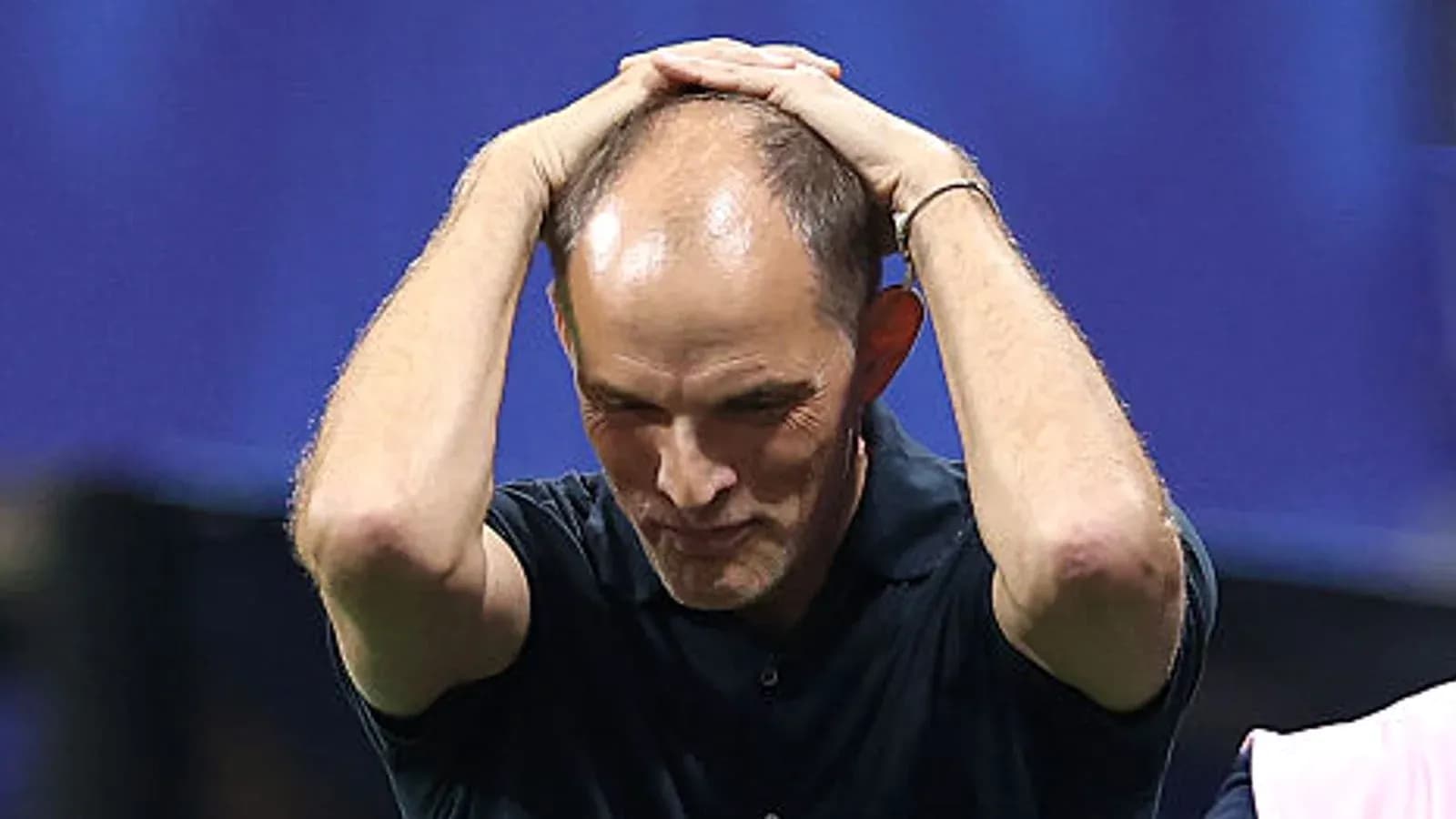
“You can try to kill me here. But it's my scar, it's not your scar,” he said. “I have to live with it. It's not you having to live with this. I'm in charge here and I take these decisions.
“No-one is more hurt than me, no-one wanted it more. They can endlessly torture you and think: if I had done different substitutions, then we would have won the match. You just don't know it.”
The tackle that flipped his mindset
For Tuchel, the turning point did not come with a goal. It came with a tackle.
England had survived a wild Argentina break at 1-0 when Giuliano Simeone burst clear, only for Djed Spence to fly back and produce a desperate, last-ditch challenge. The ball stayed out. The manager’s head started to spin.
Up to then, Tuchel felt England were in the fight.
“We did quite well in the first half, it was totally an even match,” he said. “We had good ball possession moments. I was actually happy and I saw us growing into this match. I felt we were there.
“From the start of the second half, I felt us on the back foot. I felt Argentina were more liberated and free in their movements, finding better solutions. Then we score, we have the next chance straight away.
“We go after them, we have a ball win, we have a chance, we have another half chance, we lose the ball in another attack and it's the Spence tackle and they almost score from a counter-attack.
“It did something to me, it maybe did something to the players. And we suddenly shift into a mindset of: ‘let's just overcome it’. We played like there were four minutes left, rather than 30.”
From that moment, England stopped doing what had given them control.
“From executions, the details of execution, playing around in deep build-up, playing around Messi, playing to one side then switching the side, bringing the game in the opponent's half, making them suffer, having time to recover physically and mentally in ball possession, we were lacking all these things.”
The fear of losing the ball, the urge just to survive, crept in. It would define what came next.
‘We will not survive this’ – and the back five
The storm intensified. Argentina threw on attackers, changed shape, chased chaos. Jordan Pickford had to produce a big save to deny Nicolas Gonzalez just before the final water break. For Tuchel, that was the alarm bell.
“A key moment if I look back at it and what happened to my decision-making, we conceded a big, big chance right before the water break,” he said. “And I thought: we will not survive. This is waiting for death. We don't have ball possession, we're not defending good, we're not defending properly in our 4-4-2. We need help.
“I wanted to give the players something: this is what we do. This is what we do now.”
On came Ezri Konsa. Off went goalscorer Anthony Gordon. England dropped into the much-debated back five.
Tuchel’s description of Argentina’s approach was blunt.
“Argentina then play very, very quickly. Sorry for the language, [they played] f*** it football. ‘We have nothing to lose. Let's f*** it.’
“They played four strikers. They played two wingers, the two strikers and Messi. They took a No 6 off and put a No 10 in. A central defender off and played a No 6. At some points they played 3-1-6. And we struggled.”
Tuchel leaned on what had worked before.
“Coming with this mindset and this experience, we ended the game against Norway in a back five. We ended the match against Mexico in a back five. And we did it,” he said.
“I thought Argentina relied heavily on crosses, they have four strikers in the last line. I think: let's play in a back five.
“I changed to a 5-3-2, we changed the structure. Because I believe we can handle the width better and we still have three central defenders in the middle if crosses still fly in. We changed then to a 5-4-1. Even my mindset is maybe like: let's just overcome it. And it's too early. Too early for that mindset.”
The pressure did not ease. Alexis Mac Allister hit the woodwork. England sank deeper. Then came the goals that ripped the semi-final away.
Fatigue, chaos and a decision that won’t leave him
Tuchel insists his choices were not made in isolation. They were made by a manager watching his team run out of fuel.
“It just piles up through the tournament,” he said. “Congo, 70 minutes trailing 1-0, Mexico the altitude, flying to Miami and playing against Norway. We are tired. And still we hang on until the 88th minute.”
The temptation, with hindsight, is obvious: throw on fresh attackers, push Argentina back, try to win the game on the front foot. Tuchel knows that argument. He also knows how quickly it would have been turned against him.
Asked if he could have made attacking substitutions instead, he replied: “Of course you could. No-one knows what would have happened. We could have done it and maybe lost 2-1 and could have gone: ‘Is he crazy? He finished the game against Norway with a back five, why didn't finish the game off with five?’
“I think from what I saw and the experience, the information and the level of craziness from Argentina put in – change after change after change, it was just one offensive change after the other. That was my solution to the problem.
“That's what the intervention of a coach is. I try to help, you don't implement anything for your ego or whatever. You just try to help.”
Then comes the line that cuts through all the tactical diagrams.
“If we would have been more stable in the game, with more percentage of ball possession, I would have not changed the structure, why would I? And I would have gone for offensive changes. But that is a very, very difficult road to have gone down. That can torture you.”
The torture clearly hasn’t stopped. The semi-final is gone, the World Cup is over, but the decision – that slide into survival mode with half an hour still to play – will follow Tuchel into whatever comes next for this England team.