Thomas Tuchel's Challenge After World Cup Heartbreak
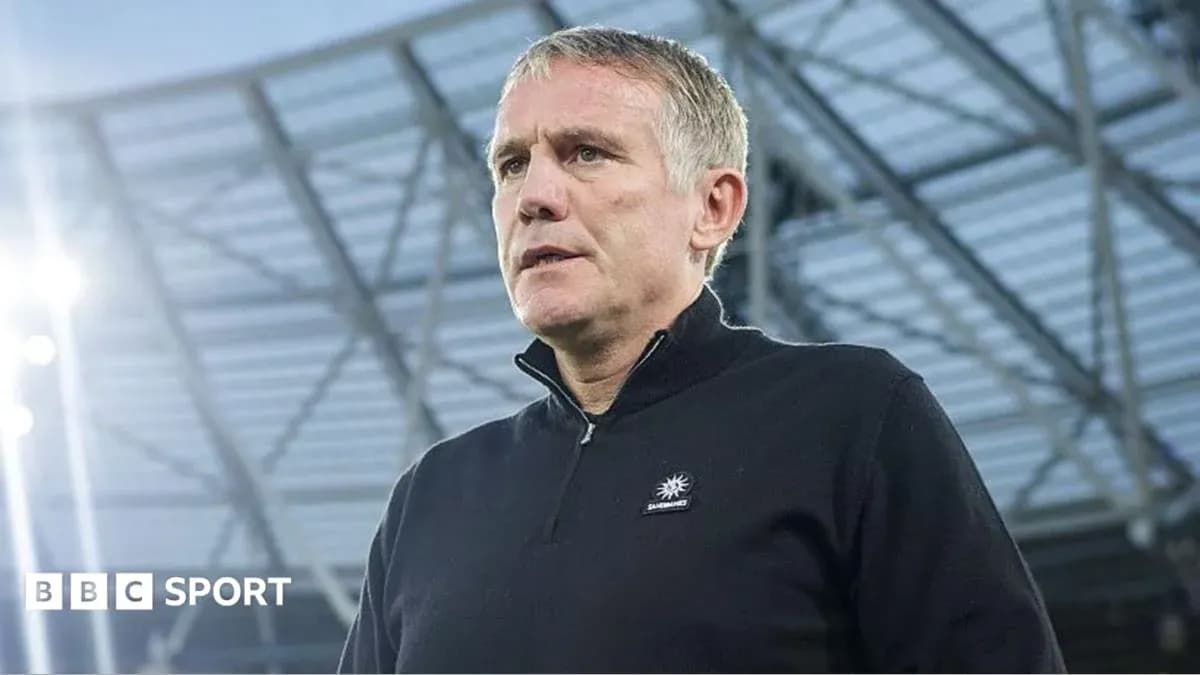
Thomas Tuchel has been a familiar face again around Premier League grounds this season, drifting through directors’ lounges and VIP suites, shaking hands, taking the temperature. In one of those rooms, during one of those polite exchanges, the England manager summed up his reality in five words.
“People are killing me.”
Still.
Two months have passed since the 2-1 World Cup semi-final defeat to Argentina in the United States, yet the air around England’s campaign remains thick with it all – heartbreak, fury, disbelief. A late collapse from a 1-0 lead with five minutes to go is the kind of trauma that embeds itself, not just in a fanbase, but in a nation’s footballing psyche. The scars feel permanent.
From that moment, the conversation about Tuchel split in two.
On one side, a furious faction who cannot get past the idea of a golden chance thrown away. For them, the blame is simple and direct: it sits with the manager who, in their eyes, retreated when he should have advanced, tightened up when he should have trusted his players to play.
On the other, a quieter but no less committed group who see the broader picture. They watched England scrap their way to only the fourth World Cup semi-final in the country’s history. They remember the personality of the team, the surging high points – the last-16 victory over Mexico at the Azteca Stadium, with all the noise and altitude and chaos; the extra-time grind to get past Norway in Miami in 40C heat; the breathless opening win over Croatia in the group. And then, after the devastation of the semi-final, the response: beating France in the third-place play-off to secure England’s best World Cup finish since 1966.
Both camps are real. Both are loud in their own ways. Tuchel feels the first more than the second. The anger has stuck to him. He remains bruised, even slightly baffled, that a semi-final with this level of performance can be framed as failure in such absolute terms. England do not stroll into the last four of World Cups as a habit.
Yet this is the tension that now follows him into the next cycle, all the way to Euro 2028, when England will be co-hosts. On Friday he names his first squad since the World Cup, for four Nations League fixtures that offer no hiding place: Spain at Wembley, Czechia home and away, Croatia in Zagreb.
He wants to turn the page. So do the Football Association. At some point, he has to release his grip on the Argentina defeat, however wild he believes the criticism to be, however much it has distorted the view of what England actually did at the tournament.
The England job has long been described as impossible. The reasons are laid bare again. The expectation crushes. The post-mortems after defeat are relentless. Every setback feeds into a cycle of blame that hangs over the next game, the next squad, the next tournament. You don’t escape it. You just learn to live inside it.
Tuchel at least can lean on the FA’s conviction that he is the right man to lead this team. Their faith is not a soundbite. The clearest example came long before Argentina, in the last 32 against the Democratic Republic of the Congo. England were 1-0 down with 15 minutes to go, the manager himself wondering whether this was how his World Cup would end – early, ugly, disastrous. Then Harry Kane scored twice, England turned it around, and a national meltdown on the scale of Iceland 2016 was averted. If you were handing out Ballon d’Or votes purely on the basis of crisis prevention, Kane would be walking up the steps.
Inside the FA, that night only strengthened Tuchel’s standing. They loved how his in-game tweaks shifted the momentum, as they did at other points in the tournament. They loved the togetherness of the squad, the “brotherhood” Tuchel kept referencing. It was not a marketing line. Staff and players felt it. The FA has anchored itself to that sense of unity. To them, the idea he should have resigned or been sacked after taking England to a World Cup semi-final is not just wrong. It is absurd.
Tuchel went to the World Cup with a mission: “put a second star on the shirt.” He did not get there. The rhetoric was bold, almost reckless, and he did soften it during the tournament. Did that make the fall from the semi-final all the more brutal? Possibly. Yet what would the reaction have been if he had set the bar at the quarter-finals or semi-finals and called that a success? England wanted someone to chase the summit, not to mark out base camp.
The FA knew the scale of that climb. England went into the tournament as fourth seeds. Privately, there was a realism that winning it, especially after the draw they were handed, would be a stretch. The schedule worked against them: a late start, a long gap between their first and second group games, then a compressed run-in. Add the travel, the heat, the altitude, and it always looked like a test of depth and resilience as much as talent.
The Euros are different. Euro 2028 will effectively be a home tournament, shared with Scotland, Wales and the Republic of Ireland. The FA fought hard to be a host for a reason. They believe this group, under this manager, can peak on home soil.
But first, the country has to decide whether it is willing to move on from Argentina. Can Tuchel’s explanation of what happened in those fateful final minutes be heard without rage? Can the semi-final be viewed as both a failure in the moment and a step forward in the bigger picture? That feels like the starting point for everything that comes next.
The tactical autopsy is well known. In the second half, as Argentina went into all-out fury mode, Tuchel could not wrestle back any control. That is on him. England were drained, physically and emotionally, after playing at altitude against Mexico with 10 men and then going 120 minutes against Norway in punishing heat. Even so, they began to drop deeper and deeper long before the second-half hydration break.
Then came the flashpoint. Tuchel replaced winger Anthony Gordon with defender Ezri Konsa, switched to a back five and tried to lock the game down. England were already in survival mode; this was survival doubled. From that point, they barely got out. Tuchel could not change the rhythm, could not get his players on the ball. Again, that sits with him.
The call to reinforce the defence was not a panicked lunge. It was a calculated decision, based on what he was seeing and feeling from his exhausted players. To him, it was the percentage play, the least bad option. It failed. When it failed, it looked dreadful. The optics were brutal: a manager accused of fear, punished for it on the biggest stage. Would bolder, more attacking substitutions have changed the outcome? No one can say with certainty. What is clear is that by the end, England were comprehensively second best.
Now comes the reset, and it starts in a demanding Nations League group that offers immediate jeopardy. Spain at Wembley next Saturday is as sharp an opener as Tuchel could have asked for.
Last time, dropping into Group B did real damage, more than the FA anticipated. The fixtures – Ireland, Finland, Greece – never truly stretched England, even if Greece’s 2-1 win at Wembley was a jolt. The World Cup qualifying group was gentle, too. The hope now is that a tougher Nations League campaign hardens England for the Euros rather than lulling them.
Tuchel’s first squad of the new era will not be straightforward. Four World Cup players are likely to miss out through injury: John Stones, Dan Burn, Djed Spence and Jordan Henderson. That opens the door for a defensive reshuffle. Tino Livramento, Levi Colwill, Jarrad Branthwaite and Lewis Hall are all pressing their cases for recalls and promotion.
In midfield, the question hangs over Kobbie Mainoo. Does he keep his place after a World Cup he would rather forget? His form for Manchester United has been one of the few bright spots in their poor start. Alex Scott and Myles Lewis-Skelly are also in contention to return. Higher up the pitch, Cole Palmer and Phil Foden are pushing for those No 10 roles. Eberechi Eze and Noni Madueke, by contrast, have laboured on their return at Arsenal. There is noise and momentum around Josh King and Ryo Ngumoha. The same goes for Dominic Calvert-Lewin and Liam Delap in the forward positions.
When Tuchel steps up to announce his squad, the names will matter. So will the tone. England’s manager has already learned what happens when he goes on the defensive.
The next phase of his tenure may depend on whether he dares to stay on the front foot.