Sweden’s Unlikely Journey Back to the World Cup
Sweden were supposed to fade quietly from this World Cup cycle. Instead, they crashed, burned, changed coach, and somehow stumbled through a side door back into the tournament. It has been chaotic, emotional and, in the end, very Swedish: stubborn, organised and just about good enough when it mattered most.
The qualifying campaign began as a slow-motion car crash. Under Jon Dahl Tomasson, Sweden took one point from their first four games. The low point came in October 2025, a flat 1-0 defeat away to Kosovo that felt like the end of something. It was. Tomasson was sacked shortly after and the mood around the national team was as bleak as a November afternoon in Stockholm.
Then Graham Potter walked back into Swedish football.
Potter’s return and a reset of identity
For Swedish fans, Potter is not the man who struggled at Chelsea and West Ham. He is the coach who turned Östersund from a fourth-tier side into a fairytale club, winning the Swedish Cup and beating Arsenal in Europe. He is the Englishman who learned the language, embraced the culture and left a mark on the country’s football.
When he gave an interview to Fotbollskanalen in October 2025, it sounded less like polite interest and more like a plea. He spoke openly of his feelings for Sweden, of his love for the football and the country, and called the national job an “incredible opportunity”. Days later, he had it.
The Swedish FA fell for him quickly. He didn’t win either of his first two games, yet by March he already had a contract extension through to 2030. They were buying into a vision as much as results.
Potter’s first big decision was to strip things back. Sweden, under him, would look more like the Sweden people recognised: compact, disciplined, hard to break down, lethal on the break. He spoke of preferring a back four, but when the Nations League opened a back door into the World Cup qualifying process, he didn’t hesitate. For the playoffs he rolled out a 5-3-2, prioritising silence at the back and sharpness in transition.
It worked.
Gyökeres, the talisman who dragged them there
In Spain, in the semi-final against Ukraine, Viktor Gyökeres took the whole thing personally. The Arsenal forward scored a hat-trick in a 3-1 win that looked, at last, like a proper Swedish performance under Potter: organised, ruthless, and built around a centre-forward who refused to miss.
The final against Poland was different. Nervier. Sloppier. Poland were the better side for long spells and Sweden wobbled. Yet the pattern of this new era is already clear: when Sweden need a saviour, Gyökeres arrives.
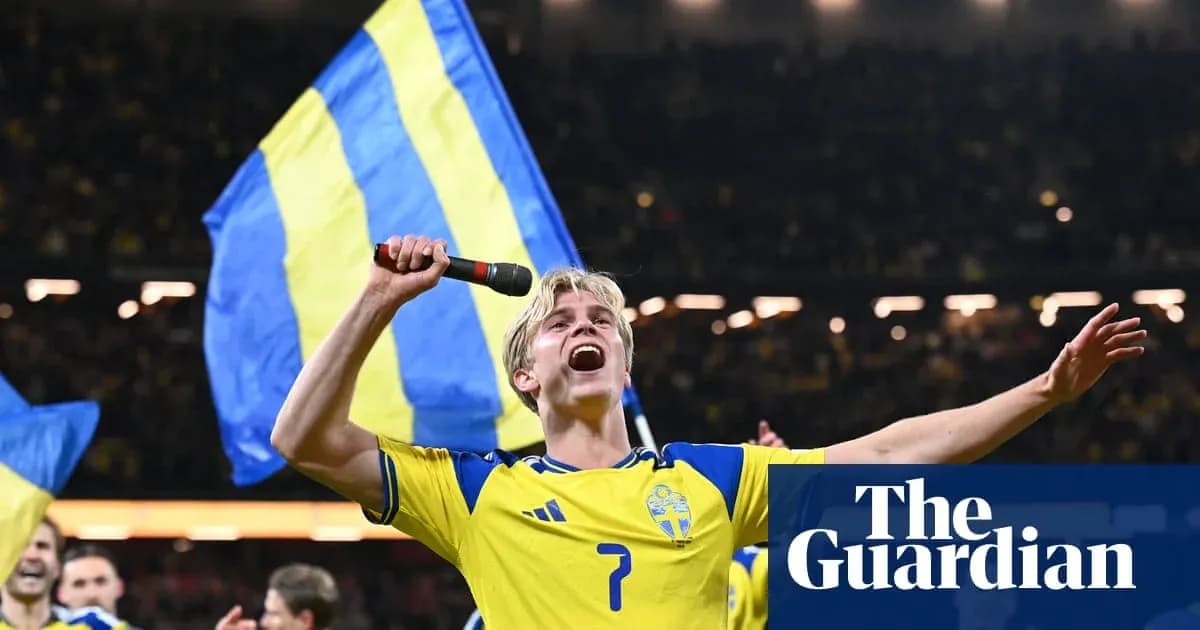
At 2-2 and with the game slipping away, he struck again in the 88th minute. A 3-2 thriller, a ticket to North America, and an entire bench sprinting onto the pitch in disbelief.
Potter later called it the best night of his football life. He spoke of an out-of-body experience, of looking at the goal and then seeing the bench flood the pitch, asking himself if he was really there. For a man who has coached at Stamford Bridge and in the Premier League glare, that says plenty about what this run has meant.
Sweden reached the World Cup having taken just two points from six matches in their original qualifying group. On paper, it makes no sense. In reality, it feels exactly like the sort of twist Potter’s career in Sweden was always going to produce.
Now they land in a group with Tunisia, Netherlands and Japan, and, somehow, there is genuine optimism about reaching the knockouts. That is the Potter effect in its purest form.
A star missing, a star reborn
The optimism comes with a heavy caveat. Dejan Kulusevski will not be there. The captain’s absence is a gaping hole that no tactical tweak can fully cover. His influence on this team, both on the ball and in the dressing room, cannot be overstated. Sweden go to North America without their leader.
Then there is Alexander Isak. Last year he became the most expensive transfer in Premier League history, swapping Newcastle for Liverpool for £125m. It has not been smooth. A difficult first season at Anfield has left questions about his form and his fitness. He did score after coming off the bench in a sobering 3-1 defeat to Norway on 1 June, but that match underlined as many concerns as it eased.
For the national team, though, the hierarchy has shifted. The talisman now is Gyökeres. He also needed time to settle at Arsenal, yet he arrives at this World Cup as the man who scored four of Sweden’s six goals in the two playoff ties. His late winner against Poland turned him into a national obsession. All over the country, fans have been filming their own versions of his goal celebration – a nod to Bane, Tom Hardy’s masked villain in The Dark Knight Rises.
Sweden have had iconic forwards before. Gyökeres is writing his own version of that story, one crunch knockout game at a time.
A baron at the back and a late-blooming anchor
Beyond the headline names, this squad has its own quirks and quiet stories.
Take Gustaf Lagerbielke. The Braga defender was immense in the playoff final, scoring with a thunderous header and then helping to shut down Robert Lewandowski. On its own, that would be enough to mark him out as a player to watch in North America.
Then you add the detail that he is a baron and 254th in line to the Swedish throne.
Lagerbielke, formerly of Celtic, is already being linked with a move to one of Europe’s big-five leagues. A strong World Cup will not just confirm his status; it will accelerate his next step.
Further forward, Jesper Karlström may become the player Sweden cannot do without. Now captain of Udinese, the 30-year-old is a late bloomer who had to grind his way up through Djurgården, then Lech Poznan, before establishing himself in Serie A.
Karlström has been open about his struggles with a gambling addiction during his time at Djurgården and how the club and his family helped him through it. That experience shows in his game: there is a calmness, a maturity, a refusal to panic.
On the pitch he is a classic deep-lying midfielder – strong in the tackle, smart in his positioning, capable of dictating the tempo. With young talents such as Yasin Ayari and Lucas Bergvall around him, his steady presence will be vital against a technically gifted Netherlands and a relentless, intricate Japan.
This is a Sweden side that will lean heavily on its spine: Lagerbielke at the back, Karlström in the middle, Gyökeres up front. It is not glamorous, but it is clear.
The stands: beer, banter and a wall of yellow
On the terraces, Sweden will look much the same as they always do at major tournaments: loud, good-natured, and everywhere.
Fans of Blågult travel in big numbers and rarely go unnoticed. They sing, they joke, they mix easily with opposition supporters. The soundtrack, as ever, will feature “Kanna på”, a terrace anthem that toasts beer pitchers that keep arriving and declares: “We are coming with 100,000 men.”
There will be no Viking invasion of America, but a sea of yellow and blue is coming all the same. The image of Swedish fans filling squares and stadiums from coast to coast will sit in sharp contrast to one of the stranger recent intersections between Sweden and US politics.
Back in 2017, Donald Trump told a rally: “Look what happened in Sweden last night,” citing supposed problems linked to immigration and terrorism. Nothing of note had happened. He later said he was referring to a TV report on Fox News, which did little to clarify matters. Swedish newspaper Aftonbladet responded by listing what actually occurred that day: technical issues for singer Owe Thörnqvist at rehearsals, a man setting himself on fire in central Stockholm, and some road closures in the north due to harsh weather.
This time, the world really will be watching Sweden at night – not through misquoted news segments, but under the bright lights of a World Cup.
From the wreckage of a doomed qualifying campaign to the promise of Potter’s rebuilt side, Sweden arrive in North America with scars, stories and a clear identity. The question now is simple: is stubborn organisation and a red-hot Gyökeres enough to turn this unlikely comeback into something far bigger?