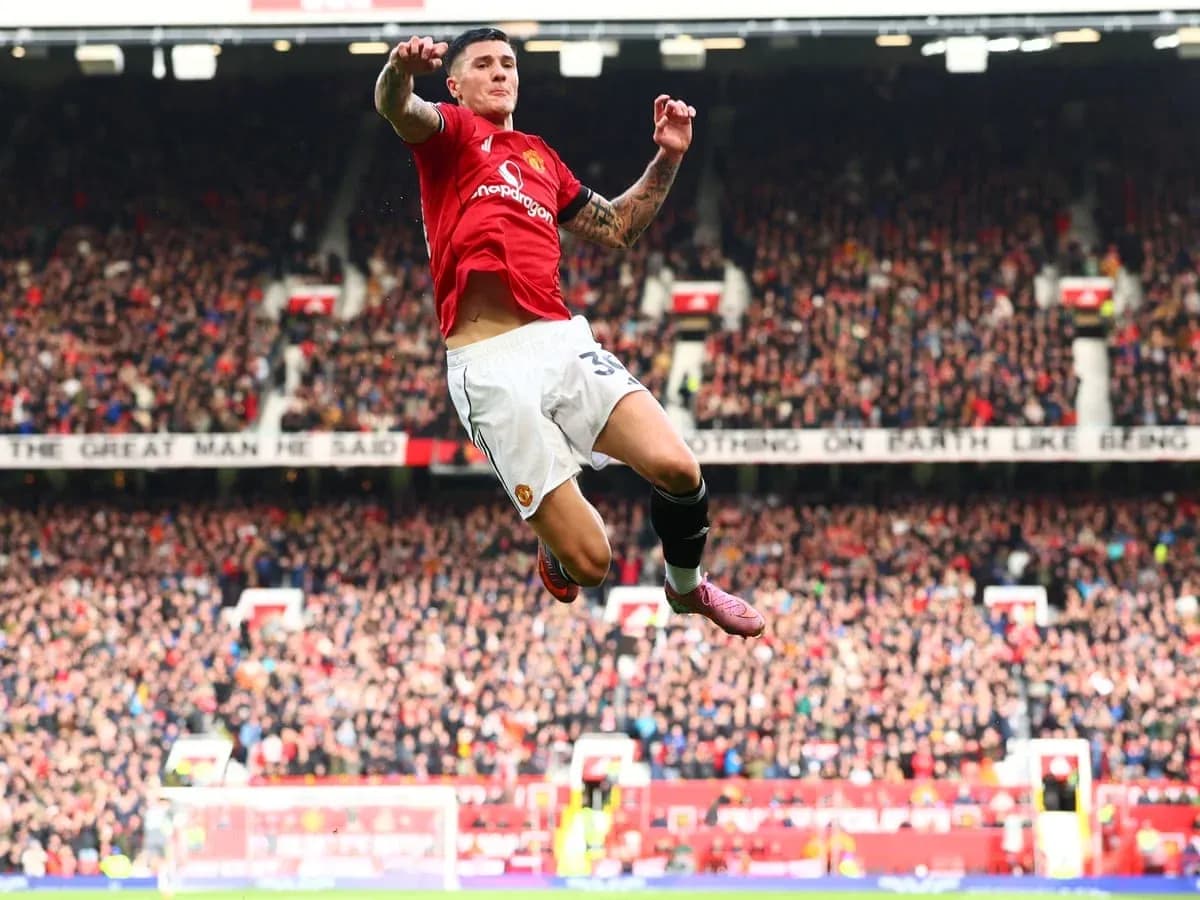
Premier League Clash: Sunderland vs Manchester United Preview
In the league phase, this is a late-season Premier League fixture in 2026 at the Stadium of Light (Round 36) with asymmetric stakes: Sunderland sit 12th on 47 points (37 goals for, 46 against) and are effectively playing for a top-half finish and prize money positioning, while Manchester United arrive 3rd on 64 points (63 goals for, 48 against), still protecting a Champions League qualifying spot and with an outside chance of climbing higher. The result will not decide relegation or the title directly, but it is high-impact for United’s top-4 security and for Sunderland’s push to turn a mid-table campaign into a credible upper-mid-table finish.
Head-to-Head Tactical Summary
The recent head-to-head record in the Premier League shows Manchester United generally on top, with Sunderland occasionally finding a way at home.
On 4 October 2025 at Old Trafford, Manchester United beat Sunderland 2-0, leading 2-0 at half-time and closing the game out without conceding. Earlier meetings in 2017 and 2016 underline United’s attacking edge: on 9 April 2017 at the Stadium of Light they won 3-0, having led 1-0 at half-time; on 26 December 2016 at Old Trafford they won 3-1 after going in 1-0 up at the break. The most notable Sunderland success came on 13 February 2016 at the Stadium of Light, a 2-1 home win after a 1-1 half-time score, showing they can exploit home conditions when United leave defensive gaps. On 26 September 2015 at Old Trafford, United again controlled the contest with a 3-0 win, 1-0 up at half-time. Overall, United have consistently found multiple-goal wins at Old Trafford, while Sunderland’s credible performances and their single win have come at the Stadium of Light, exactly where this new fixture is staged.
Global Season Picture
- League Phase Performance: In the league phase, Sunderland are 12th with 47 points from 35 matches (12 wins, 11 draws, 12 losses), scoring 37 and conceding 46 (goal difference -9). Their home record is relatively solid: 8 wins, 5 draws, 4 losses, with 23 goals for and 19 against. Manchester United are 3rd with 64 points from 35 matches (18 wins, 10 draws, 7 losses), with 63 goals scored and 48 conceded (goal difference +15). Away from home they have 6 wins, 7 draws, 4 losses, scoring 27 and conceding 26, suggesting an effective but occasionally vulnerable away side.
- All-Competition Metrics: Across all phases of the competition, Sunderland’s attack is modest but functional, averaging 1.1 goals per match (37 total in 35) with 1.3 conceded on average. At home they average 1.4 goals scored and 1.1 conceded, supporting the idea of a balanced, slightly conservative home approach. Their card profile shows a tendency to pick up yellow cards particularly between minutes 46-60 and 61-75, which indicates rising defensive aggression in the second half. Manchester United, across all phases, show a stronger attack with 1.8 goals per match (63 in 35) and 1.4 conceded, reflecting an attack-minded but not fully secure side. At Old Trafford they average 2.0 goals for, but away they still produce 1.6 goals on average with 1.5 conceded, again highlighting an open game model. Both teams are perfect from the penalty spot across all phases (4 scored from 4 each), which can be decisive in tight late-season matches.
- Form Trajectory: In the league phase, Sunderland’s form string “DLLWW” shows a recent upturn after a poor run: two defeats followed by a draw and then back-to-back wins. That suggests growing confidence and some tactical stability, especially at home. Manchester United’s league-phase form “WWWLD” indicates a strong run of three straight wins, a setback defeat, and then a draw. They arrive in generally positive shape but with a hint that their performance level has dipped slightly from peak, making this a test of resilience rather than pure momentum.
Tactical Efficiency
Across all phases of the competition, Sunderland profile as a compact, mid-table unit: 1.1 goals scored versus 1.3 conceded per match points to a limited but occasionally efficient attack and a defense that is serviceable but not tight. Their most used formation, 4-2-3-1 (18 matches), underlines a structure aimed at keeping central stability and supporting transitions rather than sustained high-possession dominance. The relatively high number of clean sheets (10) compared to their total wins (12) suggests that when Sunderland are effective, it is often through defensive control rather than outscoring opponents.
Manchester United’s all-phases data shows a more expansive model: 1.8 goals scored and 1.4 conceded per match, with only 6 clean sheets in 35 games. This indicates a proactive but occasionally exposed side, especially away where they concede 1.5 per game. Their use of 3-4-2-1 (18 matches) and 4-2-3-1 (17 matches) reflects tactical flexibility, but both systems rely heavily on attacking width and advanced midfielders, which can leave space for Sunderland counters, particularly at the Stadium of Light where Sunderland’s best home win margin (3-0) shows they can punish open structures.
Without explicit numerical “Attack/Defense Index” values from the comparison block, the efficiency picture must be inferred from these averages: United’s attack is clearly superior in output terms (63 vs 37 goals across all phases, 1.8 vs 1.1 per match), but their defensive concession rate (1.4 per match, similar to Sunderland’s 1.3) suggests that the gap is almost entirely in attacking efficiency. This means that in any model where United’s attack is even slightly below par, the tactical gap between the sides narrows quickly, especially in a single away fixture.
The Verdict: Seasonal Impact
For Sunderland, a win here would be season-defining in terms of narrative and table position. In the league phase, moving from 47 points with three matches left towards or beyond the 50-point mark would position them firmly in the upper half and strengthen the case for continuity in their current tactical model. It would also reinforce the Stadium of Light as a difficult venue, backed up by their positive home record (23 goals for, 19 against). A draw would still be valuable, confirming mid-table safety with upside. A defeat, however, would likely confine them to a lower mid-table finish, respectable but lacking a signature scalp.
For Manchester United, this match has direct implications for the Champions League race. On 64 points and sitting 3rd in the league phase, dropping points away to a mid-table side would invite pressure from teams below and could turn the final two rounds into high-risk fixtures. A win would consolidate their top-4 position, probably allowing them to manage the run-in with more control and rotation, and maintain an outside shot at improving their final ranking. A draw would keep them in a strong but less comfortable position, while a defeat would significantly tighten the race, especially given their relatively modest away defensive numbers (26 conceded in 17 away league matches).
Overall, the seasonal impact is asymmetric: for Sunderland, it is about converting a stable campaign into an overperformance narrative and reinforcing their home identity; for Manchester United, it is a pressure match that could either stabilize their Champions League qualification or reopen the contest. The tactical balance—United’s superior attack against Sunderland’s respectable home defensive record—suggests that the result will heavily shape how both clubs frame their 2026 campaigns: consolidation and growth for Sunderland, or Champions League security and status protection for Manchester United.