
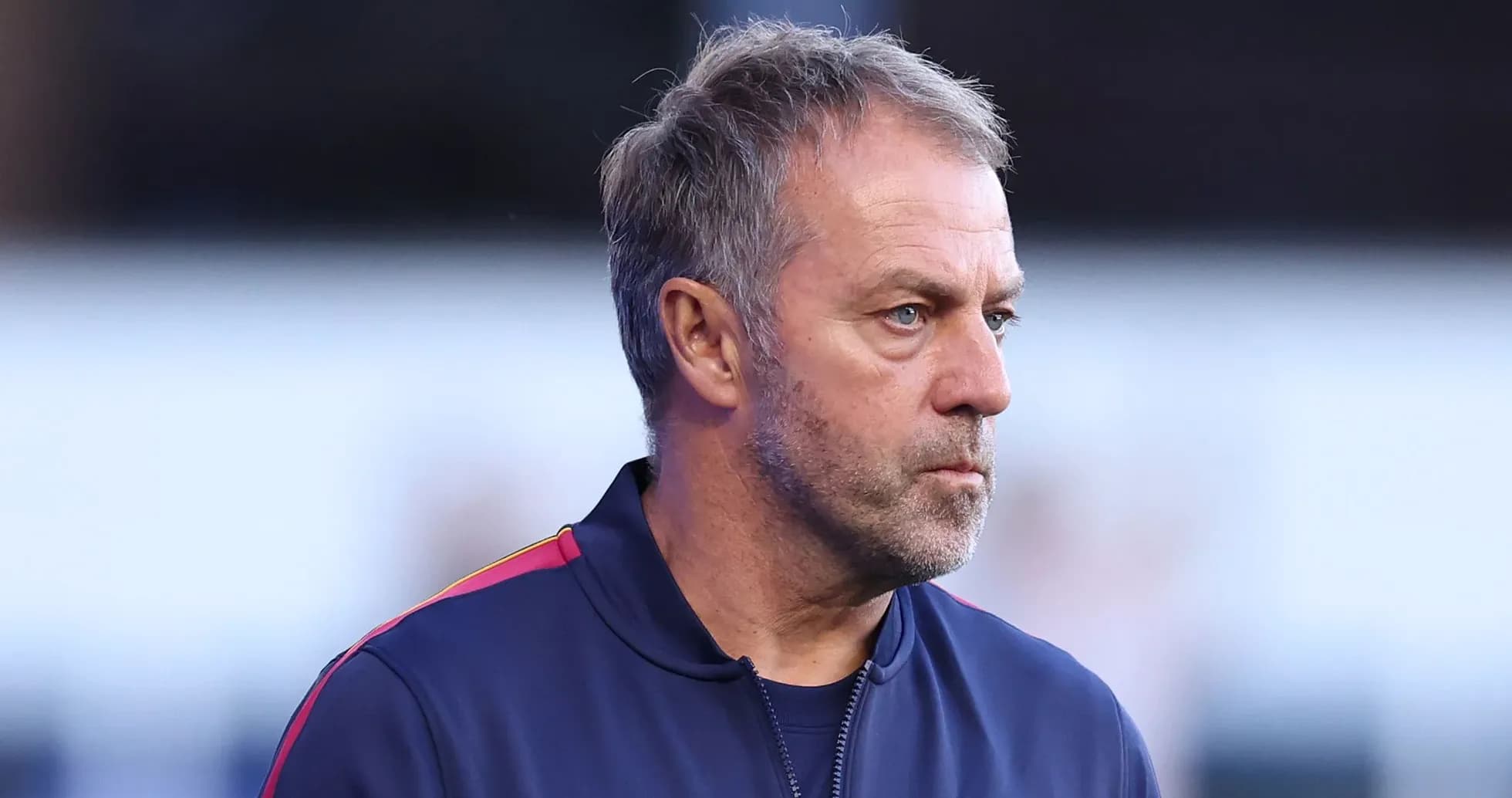
Spain's World Champions Return to Barcelona: Hansi Flick's Challenge
Spain have climbed back to the summit of world football, and the aftershocks are being felt most sharply in Barcelona.
A few weeks on from their tense 1-0 win over Argentina in the World Cup final, the glow of that night still hangs over La Roja – and over a Barça squad now stacked with freshly crowned champions. The final itself was a grind, a tactical arm wrestle laced with heavy challenges and narrow margins. It took a substitute, a moment, and a ruthless finish to crack it.
Ferran Torres, thrown into the fray in the second half, delivered the punch line. In the 106th minute, the Barcelona forward lashed in the winner, his shot carrying the weight of a nation and the echo of Spain’s golden generation. With that strike, Spain lifted their second World Cup, adding 2026 to the 2010 triumph in South Africa and sealing a rare sweep of major international trophies.
For Barcelona, the implications are enormous.
A Dressing Room Full of Champions
The list is striking. Alongside Torres, at least seven Barcelona players were central to Spain’s campaign: Joan Garcia, Eric Garcia, Pau Cubarsi, Gavi, Pedri, Dani Olmo and Lamine Yamal. A core of the club’s present and future now walks back into the Ciutat Esportiva as world champions.
That kind of success can cut both ways. Around the club, there are quiet worries that some of these young stars might feel they have already scaled the mountain. That the hunger might dull. That the edge might soften.
Hansi Flick doesn’t see it that way.
The former Bayern Munich coach, now charged with steering Barça through a delicate era, views the new medals as fuel, not baggage. He welcomes the egos, the confidence, the demands that come with players who know what it takes on the biggest stage.
“Champions never stop. They know how to win titles and that is important. This title should give them more confidence. When you work hard and focus every day, it becomes something special. That's what we want to achieve this year,” Flick said at Saint George’s Park, his words as much a challenge as a reassurance.
He wants those World Cup winners to drag the rest of the squad with them.
A Giant Hole at Number Nine
The optimism doesn’t hide the obvious. Barcelona have a problem at the sharp end of the pitch.
Robert Lewandowski’s departure at the end of his contract has ripped out the club’s reference point at center-forward. For years, the Pole offered guarantees: goals, presence, structure. Now there is a void, and it remains unfilled.
The club has moved for wide players, adding pace and creativity in the channels, but the pure ‘number nine’ profile is still missing. Inside the coaching offices, that absence is more than a talking point; it’s a strategic headache.
Ferran Torres sits at the heart of that dilemma. Hero of the World Cup final, versatile, capable of playing centrally or wide, and now the subject of interest from Paris Saint-Germain. Flick knows that what happens with Torres could shape his entire attacking plan.
“It depends on the team. We have to wait. I have complete confidence in Deco and we know we have to do something. It also depends on Ferran. We'll see what we do,” Flick admitted, laying bare both the uncertainty and the trust in the club’s sporting structure.
The pressure to find solutions up front is real. So is the risk of losing a player who has just written his name into Spain’s history.
Setbacks Before the First Whistle
Even the pre-season rhythm has been disrupted.
A scheduled friendly against Preston North End was scrapped when the English club couldn’t field enough players. What should have been another data point for Flick, another chance to test combinations and fitness levels, simply vanished from the calendar.
On top of that, Frenkie de Jong’s injury has punched a hole in midfield. The Dutchman’s ability to control tempo and break lines is difficult to replicate, and his absence would tempt many coaches to demand an immediate signing.
Flick has chosen a different route.
He remains calm, at least outwardly. Instead of pushing for a quick fix in the market, he is leaning into internal solutions, banking on the development of the players already in the building and the gradual reintegration of those returning from international duty. For a club wrestling with financial and structural constraints, that stance is as pragmatic as it is philosophical.
Flick’s Tightrope
The challenge in front of Hansi Flick is clear and unforgiving.
He must mold a squad heavy with world champions into a hungry, club-focused unit. He must do it while navigating a transfer market where needs are obvious, resources are limited, and key decisions hinge on players like Ferran Torres. He must absorb injuries, canceled friendlies, and off-field noise, and still present a team ready to compete from the first competitive kick.
Flick’s message does not change.
“When you work hard and focus every day, it eventually becomes something special,” he said, repeating the mantra that has followed him from Germany to Catalonia.
The medals are back in Barcelona. The question now is whether that World Cup glow becomes a springboard to a new era – or a standard this squad finds itself constantly chasing.




