Barcelona’s 5-2 Victory Over Rayo Vallecano – Tactical Insights
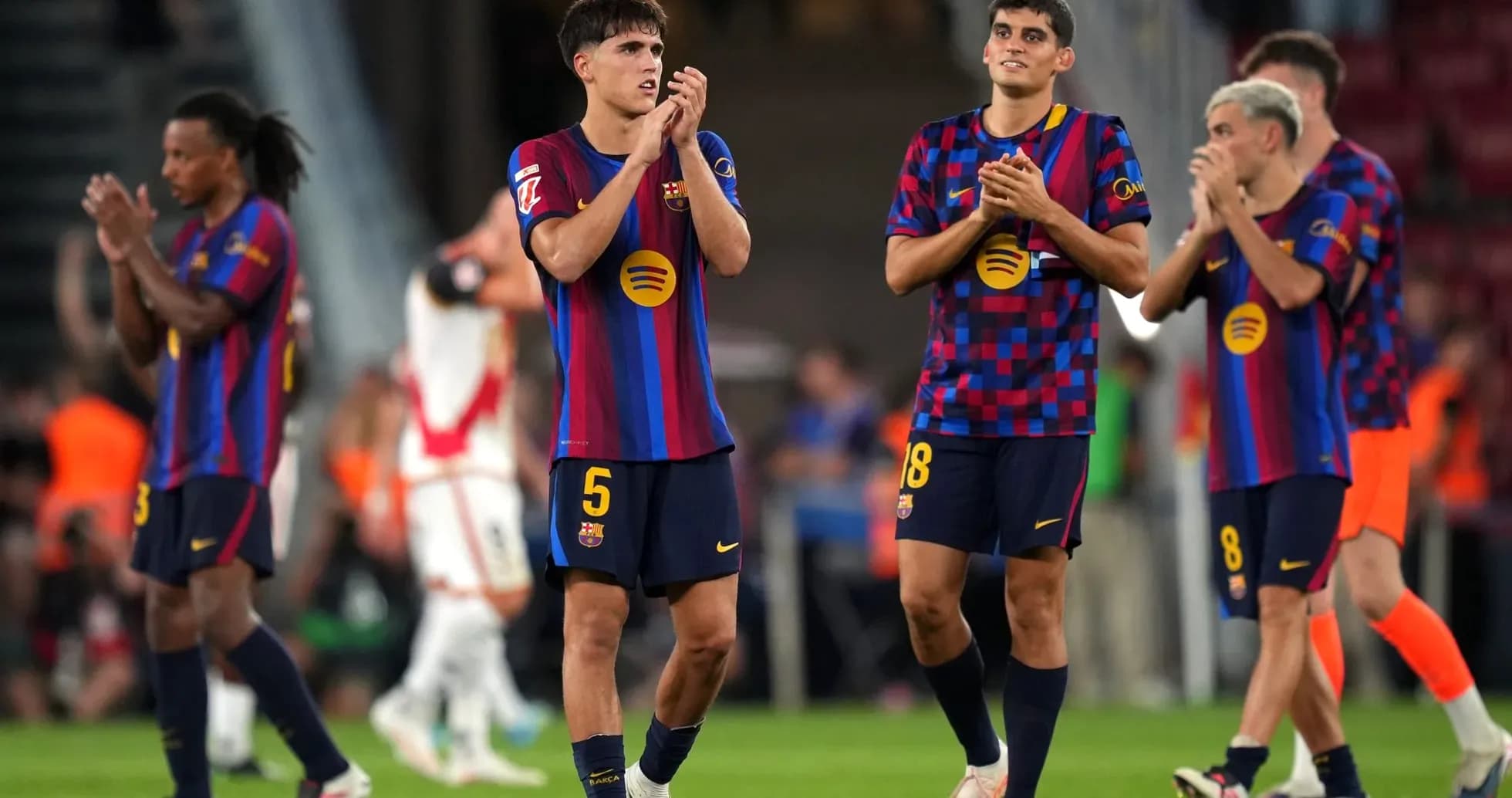
Under the Camp Nou lights, this Regular Season - 3 fixture in La Liga became a statement of intent. Barcelona’s 5-2 win over Rayo Vallecano did more than add three points; it crystallised the tactical identities of both sides. Following this result, Barcelona sit top with 9 points and a goal difference of 10, built on 12 goals scored and only 2 conceded overall. Rayo, by contrast, are lodged in 18th with 1 point and a goal difference of -4, their 4 goals for overwhelmed by 8 against.
I. The Big Picture – Barcelona’s new structure, same authority
Hansi Flick went with a 4-2-3-1 that looked tailor‑made for the current squad realities. Without F. de Jong and Gavi, both sidelined with knee injuries, the double pivot of M. Bernal and Pedri became the hinge of everything. Bernal anchored in the “3:2” lane, allowing Pedri, starting in the “3:1” slot, to step higher and connect with the line of three: Lamine Yamal on the right, D. Olmo centrally, and A. Gordon off the left behind Raphinha.
This structure dovetails with Barcelona’s seasonal profile: heading into this game they had won all 3 league matches, scoring 12 overall at an average of 4.0 goals per game and conceding only 0.7 on average. At home they had already produced 7 goals in 2 matches (3.5 per game), with just 2 conceded. The 5-2 here simply extended a pattern: at Camp Nou this season, Barcelona’s biggest home win is 5-2, and they have yet to fail to score.
Rayo Vallecano mirrored the shape on paper with their own 4-2-3-1, but the symmetry was deceptive. Benat San Jose’s side arrived in Barcelona with no wins in 3, just 1 point, and an overall defensive record of 8 goals conceded at 2.7 per game. Away from home, the numbers are harsher: 7 conceded in 2 trips at an average of 3.5, including a biggest away defeat of 5-2. The scoreline at Camp Nou was not an aberration; it was a continuation.
II. Tactical Voids – Absences that shaped the chessboard
Barcelona’s missing list was long but instructive. F. de Jong and Gavi, both out with knee injuries, removed two of the side’s best press‑resistant midfielders. That forced Flick to lean into structure over improvisation: Bernal as the positional metronome, Pedri as the creative pivot, and the wide triangle of Gordon and Lamine Yamal feeding Raphinha. D. Livakovic’s “Inactive” status opened the door for J. Garcia to start in goal, and he responded by overseeing another win in a season where Barcelona have already kept 2 clean sheets overall.
R. Bardghji and M. Casado were also absent by decision or injury, but given the depth on the bench – K. Adeyemi, Fermín, Rodri and J. Cancelo among others – the tactical impact was softened. Flick could still change the game’s rhythm from the bench without compromising the system.
For Rayo, the voids were more structural. At the back, Luiz Felipe (hamstring injury) and M. Kumbulla (muscle injury) stripped depth from central defence, forcing F. Lejeune to marshal a back line with P. Ciss stepping in as a defender and J. Vertrouwd at left‑back. In midfield and attack, the absence of I. Palazon and A. Batalla reduced their ability to retain the ball under pressure and to counter with precision.
Disciplinarily, the season’s card profile underlines a psychological fault line. Rayo’s yellow cards cluster late: 50.00% between minutes 61-75, 33.33% from 76-90, and 16.67% in stoppage time. It paints a picture of a side that frays as the game stretches, exactly when Barcelona’s technical dominance tends to suffocate opponents. Barcelona, by contrast, have taken a single yellow card this season, and only between 16-30 minutes, with no reds; their control is tactical and emotional.
III. Key Matchups – Hunter vs Shield, Engine Room vs Enforcer
Hunter vs Shield
Raphinha arrived as La Liga’s leading scorer, with 5 goals and 1 assist in 3 appearances, a 9.03 average rating, and a ruthlessly efficient shot profile: 8 shots, 7 on target. He had already converted 1 penalty from 1 this season, with no misses. His movement from the “5:1” channel in this match relentlessly targeted the space between Lejeune and J. Vertrouwd, forcing Rayo’s back four to collapse centrally and opening corridors for Gordon and Lamine Yamal.
Rayo’s “shield” was fragile before a ball was kicked. On their travels they had conceded 7 goals at an average of 3.5 per match; overall, 8 conceded in 3. The 5-2 here simply confirmed that their defensive block, especially away, cannot absorb sustained wide‑to‑central rotations. Once Barcelona’s front four began to interchange – Raphinha dropping, Olmo pushing beyond, Gordon underlapping – the lines between Rayo’s defence and double pivot of O. Valentin and G. Bouare were repeatedly torn open.
Engine Room – Playmaker vs Enforcer
In midfield, the duel was less about individual tackles and more about who could dictate tempo. Pedri, starting as one of the two deeper midfielders, orchestrated the vertical connections, while Bernal provided the security to let full‑backs J. Kounde and X. Espart step high. Espart’s season numbers tell the story: 156 passes at 86% accuracy, 4 key passes, 8 tackles, 5 interceptions, and 2 assists overall. He is both outlet and enforcer down the left, and his presence allowed Gordon to stay high and inside, where his 3 assists this season have made him La Liga’s top provider.
For Rayo, U. Lopez and O. Valentin were tasked with screening and launching transitions, but the lack of sustained possession meant they were mostly reacting. The creative burden fell on J. de Frutos and Álvaro García behind S. Camello. García, with 1 goal, 1 assist, and 4 tackles plus 1 blocked shot this season, tried to double as both outlet and auxiliary full‑back, but the volume of defending required blunted his attacking threat.
Up front, S. Camello came in as Rayo’s chief hunter: 3 goals in 3 appearances, 5 shots with 4 on target, and 6 fouls drawn. His willingness to duel – 28 overall, with 9 won – gave Rayo moments of respite and a route to goal. Yet against Barcelona’s central pairing of P. Cubarsi and A. Christensen, supported by Bernal dropping in, his touches were often isolated, his pressing more about survival than turning the tide.
IV. Statistical Prognosis – What this result tells us
Following this result, the numbers harden into narrative. Barcelona’s overall goal difference of 10 (12 scored, 2 conceded) is the statistical face of a side that dominates both boxes. They have yet to lose or draw, have not failed to score once, and have already posted two clean sheets. Their penalty record is perfect so far: 1 taken, 1 scored, none missed.
Rayo’s trajectory is the mirror image. Overall they have 4 goals for and 8 against, a goal difference of -4, no wins, and no clean sheets. Away, they concede 3.5 per game and have already suffered a 5-2 defeat, the same margin inflicted here. Their late‑game yellow card surge suggests that as opponents increase pressure, Rayo’s defensive discipline erodes.
Tactically, this match underlined a clear hierarchy. Barcelona’s 4-2-3-1, built on a secure double pivot and high‑impact wide players like Lamine Yamal and Gordon, is calibrated to squeeze vulnerable defences like Rayo’s. With Raphinha in ruthless form and Espart providing balance and progression from full‑back, the league leaders look structurally robust even amid injuries.
For Rayo, the task is stark: reinforce the defensive spine, manage emotional control in the final half‑hour, and find ways to connect Camello and Álvaro García to transitions earlier, before fatigue and pressure turn matches into damage limitation. At Camp Nou, they were not just beaten; they were tactically mapped and exposed by a side whose numbers and structure now both read like those of a genuine title contender.