Spain's Tactical Masterclass Over France in World Cup Semi-Final
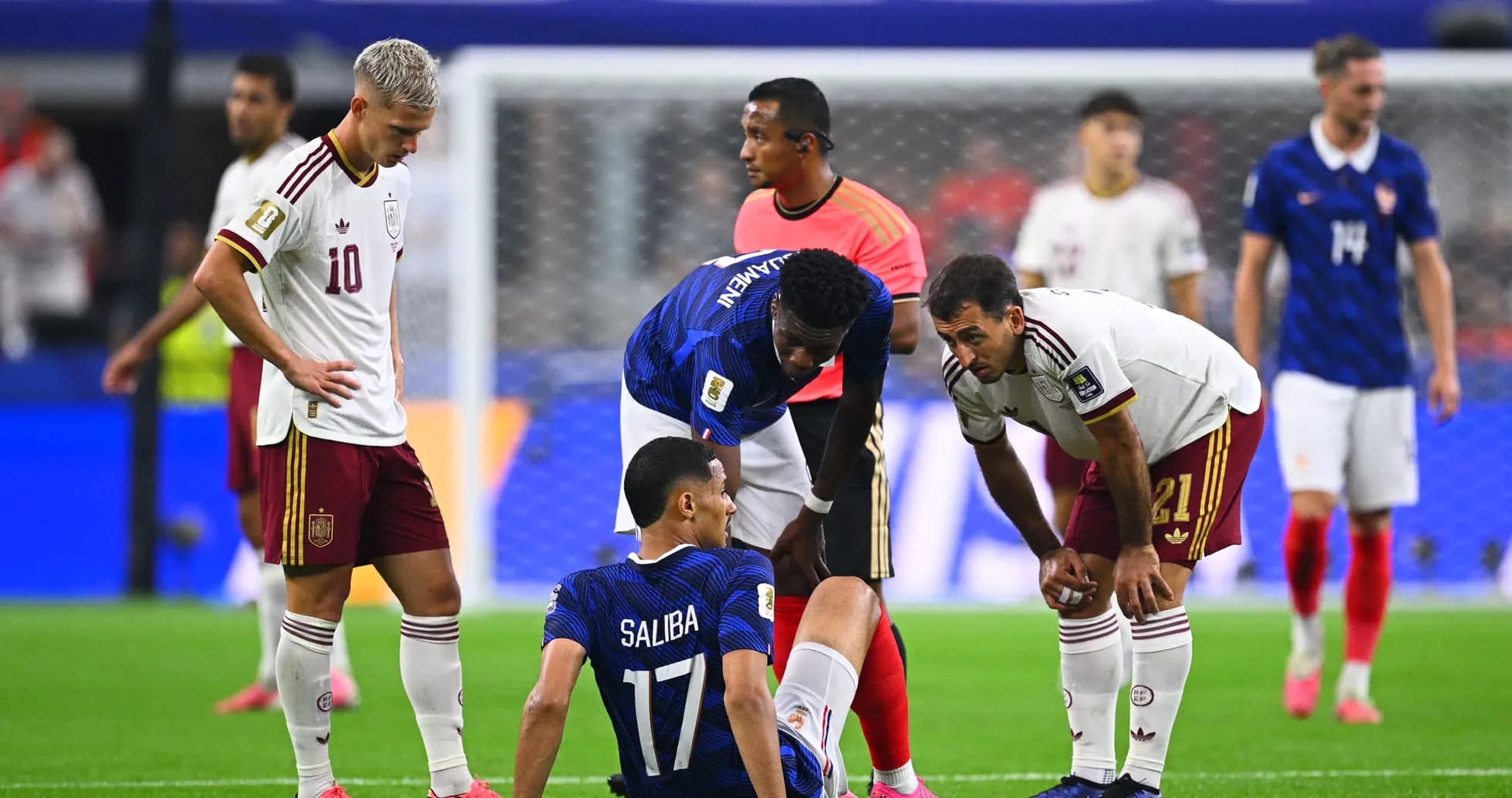
The lights in Arlington had barely settled when the reality of the night became clear: Spain, measured and ruthless, had just dismantled France 2–0 at Dallas Stadium to book their place in the World Cup final. Following this result in the Semi-finals, the story is as much about tactical control and squad identity as it is about the scoreline.
France arrived as the tournament’s most explosive attack. Overall this campaign, they had scored 16 goals in 7 matches, with an overall average of 2.3 goals per game and 2.2 at home. They had conceded only 4 overall, an overall average of 0.6. An overall goal difference of +12 (16 scored, 4 conceded) underpinned a run of 6 straight wins before a final-day stumble in the group. Spain, for their part, came in unbeaten, with 13 goals overall at an overall rate of 1.9 per match and a defensive record that bordered on perfection: just 1 goal conceded overall in 7 games, an overall average of 0.1, with 6 clean sheets overall.
Team Formations
That clash of identities was written straight onto the tactical boards. Didier Deschamps stayed loyal to the 4‑2‑3‑1 that had carried France through the tournament, a shape they had used in all 7 fixtures. Mike Maignan started behind a back four of Jules Koundé, Dayot Upamecano, William Saliba and Lucas Digne. Aurélien Tchouaméni and Adrien Rabiot formed the double pivot, with Ousmane Dembélé, Michael Olise and Bradley Barcola supporting Kylian Mbappé as the lone forward.
Luis de la Fuente answered with Spain’s now-familiar 4‑1‑2‑3, a structure he had turned to most often this campaign. Unai Simón anchored a back line of Pedro Porro, Pau Cubarsí Paredes, Aymeric Laporte and Marc Cucurella. Rodri sat as the single pivot, with Dani Olmo and Fabián Ruiz ahead of him, while Lamine Yamal and Álex Baena flanked Mikel Oyarzabal in a fluid front three.
Tactical Battle
From the opening whistle, Spain’s shape did the talking. Rodri’s positioning between the lines suffocated the central zones where Olise usually thrives as the tournament’s leading creator, with 5 assists and 13 key passes overall. France’s plan, as it had been all tournament, was to use that creative triangle: Olise between the lines, Dembélé driving from the right, Mbappé attacking the space behind. But Spain’s compact 4‑1‑2‑3 narrowed the corridor between their full-backs and midfield, forcing France’s wide players into predictable, touchline-hugging lanes.
The “Hunter vs Shield” duel was Mbappé against Spain’s defensive machine. Overall, Mbappé had 8 goals and 3 assists, with 30 shots and 19 on target; he had been the sharpest weapon in the competition. But Spain’s overall record of just 1 goal conceded, backed by 6 clean sheets overall, was no statistical mirage. Laporte and Pau Cubarsí Paredes held a staggered line, one stepping into Mbappé’s feet, the other covering the depth, while Rodri slid across to block the inside channel where Mbappé usually cuts in to combine with Olise.
On France’s right, Dembélé faced a different kind of trap. With 5 goals and 2 assists overall and 13 shots in the tournament, he had been devastating when allowed to isolate full-backs. Here, Cucurella rarely engaged him 1v1 in open space. Instead, Spain’s left-back delayed and shepherded, trusting Fabián Ruiz and Rodri to close the angles inside. The result was that Dembélé’s dribbles were pushed away from the box, and the passing lanes into Mbappé’s feet were constantly crowded.
Midfield Dynamics
In midfield, the “Engine Room” duel tilted the match. Tchouaméni and Rabiot, usually the platform for France’s transitions, found themselves outnumbered by Rodri, Olmo and Fabián. Spain’s structure turned France’s 4‑2‑3‑1 into a 4‑4‑1‑1 out of possession, with Olise dropping alongside the double pivot. That robbed France of their usual vertical snap. While France’s season numbers show a side that can dominate both ways — 4 clean sheets overall, only 1 match overall where they failed to score — Spain’s pressing and circulation made them look strangely blunt.
Discipline and Set Pieces
Discipline, too, told a quiet story. France had shown a tendency to collect yellow cards late, with 33.33% of their bookings overall coming between 76–90 minutes and another 16.67% overall in added time up to 105 minutes. Spain, by contrast, concentrated their cautions around the end of halves, with 33.33% overall between 31–45 minutes and 50.00% overall between 91–105 minutes. In a semi-final of fine margins, Spain’s ability to stay structurally disciplined even when under pressure in those phases allowed them to preserve control without descending into chaos.
Set pieces and penalties had been another subplot of France’s run. Overall this campaign they had been awarded 2 penalties, scoring 1 and missing 1 — a 50.00% conversion rate that hinted at fragility from the spot. Spain, by contrast, had scored their only penalty overall, a 100.00% record. In a knockout match where a single mistake can tilt the night, that underlying edge in composure from 12 yards always loomed in the background, even though this semi-final was settled in open play.
Statistical Insights
From a statistical prognosis point of view, Spain’s progression feels like the logical extension of their numbers. They arrived with a perfect record in terms of defeats — 0 losses overall in 7 matches — and a defensive block that had conceded only once overall. Their attack, at 1.9 goals per game overall, did not match France’s raw volume, but it was married to control and efficiency. France’s +12 overall goal difference (16 scored, 4 conceded) had been built on overpowering weaker sides; against a unit as organised as Spain’s, their reliance on individual brilliance met its limit.
Following this result, the narrative of the tournament shifts. France, who stormed through Group I with 9 points, 10 goals for and 2 against in 3 matches overall, leave the Semi-finals having finally met a defence they could not bend. Spain, who topped Group H with 7 points, 5 goals for and none conceded in 3 group matches overall, now carry into the final not just momentum, but the statistical profile of champions: balanced, disciplined, and almost impossibly hard to break.