Spain vs Argentina: World Cup Final Clash of Footballing Philosophies
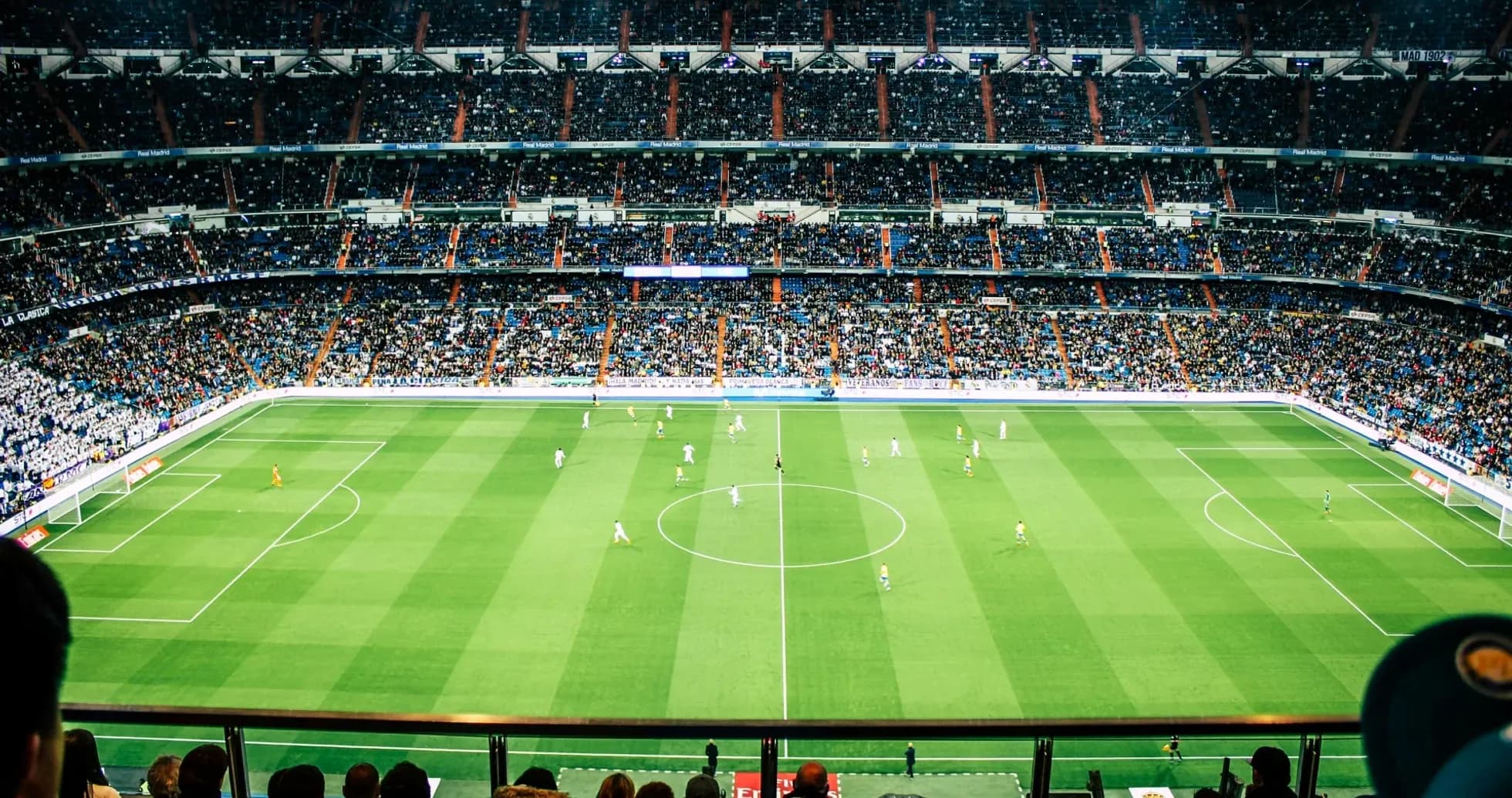
MetLife Stadium becomes the axis of world football as Spain and Argentina walk out for a World Cup Final that feels like a clash of footballing philosophies as much as of squads. Kick-off comes under New Jersey lights, but the numbers both sides bring into this showpiece are forged over a long month of near-perfection.
Spain's Campaign
Heading into this game, Spain arrive as the tournament’s most watertight side. Overall this campaign they have played 8 fixtures, winning 7 and drawing 1, without a single defeat. In total they have scored 14 goals and conceded just 1, an overall average of 1.8 goals for and 0.1 against per match. The group-stage standings echo that dominance: in Group H they topped the table with 7 points from 3 matches, scoring 5 and conceding none, for a goal difference of +5.
Argentina's Path
Argentina’s path has been more volatile but just as imposing. In Group J they claimed 9 points from 3 matches with a goal difference of +7, scoring 8 and conceding 1. Across the full campaign they also stand at 7 wins from 8 fixtures, but their football has been more open: 19 goals scored and 8 conceded overall, an average of 2.4 goals for and 1.0 against per game. Where Spain suffocate, Argentina overwhelm.
Team Lineups
Luis de la Fuente doubles down on Spain’s identity with a 4-2-3-1 that looks like a laboratory for control. Unai Simón stands behind a back four of Pedro Porro, Pau Cubarsí, Aymeric Laporte and Marc Cucurella. Ahead of them, Rodri and Fabián Ruiz form a double pivot designed to dictate tempo and deny transition. The attacking band of three is where Spain’s imagination lives: Lamine Yamal wide, Dani Olmo central, Álex Baena tucking in from the other side, all orbiting around Mikel Oyarzabal as the lone forward.
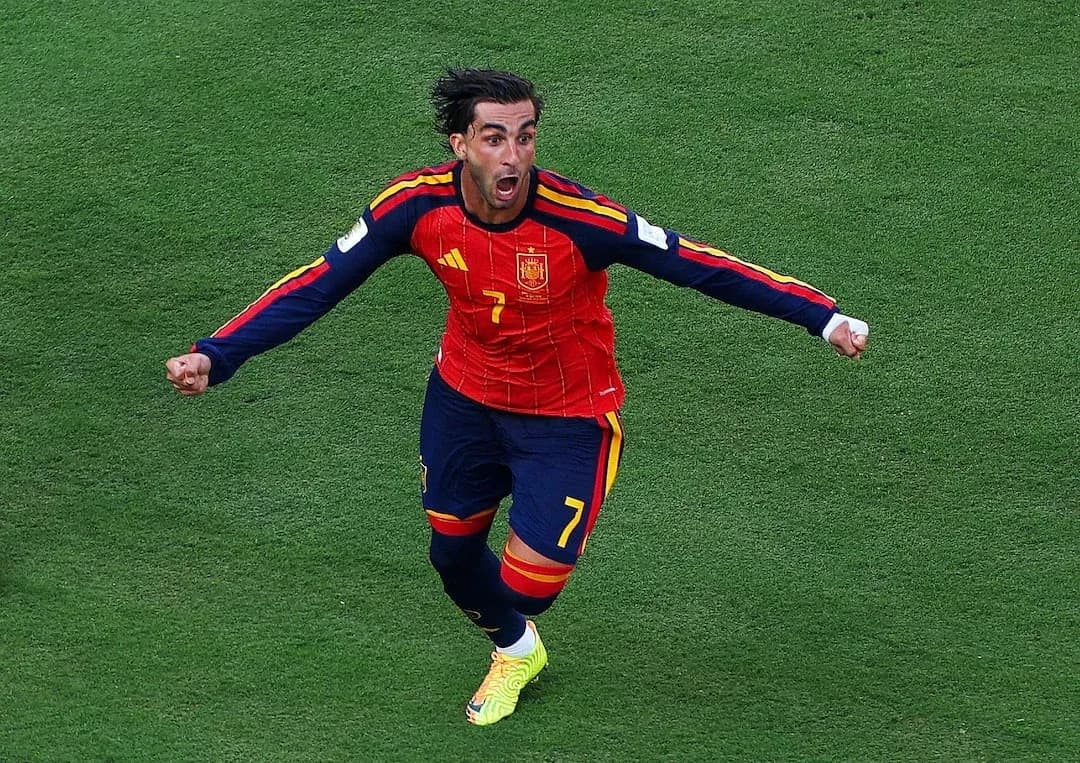
The bench deepens that technical profile rather than changing it. Pedri and Gavi offer alternative rhythms in midfield; Mikel Merino brings aerial presence and late runs; Nico Williams and Ferran Torres give verticality and direct running if Spain need to stretch a tiring back line. Alejandro Grimaldo and Eric García are there to tilt the back four into a back three in possession, freeing Cucurella or Porro to push higher.
Lionel Scaloni answers with a classic Argentina 4-4-2 that is anything but conservative. Emiliano Martínez anchors a back line of Gonzalo Montiel, Cristian Romero, Lisandro Martínez and Nicolás Tagliafico. In front of them, Rodrigo de Paul, Enzo Fernández, Alexis Mac Allister and Nicolás González form a hard‑running, technically gifted midfield square, with Lionel Messi and Julián Álvarez up front.
The Albiceleste bench is laced with different flavours of aggression. Leandro Paredes offers a more positional, metronomic presence in midfield but also brings disciplinary risk, having collected 2 yellow cards in this tournament. Exequiel Palacios and Thiago Almada can add legs and line-breaking passes, while Lautaro Martínez, Giovanni Simeone and J. López give Scaloni three very different penalty-box profiles if he wants to turn the final into a siege.
Tactical Considerations
Tactically, the first void to consider is emotional rather than structural: Argentina’s disciplinary edge. Across the tournament they have only 2 clean sheets in total, and their card profile is spiky in extra time. A full 33.33% of their yellow cards arrive between 91-105 minutes, with another 20.00% between 106-120. They have also seen a red card deep into extra time. In a final that has already gone to extra time in this fixture, that volatility becomes a tactical fault line Spain will look to exploit by maintaining the ball and forcing tired, late challenges.
Spain’s own yellow-card pattern is quieter but telling. Half of their cautions arrive between 91-105 minutes, with 33.33% between 31-45 and 16.67% between 46-60. They rarely lose control early, but they can be drawn into fouls when protecting a lead deep into games. That opens a narrow window for Messi’s set-piece threat if Argentina can tilt the field late on.
Player Impact
The “Hunter vs Shield” duel is brutally clear. For Argentina, Messi is the apex predator of this World Cup: 8 goals and 4 assists, 28 shots with 18 on target, and 26 key passes. He is joined by Lautaro Martínez, who also sits on 8 goals and 4 assists. Together they are responsible for the majority of Argentina’s 19 goals. Their task is to puncture a Spanish defence that, across 8 matches, has conceded only once, with 7 clean sheets in total and just 1 goal allowed at home and 0 away in the underlying data.
Behind that shield, Rodri is the quiet architect. His presence in the double pivot is designed to deny Messi his favourite receiving pockets between the lines. Pau Cubarsí and Laporte will be aggressive stepping out, trusting Rodri and Fabián Ruiz to close the inside channels. On the flanks, Lamine Yamal and Baena will be asked to pin back Tagliafico and Montiel, preventing them from doubling up on Messi or overloading Cucurella and Porro.
The Engine Room
In the “Engine Room”, Enzo Fernández and Alexis Mac Allister carry a heavy load. Enzo’s numbers across the tournament – 512 passes at 93% accuracy, 11 tackles and 5 interceptions – speak to a midfielder who can both circulate and disrupt. But his disciplinary record, with 12 fouls committed and a yellow card that turned into a yellow-red, hints at a risk if Spain can drag him into repeated defensive duels against the likes of Olmo and Pedri.
Set Pieces and Penalties
Set pieces and penalties add another layer of tension. Spain have been perfect from the spot in this campaign, scoring 1 penalty from 1 overall. Argentina, by contrast, are living with scars: across the tournament they have taken 3 penalties, scoring just 1 and missing 2. Messi himself has missed 2 penalties, and Lautaro Martínez also carries that burden in the statistics. In a final that has already gone to extra time and could easily hinge on a single spot-kick, that 33.33% conversion rate is a psychological weight.
Statistical Prognosis
Statistically, the prognosis tilts towards a cagey Spanish control against a more chaotic Argentine threat. Spain’s overall defensive average of 0.1 goals conceded per match against Argentina’s overall attacking average of 2.4 goals scored sets up a pure strength-on-strength confrontation. Yet Argentina’s overall concession rate of 1.0 per game, combined with just 2 clean sheets in total, suggests that Oyarzabal, already on 5 goals this World Cup, will find moments.
Over 120 minutes, Spain’s structure, depth of technical midfielders, and defensive solidity give them a marginal edge in suppressing Argentina’s firepower. But with Messi and Lautaro carrying 16 goals and 8 assists between them, and with Argentina’s willingness to turn the game into a late, emotional battle, this final feels destined to be decided not by sustained dominance, but by which side best manages the thin line between control and chaos when legs are gone and decisions fray in the final, desperate minutes.