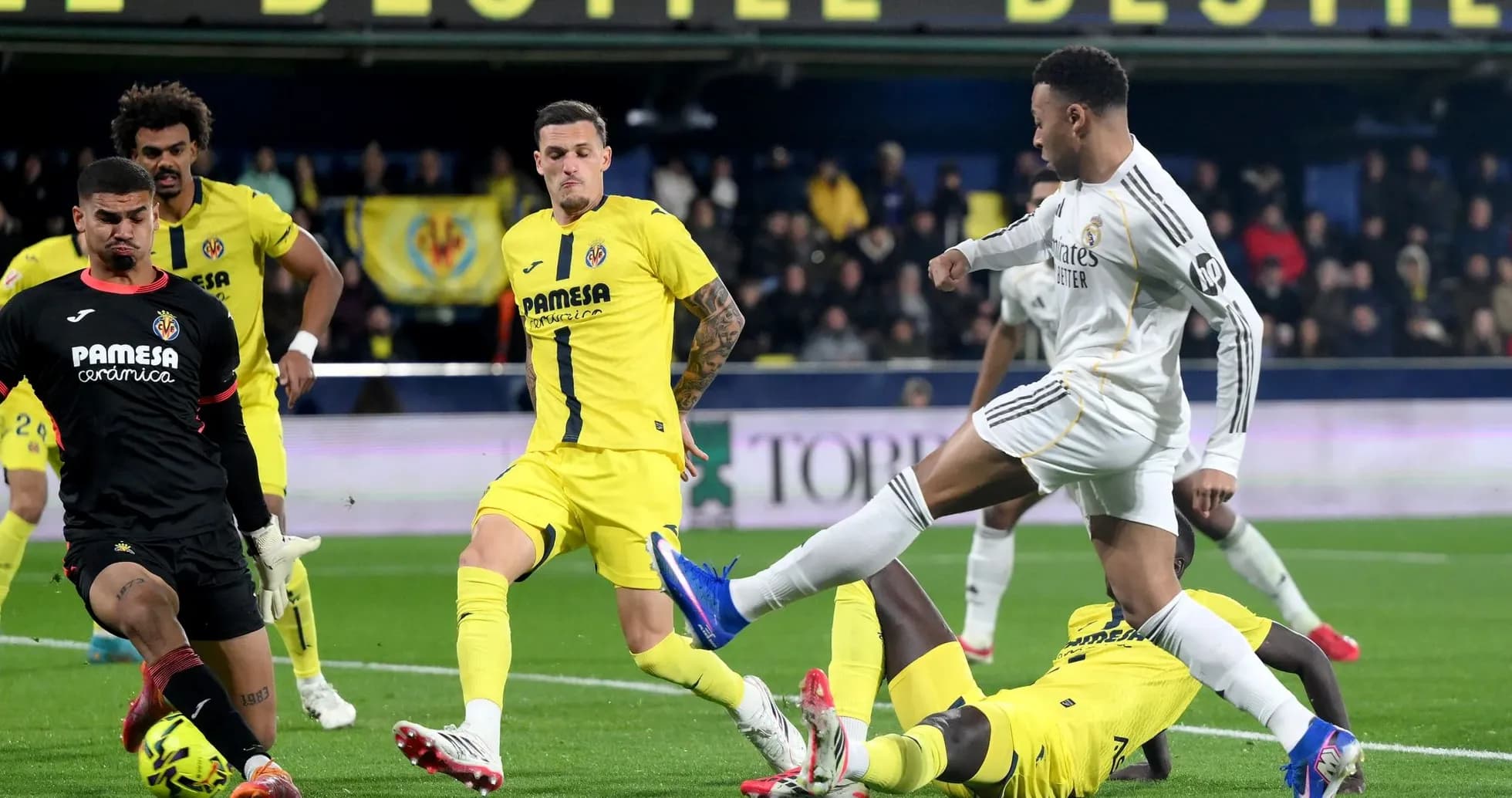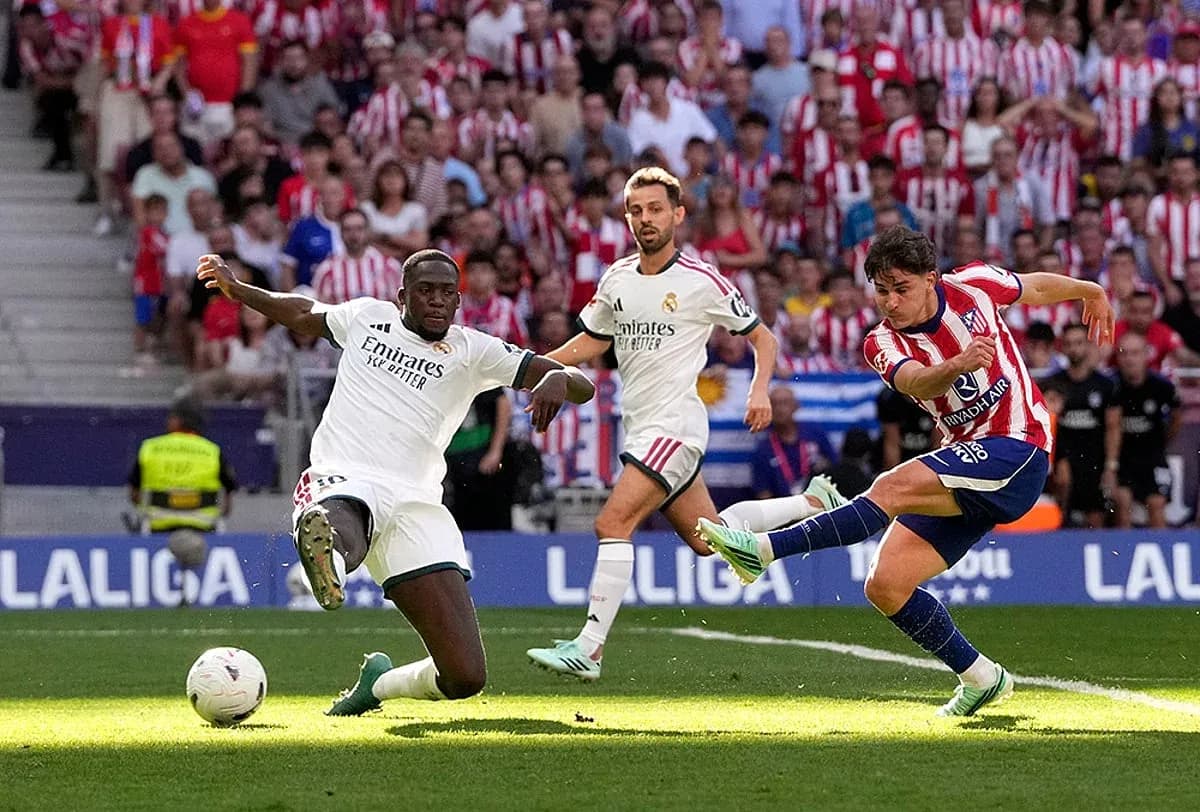
Sevilla vs Real Madrid: Tactical Analysis and Season Profiles
The Ramón Sánchez Pizjuán closed its La Liga season under a hard, clear logic: one side fighting to reassert its status among Spain’s elite, the other simply trying to end a turbulent campaign with dignity. Following this result, Sevilla remain 13th on 43 points, while Real Madrid, already a 73-goal machine overall with a goal difference of +40 (73 scored, 33 conceded), underlined why they have lived near the top of the table all year.
I. The Big Picture – Structures and Seasonal DNA
Luis Garcia Plaza rolled the dice with a bold 4-4-2. Odisseas Vlachodimos sat behind a back four of José Ángel Carmona, Castrin, Kike Salas and Gonzalo Suazo. Across midfield, Rubén Vargas and Oso patrolled the flanks, with Nemanja Gudelj and Djibril Sow as the central hinge. Up front, Akor Adams and Neal Maupay formed a classic strike pair.
The choice was revealing. Heading into this game, Sevilla’s season numbers told of a team caught between ideas: overall they averaged 1.2 goals for and 1.6 against per match, with a total goal difference of -13 (46 scored, 59 conceded). At home they had been marginally more solid – 24 goals scored and 25 conceded in 19 matches, an average of 1.3 for and 1.3 against – but the defensive fragility never fully left them. The 4-4-2 here was less about expansive play and more about having two forwards to pin Real Madrid’s back line, while relying on a compact, horizontally tight midfield four.
Alvaro Arbeloa answered with a 4-3-3 that felt like a statement of continuity from a dominant season. Thibaut Courtois returned as the imposing last line. Dani Carvajal, Antonio Rüdiger, Dean Huijsen and Fran García formed the back four; Aurélien Tchouameni anchored midfield with Jude Bellingham and T. Pitarch ahead of him; Brahim Diaz and Vinicius Junior flanked Kylian Mbappé in a front line that has terrorised La Liga.
Real Madrid’s season profile framed the tactical story. Overall they averaged 2.0 goals for and just 0.9 against per match, with 73 scored and 33 conceded. On their travels they still produced 1.7 goals per game and allowed only 1.0. This is not simply a free-scoring side; it is a control machine, able to suffocate games once ahead.
II. Tactical Voids – Absences and Discipline
Both squads arrived with important absentees that shaped the contest’s texture.
Sevilla were again without M. Bueno (knee injury) and Marcao (wrist injury), robbing Garcia Plaza of depth and aerial presence in central defence. That absence partly explains the trust placed in Castrin and Kike Salas; any high defensive line against Mbappé and Vinicius was always going to be a gamble.
Real Madrid, meanwhile, travelled without a full secondary creative unit. Dani Ceballos was left out by coach’s decision, while Eder Militao, Arda Güler, F. Mendy, Rodrygo and F. Valverde all missed out through various injuries or illness, as did Andriy Lunin. The spine remained elite, but Arbeloa’s bench was thinner in terms of ball-progression and wide rotation; the starting front three were therefore almost obliged to go the distance.
From a disciplinary perspective, the season data framed the risk lines. Sevilla’s yellow-card distribution showed a clear late-game spike: 19.81% of their yellows arrived between 76-90', and a further 20.75% between 91-105'. This is a side that tends to fray at the edges as fatigue and desperation creep in. Real Madrid’s yellows peaked between 61-75' (22.06%), a window where their intensity in pressing often edges into aggression. It was no surprise that, as the match wore on, Sevilla’s challenges became more urgent and Madrid’s counters more punishing, even if the scoreline stayed narrow.
III. Key Matchups – Hunter vs Shield, Engine Room
The headline duel was always going to be Kylian Mbappé against Sevilla’s defensive block. Heading into this game, Mbappé had 24 league goals and 5 assists in 30 appearances, with 105 shots (61 on target) and a penalty record that included 8 scored but also 1 missed – a reminder that even his ruthlessness has edges. Up against a Sevilla defence that, overall, conceded 1.6 goals per match and had kept only 6 clean sheets in total, the balance of probabilities leaned heavily his way.
Yet the “Shield” was not a single player but a structure. Gudelj and Sow were tasked with screening passes into Mbappé’s feet and doubling up when he drifted into the left half-space. Carmona, La Liga’s leading yellow-card collector with 13 bookings, walked a tightrope on the right of Sevilla’s defence. His season numbers – 64 tackles, 9 successful blocked shots, 38 interceptions and 310 duels contested – paint the picture of an aggressive, front-foot defender. Against Vinicius, that aggression risked becoming a liability, but it was also Sevilla’s only real way of stopping the Brazilian from turning and running.
On the other side, Sevilla’s attacking hope rested on Akor Adams. With 10 league goals and 3 assists, plus 4 successful blocked shots defensively, Adams has been their most reliable finisher. His duel with Rüdiger and Huijsen was less about volume of chances and more about whether he could make the few moments count. Real Madrid’s away defensive record – only 19 goals conceded in 19 away matches, an average of 1.0 per game, with 8 clean sheets on their travels – suggested that Adams would be starved of service.
In the engine room, Bellingham and Tchouameni against Gudelj and Sow defined the game’s rhythm. Bellingham’s capacity to arrive late in the box, combined with Tchouameni’s ability to recycle possession, tilted the midfield in Madrid’s favour. For Sevilla, Sow’s energy and Gudelj’s positional discipline were about containment more than control; any time they were forced to defend running back toward their own goal, the structure frayed.
IV. Statistical Prognosis – Why 0-1 Felt Inevitable
Following this result, the 1-0 scoreline aligned almost perfectly with the underlying profiles. Sevilla, who had failed to score in 9 league matches overall heading into this game, once again found their attacking channels choked by a side that concedes less than a goal per match on average. Real Madrid, with their 2.0 goals-per-game overall average, did not hit their usual offensive ceiling, but their defensive solidity away from home made a single strike sufficient.
In xG terms, you would expect Real Madrid’s high-quality front three and structured possession to generate the more dangerous chances, even if Sevilla manufactured sporadic opportunities from crosses toward Adams and Maupay. The combination of Madrid’s away defensive numbers and Sevilla’s negative goal difference of -13 suggested that, once Arbeloa’s side went ahead, the probability curve bent sharply toward a Madrid win by a one- or two-goal margin.
The narrative of the evening, then, was less about surprise and more about confirmation. Sevilla’s 4-4-2 showed courage and brief flashes of threat, particularly when Vargas drifted inside to combine, but their season-long fragility against top-tier attacks resurfaced. Real Madrid, even without key creative absentees, leaned on structure, star quality and a defence that has been one of La Liga’s most reliable units. In a stadium built for drama, the cold numbers had already written most of the script.