Ruben Amorim's Journey: From Manchester United to AC Milan
Ruben Amorim doesn’t flinch when Manchester United comes up. He leans into it.
“I made a lot of mistakes,” he admits now, speaking thousands of miles away from Old Trafford, under a different sky, in different colours.
The Portuguese coach, sacked by United in January after a bleak, fractured spell, is rebuilding his reputation at AC Milan. The scars from England are still fresh, but he has turned them into part of his sales pitch – and Milan bought it.
From Old Trafford failure to San Siro project
United’s decision to dismiss Amorim midway through the season felt inevitable by the end. The numbers were brutal.
- The worst win ratio of any United manager in history – 32 per cent in the Premier League.
- The worst goals conceded per game – 1.53.
- The lowest clean sheet rate – 15 per cent.
Those figures do not just end tenures. They stain them.
Tensions with the board had been rising for weeks. The breaking point came in public, when Amorim challenged the club’s decision-makers after a match at Elland Road against Leeds, pointedly suggesting others should concentrate on doing their own jobs. Once a manager goes to war in front of the cameras, there is rarely a way back.
United pulled the plug in January, swallowing a compensation bill of £15.9million to cover Amorim and his staff – Carlos Fernandes, Adelio Candido, Emanuel Ferro and Jorge Vital. That outlay eased once Milan stepped in and took him off the market last month.
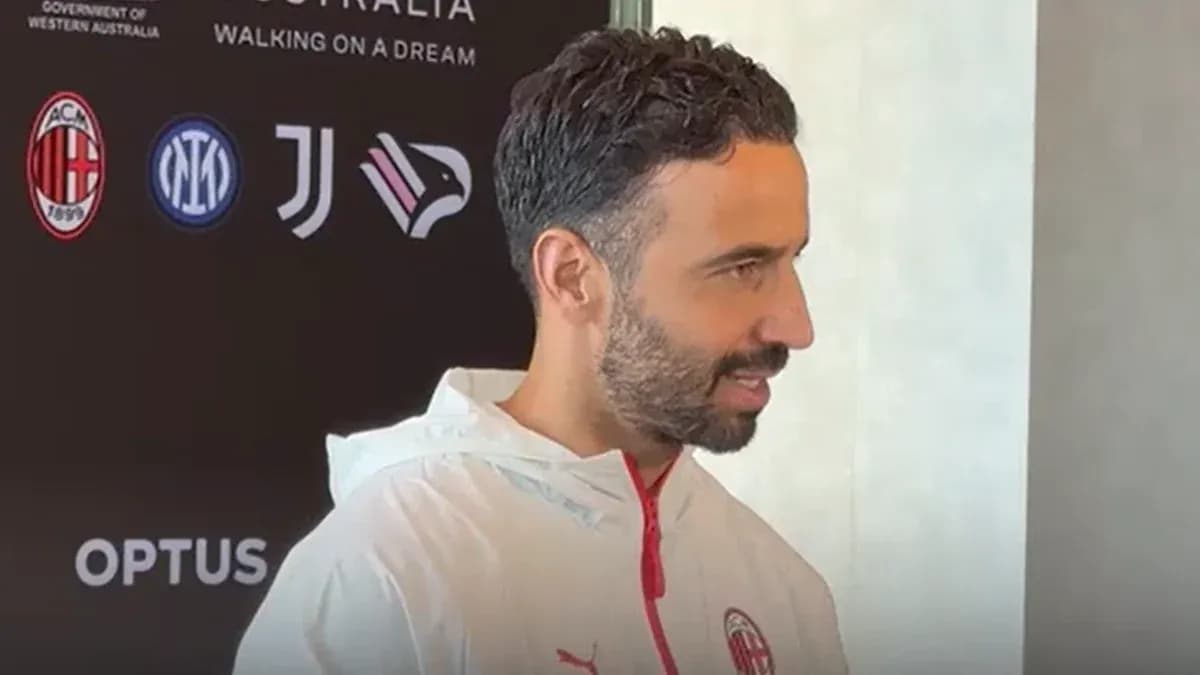
Now he stands in front of the media on Milan’s pre-season tour in Australia, talking not like a man running from his failure, but one dissecting it.
“Not just my success, but also my failures”
Milan, he insists, knew exactly what they were getting.
“They appointed me because they felt I was the right guy for the way I want to play,” Amorim told Sky Italia. “They want to play the same way, but I think they signed me not just for my success, but also for my experience with a top club like Manchester United and the reflections I shared in our meetings with Mr Cardinale.”
Those meetings with Gerry Cardinale, Milan’s owner, were not just about tactics and pressing triggers. They were about scars and lessons.
“They understood that I was prepared for this job, not just because of my past success, but also because of my failures. I think it helped a lot in those meetings.”
This is where Amorim sounds different to many coaches who leave Old Trafford under a cloud. There is no attempt to rewrite history. No carefully disguised bitterness. Just a clear-eyed look at what went wrong.
“It was not just their fault, but also my fault”
Asked directly what failed at United, he shrugs off any temptation to linger.
“The first thing is that it doesn’t matter anymore. That is the feeling,” he says. “There’s a history, then something happens, the context changes, and you focus on the next challenge.
“I learned a lot. It would be hard to point to one thing, but the important thing that I clearly know is that I made a lot of mistakes. When you do this kind of reflection, and you understand that it was not just their fault, but also my fault, I think you can be a better coach and a better man.”
That line cuts through. At a club where managers often leave complaining of structures, politics and chaos, Amorim is willing to put his own name on the post-mortem. He does not absolve United, but he does not hide behind them either.
His reign was chaotic on the pitch and combustible off it. The defensive record was alarming, the football disjointed, the dressing room unconvinced. United, again, looked like a club with a manager who never quite fit the building.
Now, Amorim is determined not to repeat that mistake.
A boyhood fan in the dugout
“I was really honoured to be the manager of Man United at the time, but now I’m at Milan,” he says. The contrast matters to him.
In Manchester, he walked into a giant he did not grow up with. In Milan, he walks into a club he already carries in his imagination.
“I spoke with some people at the club, like Massaro and Baresi and we exchanged messages. That is the most important thing. To understand what kind of club I am and what the history of the club is.
“For me, it was easier this time, because I’ve been a Milan fan since I was a boy. I understand the culture of the club and their history.”
That sense of belonging is not a cliché for him; it is a starting point. At United, he arrived as an outsider trying to master a culture under intense scrutiny. At Milan, he feels like a supporter with a whistle.
But he is not here to bask in nostalgia.
“That is the past. Our goal is to be the new future. They chose me for a reason, and one of the reasons is that I like to look at teams that are struggling.
“I know it’s tough, but we want to rebuild something. We have many things in a good place. The staff is in a good place; the organisation is fantastic. If this is my final destination, I’ll be pleased because it’s a dream to coach this club.”
From mistakes to a “new future”
There is a certain irony in Milan turning to a coach whose last job ended in such stark statistical failure. Yet this is modern elite football: clubs chase ideas, conviction and the promise of growth as much as they chase win percentages.
Amorim arrives at San Siro with both sides of his story on display – the trophies that once made him a rising star, and the bruises from a spell at Manchester United that went badly wrong.
He insists that combination makes him stronger. Milan are betting he is right.
His United chapter is closed, the compensation figure already softened by his new contract in Italy. The numbers will remain on the record books at Old Trafford, a warning etched into the club’s managerial history.
What comes next, in the red and black of Milan, will decide whether those “lot of mistakes” were the making of Ruben Amorim, or just the start of a longer, harsher verdict on his time among Europe’s giants.