Roshn League's Missed Opportunity: No Players in Spain's World Cup Squad
Two summers ago, the Saudi Roshn League could point proudly to Europe and say: those are our men.
Nacho Fernandez and Aymeric Laporte, wearing the shirts of Al-Qadisiyah and Al-Nassr, stood on the podium as Spain finally reclaimed the European crown at Euro 2024. The league basked in the reflected glory of champions.
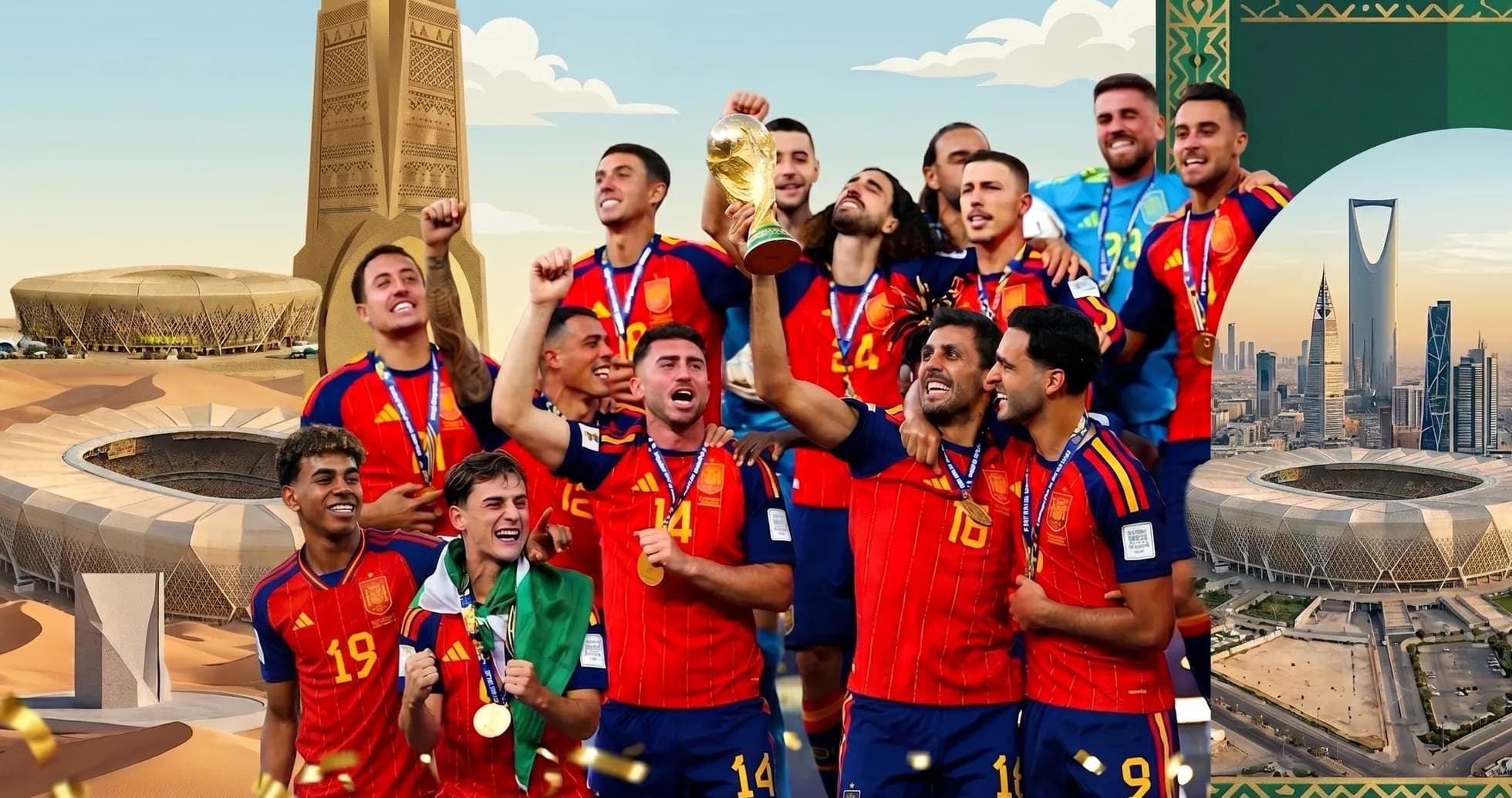
Now Spain rule the world again, lifting the 2026 World Cup. This time, the reflection is gone.
No Roshn League player made Luis de la Fuente’s squad. Not one. Spain’s champions – a side built on tactical control, defensive steel and a single, ruthless strike to edge Argentina in the final – did it without a single representative from Saudi clubs, despite the league being awash with Spanish talent.
The champions that got away
The irony is sharp. The Roshn League has never been more global, never more aggressive in the market, never more willing to chase big names. Had a few stalled deals gone the other way over the last couple of seasons, Saudi clubs could have been celebrating with genuine world champions in their ranks.
Instead, they are left with a list of “almosts”.
Nowhere is that more striking than with Aymeric Laporte. The same Laporte who, alongside Pau Cubarsi, formed the granite core of Spain’s back line and drove La Roja to the title. The same Laporte who, just a season earlier, had walked away from Al-Nassr to return to Athletic Bilbao.
His spell in Riyadh ended in bitterness. Under Italian coach Stefano Pioli, Laporte was sanctioned, pushed to train alone, frozen out of the run-in. He later spoke openly about the “difficult” atmosphere at Al-Nassr, pointing to constant upheaval in management and on the bench. A year on, he is a world champion – and no longer any kind of flag-bearer for the Roshn League.
He is not the only one. Spain’s World Cup-winning squad is dotted with players who crossed Saudi radar, were linked with Roshn clubs, discussed, negotiated… and ultimately never signed. The scouting was sharp. The timing, and perhaps the final push, was not.
For all the Spanish influence inside the league’s dressing rooms, for all the ambition, the decisive deals never landed. The “final step” – the last signature, the final green light – proved just out of reach.
No champions, but plenty of presence
On paper, the verdict is simple: Roshn League clubs failed to sign a single member of Spain’s 2026 World Cup-winning squad.
On the balance sheet and on the pitch, the story is more nuanced.
The league still sent a formidable contingent to the tournament: 49 players from Saudi-based clubs took part in the World Cup. That number underlines how deeply the competition has embedded itself in the global game, even without a medal-winning headline act.
FIFA’s club benefits programme ensured the presence of those players translated directly into revenue. According to French newspaper L’Equipe, clubs received 4,300 euros per day for each player involved, covering the period from 1 June to 19 July 2026, out of a total pot of 305.3 million euros.
No club in Saudi Arabia capitalised more than Al-Hilal. They sent 12 players to the World Cup, more than any of their domestic rivals, and cashed in accordingly. Among them, full-back Theo Hernandez stayed with France all the way to the third-place match. The French missed out on bronze, but his extended run kept both his profile – and Al-Hilal’s compensation – high.
Just behind them came Al-Ahli and Al-Nassr, level in second among Saudi clubs with nine World Cup representatives each. Al-Ahli had particular cause to celebrate. Striker Ivan Toney helped England carve out a piece of history of their own, playing his part in a campaign that ended with a bronze medal.
The financial rewards matter, especially in a league that continues to invest heavily. Yet the on-field returns may prove just as valuable.
Stars forged on the biggest stage
Al-Qadisiyah, who once celebrated Nacho’s European triumph, took a different kind of pride this time. They sent six players to the World Cup and watched their Mexican forward Julian Quinones step into the global spotlight.
Quinones delivered. Across five matches, he scored four times and supplied a decisive assist, carrying the form and confidence of a player who now knows he can hurt the very best. Performances like that do not just swell a club’s bank account. They change dressing rooms. They raise standards.
That is the other side of this World Cup for the Roshn League. No one will parade a world champion in club colours when the players return. There will be no Laporte or Cubarsi stepping off a flight in Riyadh or Jeddah with a winner’s medal around his neck.
What the league does have is reach, relevance, and a growing cast of players hardened by football’s toughest stage. The question now is simple: will Saudi clubs keep watching world champions from afar, or will the next wave of transfer moves finally bring one of those winners into the Roshn League for good?