
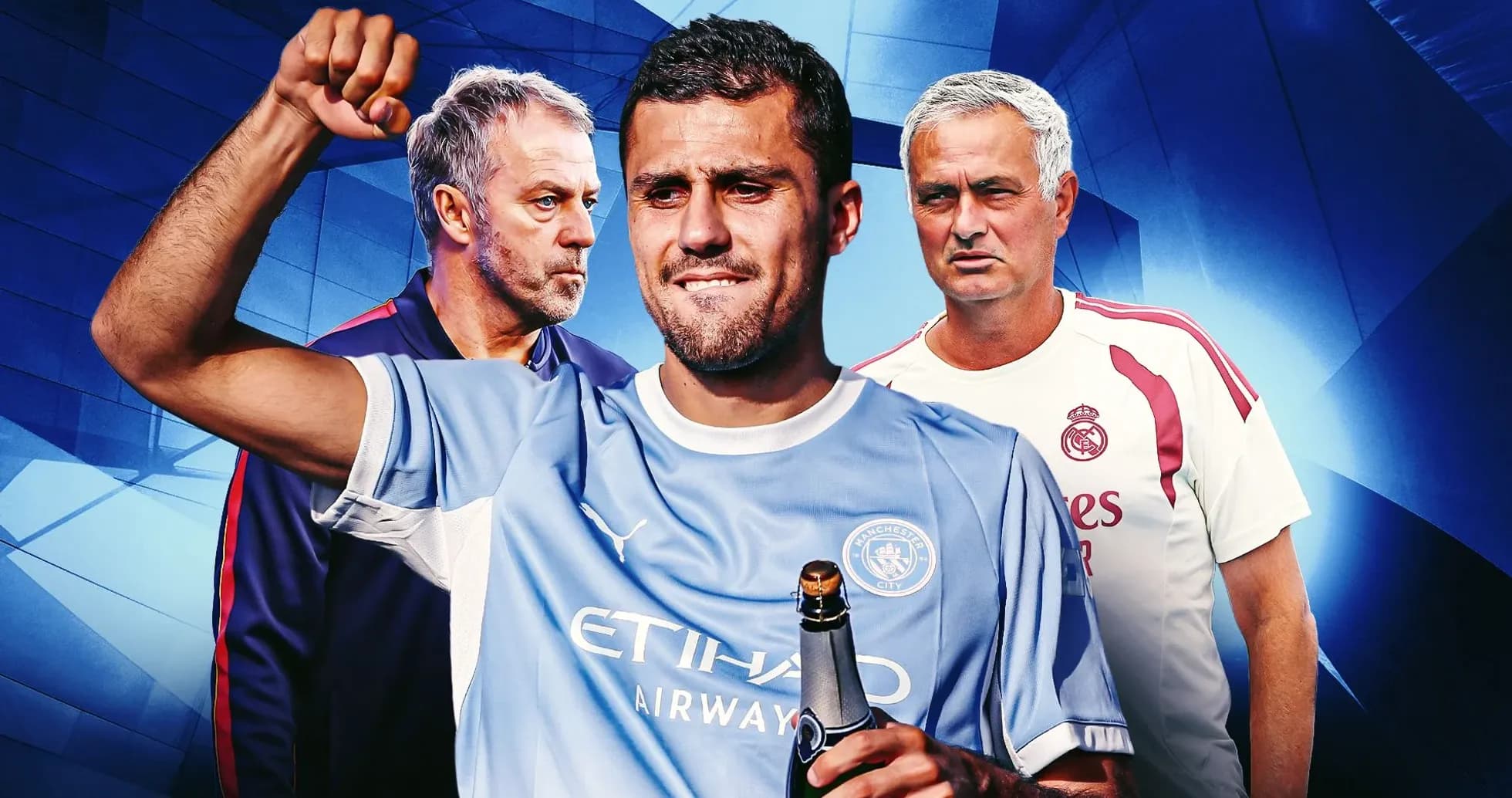
Rodri Chooses Barcelona Over Real Madrid: A Transfer Saga
There are transfer sagas, and then there are moments that tilt the axis of a rivalry. Rodri choosing Barcelona over Real Madrid falls firmly into the latter.
When the best defensive midfielder in the world, fresh from winning the 2024 Ballon d'Or and the Golden Ball at a World Cup, hits the market with one year left on his contract, the elite usually circle in unison. This time, though, Spain’s two giants went head-to-head – and only one of them moved with conviction.
Manchester City, boxed in by the clock on Rodri’s deal, are understood to be willing to accept as little as £60 million for a player who has defined their era. For a club that has built its dominance on control and certainty, the combination of Pep Guardiola’s departure and Rodri’s contract situation has created a rare moment of vulnerability. City know it. So do Madrid and Barcelona.
Rodri, 30, has not hidden his desire to go home. He has hinted at it for months, talking openly about a return to La Liga and even to Madrid itself. With Guardiola gone and the Etihad’s great project entering a new phase, this summer always felt like a natural breaking point. John Stones and Bernardo Silva have been linked with exits for the same reason. The core of Guardiola’s side can sense the end of a cycle.
Real Madrid, by all accounts, believed they were in control of this chase. Their interest in Rodri stretches back years, and his towering performances at the World Cup – where he ran games from deep and walked away with the Golden Ball – only hardened that view. He looked like the missing piece in a midfield already stacked with Aurelien Tchouameni and Eduardo Camavinga but still searching for a true conductor in the Busquets mould.
Then Barcelona walked in.
Flick, Camp Nou and a Catalan Turn
Barcelona’s entrance earlier this week changed everything. Quietly at first. Then with real force.
While Madrid wrestled with City over a fee and struggled to finalise personal terms, Barça simply acted. They spoke to Rodri. They opened a line to City. They presented a project that made footballing sense to a player who has built his career on logic and clarity.
The timing helped them. Frenkie de Jong’s serious knee injury – a torn medial collateral ligament on World Cup duty, with an absence of around four months and the possibility of surgery – left a gaping hole in the heart of Hansi Flick’s midfield. The club needed a solution that was immediate, elite and structurally sound. Rodri ticked every box.
For the player, the fit is obvious. The Athletic reported that the City star is drawn to Flick’s possession-heavy, ball-playing system, a style that would let him dictate as he does for Spain and did for Guardiola. Add the presence of several international team-mates in the dressing room and the echoes of Sergio Busquets in his own game, and Barcelona began to look less like an option and more like an inevitability.
The preference quickly became public. Rodri’s agent, Pablo Barquero, went on Cadena SER and removed any lingering doubt: “Out of respect for Madrid, as they have been class, Rodri informed them that his decision is to join Barca.” One sentence, and the transfer window’s biggest fault line cracked open.
Madrid’s Miss, Barça’s Gain
Spain’s media reacted exactly as you would expect: with noise, fury and a blizzard of competing explanations.
One version has Madrid and City reaching an agreement, only for Los Blancos to try and shave the price at the last second, stalling the entire operation. Another says Rodri simply grew tired of waiting for Madrid to commit and pivoted to Barça, who were ready to move decisively. Reports have even suggested that Real were only prepared to go as high as £34m, a figure that looks wildly out of step with City’s stance.
Then there is the more cynical reading: that Rodri never truly wanted Madrid, but used their long-standing interest to flush out an offer from Barcelona, and that the proposals from both clubs were essentially identical. The most dramatic theory of all alleges collusion between City and Barça, a game of brinkmanship designed to drag Madrid into a bidding war.
What is clear is the outcome. Madrid thought they were leading the race. They are now watching from the outside as their greatest domestic rival closes in on a player who could reshape the title race.
The fallout inside the Bernabéu has been described as explosive. Jose Mourinho, already a combustible presence back in the Madrid dugout, has reportedly been left furious by the failure to close the deal. Stories have emerged of a heated phone call with chief scout Juni Calafat, with the coach told he will have to make do with his current midfield options.
For a club that prides itself on never missing when it truly wants someone, this one hurts. Badly.
A Player Who Changes Titles
Strip away the drama and look at the football. That is where the damage to Madrid really comes into focus.
Rodri is not just a defensive midfielder. He is a system. A structure. A guarantee that the team will play at his tempo and on his terms. He has shown it year after year at City, dictating title runs from the base of midfield, and he repeated the trick on the biggest international stage at the World Cup.
Drop that player into Barcelona’s midfield, alongside Pedri, De Jong and Gavi, and the picture shifts. A team that has already claimed back-to-back league titles suddenly finds a new level of control. A side still chasing its first Champions League crown in 12 years adds a player who has made winning the competition feel almost routine.
This is why the blow to Madrid is so profound. Rodri could have been the upgrade that finally turned their talented but still-evolving midfield into an unshakeable unit. He could have been the difference between another season of chasing Barça and a return to domestic dominance. Instead, he looks set to become the cornerstone of a Barcelona side built to extend its grip on La Liga.
Madrid will know that. They will also know what Rodri himself has said in the past. During the March international break, he did not hide his admiration for a return to the Spanish capital. “Would I like to play in Spain again, in La Liga, in Madrid? I would like to return, yes, obviously,” he told reporters. On Real specifically, he added: “You can’t turn down one of the world’s best clubs.”
And yet, when the decisive moment arrived, they managed to let him slip away.
A Wound to Pride – and to Power
There is a tangible, tactical cost to this failure. There is also something less measurable but just as important: pride.
Real Madrid are not used to losing transfer battles, least of all to Barcelona, and certainly not for a player of this calibre at a cut-price fee. To fall short now, only weeks after surrendering the league title in a limp Clasico defeat in May, deepens the sense of a shifting balance.
Barcelona still have work to do. Their initial bid has been rejected, and City will not simply roll over for sentimental reasons. But the direction of travel is unmistakable. Rodri wants Barça. Barça want Rodri. City are ready to sell. Madrid, once in pole position, are watching a generational midfielder walk towards Camp Nou.
If and when he walks out in Blaugrana colours, the question will not be how they pulled it off. It will be how Madrid, with every advantage, every warning and every opportunity, allowed their greatest rival to sign the player who might decide where La Liga’s next few titles end up.




