
The Return of Europe’s Sleeping Giants and Upstarts
The new season across Europe does not just bring fresh title races and new managers. It brings ghosts. Names that once dominated front pages, now climbing back out of the shadows. And a few who have never been here before, kicking down the door to join the elite.
From Galicia to Diyarbakir, from the Saarland to the Circuit de la Sarthe, this is a year of returns and firsts.
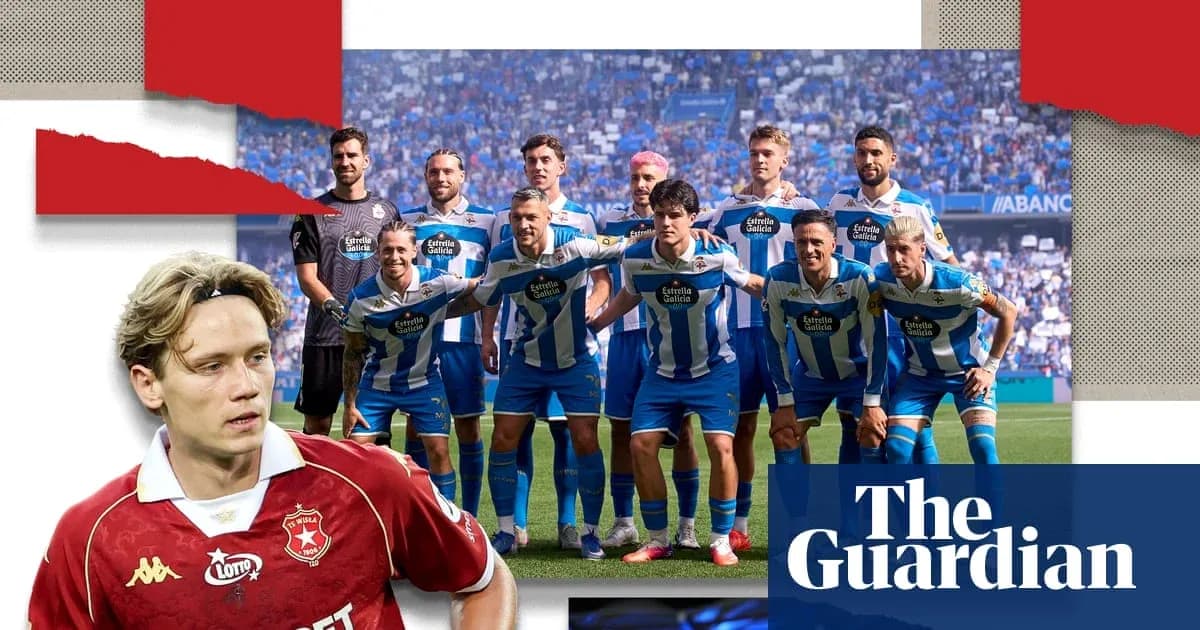
Deportivo La Coruña: Back From the Edge
For a generation, Deportivo La Coruña did not just belong in La Liga. They shaped it.
In the 1990s and early 2000s, Dépor muscled their way into a cartel that was supposed to be untouchable. Barcelona, Valencia, Real Madrid – and them. Between 1993 and 2004 they finished in the top three nine times and, in 1999, they took the title itself. They were not a curiosity. They were a problem for everyone else.
The run to the 2004 Champions League semi-finals felt like the moment they might step onto the very top step of the European game. Instead, they ran into José Mourinho’s Porto and the door slammed shut. Gradually, the gravity of Spanish football reasserted itself. The established giants pulled away. Deportivo slipped to mid-table, then into trouble, then into oblivion.
By 2020, the club that once silenced the Bernabéu had dropped into the regional third tier. Not just relegated. Marooned.
Four years later, they are back in the second tier. One year on from that, they have done something even more improbable: a leap from 15th place in 2024-25 to automatic promotion last season. No gentle build, no slow consolidation. A surge.
The golden era of Juan Carlos Valerón and Diego Tristán is not coming back. That kind of magic does not repeat on command. But Deportivo are not treating this as a nostalgic cameo. They have gone to the market with intent, bringing in Mallorca goalkeeper Leo Román and veteran striker Pierre-Emerick Aubameyang to give the squad experience and edge as they try to hold their ground in La Liga.
They are not alone in dusting off an old nameplate at Spain’s top table. Racing Santander, champions of the Segunda, return after 15 years away. Málaga, who also fell from La Liga in 2018 and even spent a season in the third tier in 2023-24, are back as well.
Three clubs with long memories, three different versions of the same question: is this a comeback, or just a visit?
Elversberg: A Village Club in Bayern’s World
In Germany, the promotion race once again set history against romance.
On one side, Schalke. A club that feels too big for the second tier, yet have spent four of the last five campaigns there. They finally punched their way out, winning the title and reclaiming their place in the Bundesliga.
On the other side, Elversberg. A club from a Saarland town whose entire population could fit inside Schalke’s Veltins Arena four times over.
Three years ago, in 2021-22, Elversberg were playing in the regional leagues. Now they stand in the Bundesliga. The climb has been almost vertical. Under coach Horst Steffen they surged through the divisions, only to fall short in the promotion playoff last season. Steffen’s work did not go unnoticed: Werder Bremen took him last summer.
It did not last. Nine months later, Steffen was out at Bremen. Elversberg, meanwhile, kept moving.
They turned to Vincent Wagner, taken from Hoffenheim’s second team, and the momentum held. Promotion, finally, was secured. While the club scrambles to expand its modest stadium during the season to meet the 15,000-capacity requirement, the team will not be eased into anything.
Leverkusen first. Bayern Munich second. The champions of now, and the champions of almost always.
No time to breathe. No time to admire the view. Elversberg’s Bundesliga education starts at full speed.
Le Mans: From Financial Ruin to a New Project on the Circuit
France’s top division has become a magnet for money and multi-club projects. Paris FC with billionaire backing. Strasbourg under the BlueCo umbrella. And now City Football Group, who arrive with promoted Troyes and another partner club, Lommel, stepping into Belgium’s top tier.
Le Mans come from a similar playbook, but with a twist of glamour and a very particular backdrop.
The town is globally famous for its race, not its football. The stadium itself sits inside the legendary Circuit de la Sarthe. On the pitch, Le Mans enjoyed a brief taste of Ligue 1 in the 2010s before sliding into financial chaos and falling away.
They clawed their way back to Ligue 2. Then, last August, came the turning point: a takeover by OutField, a Brazilian consortium. They did not arrive quietly. Novak Djokovic, Thibaut Courtois, Felipe Massa, Kevin Magnussen – names from tennis, football and Formula 1 – were attached to the project, adding a layer of star power rarely seen at a club of this size.
The temptation in such situations is to floor the accelerator and see what happens. Le Mans say they will do the opposite. The plan is youth, not fireworks: reopen the academy, invest in potential, avoid the trap of reckless spending that wrecked them once already.
They have already moved quickly through the gears to get back to Ligue 1. Now comes the harder part – staying there while resisting the urge to turn the club into a vanity project.
Amedspor: Football on the Fault Line
No club entering a top division this season carries more political weight than Amed SK, better known as Amedspor.
They are based in Diyarbakir, a Kurdish-majority city in Turkey’s south-east, closer to Iraq and Syria than to Istanbul’s glittering Bosphorus. For many Kurds, the club has become a symbol as much as a team, especially since 2014 when they formally added “Amed” – the Kurdish name for the city – to their identity.
On the pitch, they had long been stuck between Turkey’s third and fourth tiers. Off it, that embrace of Kurdish identity changed everything. It drew a broader, more diverse fanbase, but it also provoked hostility. Abuse from opposing supporters, intimidation, even physical attacks became part of the matchday landscape.
The response from the Turkish FA was stark: a ban on Amedspor fans attending away games, which remained in place until 2020.
Now the club step into the Super Lig for the first time. Their presence at the top level raises obvious, uncomfortable questions about security, policing and the risk of violence. Yet there are also signs of a shifting tone.
When Amedspor sealed promotion, Turkish president Recep Tayyip Erdogan – who has consistently refused to acknowledge Diyarbakir’s Kurdish name – publicly congratulated the club. The gesture drew sharp reactions on social media, precisely because of the history behind it.
Whether that moment signals a genuine thaw or a temporary pause in hostilities will become clear as the season unfolds. Either way, every Amedspor away game will feel like more than just a football match.
Wisla Krakow: The White Star Rises Again
In Poland, one of the country’s grand old names has finally found its way back to where it believes it belongs.
Wisla Krakow, founded 120 years ago, have 14 league titles to their name. For decades they were a fixture in the top division, a permanent part of the landscape. That ended in 2022. Relegation sent the White Star into four seasons outside the elite, a fall that stung as much for its symbolism as for its sporting cost.
They did not disappear. Last year, still a second-tier club, Wisla lifted the Polish Cup for the fifth time, a reminder that their name still carries weight in knockout football.
Inside the club, there has been a reset. Former player Jakub Blaszczykowski has come on board as a minority investor. The rebuild has focused on smarter use of analytics and a renewed trust in academy products, a shift from the short-term fixes that so often drag big clubs into deeper trouble.
Their return to the Ekstraklasa last month came with a flourish: a 2-1 win over Katowice, the stands drenched in red-and-white as fans lit a pyro show that felt as much like a statement as a celebration.
The stakes go beyond league position. The “Holy War” derby with Cracovia is back on the calendar, one of Europe’s more intense city rivalries. And Krakow’s footprint in the top flight has grown. Wieczysta Krakow have joined via the playoffs, making their Ekstraklasa debut and ground-sharing with Wisla because their own stadium does not meet league standards.
From one top-tier club in Poland’s second city to three. From exile to a crowded, combustible local scene. Wisla are home again – but the neighbourhood has changed.
From Deportivo’s resurrection to Elversberg’s improbable rise, from Le Mans’ controlled gamble to Amedspor’s charged debut and Wisla’s restored pride, this season is full of clubs who have dragged themselves back into the light.
The question is not whether they belong. History, in most cases, has already answered that. The question is how long they can stay, and what kind of mark they will leave this time.




