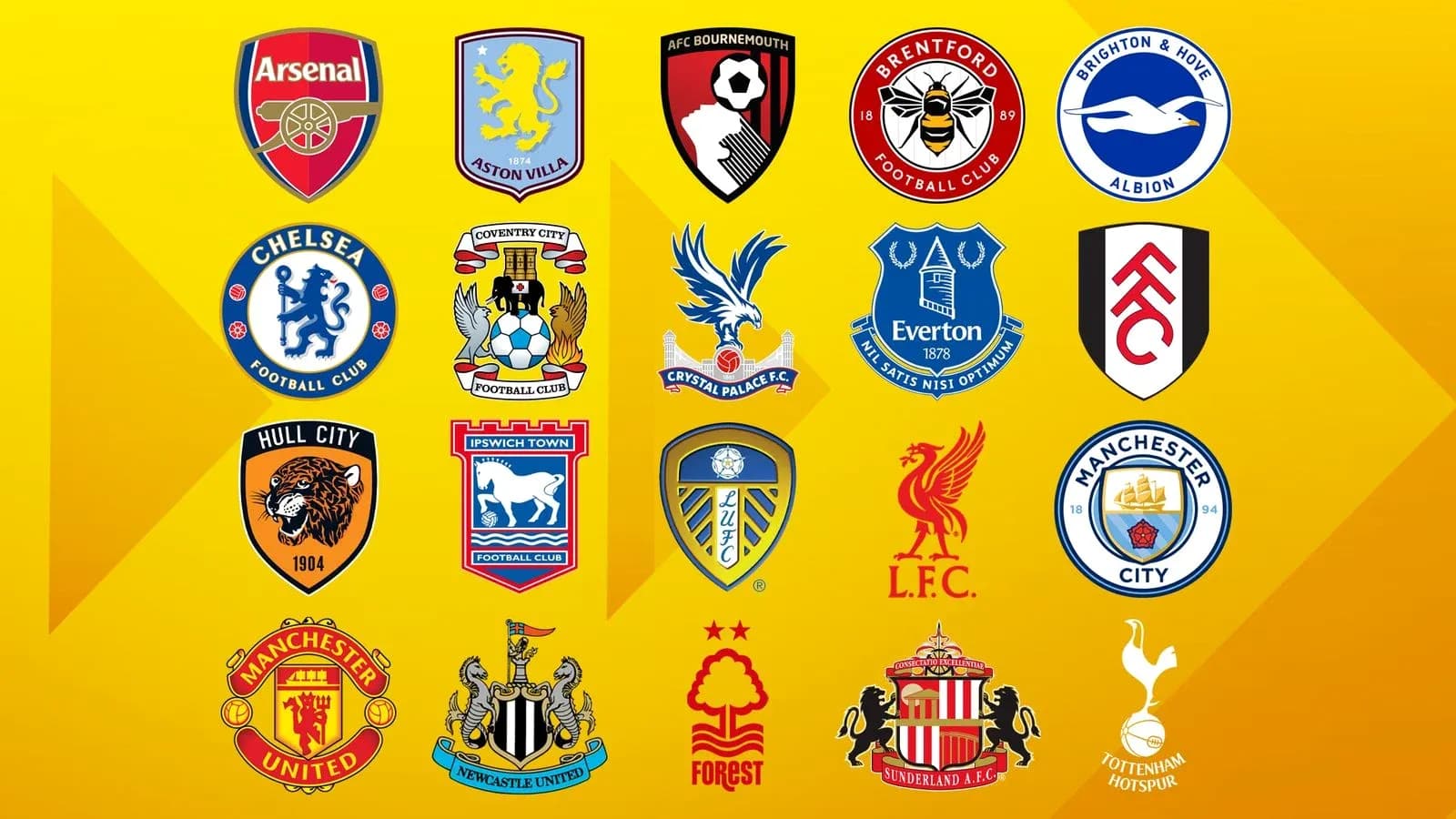
Premier League Transfer Window Analysis: Grades and Insights
Record fees, deadline drama and a Premier League reshaped. After a wild summer, here’s how every club’s window really stacks up.
Arsenal – ruthless exits, targeted upgrades
Eight senior players gone. Eight out of 10. The symmetry isn’t lost on anyone at Arsenal.
Gabriel Jesus, Gabriel Martinelli, Leandro Trossard, Christian Norgaard, Fabio Vieira, Ethan Nwaneri (on loan), Jakob Kiwior and Reiss Nelson have all moved on, with only Nwaneri still viewed as part of the club’s long-term future. The clear-out has brought in more than £100m and shaved a hefty chunk off the wage bill – Jesus’ salary in particular.
The big miss? A left winger. Arsenal sold their two main left-sided threats and never landed the marquee replacement. Vinicius Junior and Julian Alvarez were the dream names. Either would have pushed this window towards perfection, but both were always ambitious swings.
Supporters understand why those deals didn’t happen. What they’re less forgiving about is the lack of a like-for-like successor on that flank. The club tried, the right option never surfaced after the Vinicius chase collapsed, and now it’s a case of improvising.
Arteta and the hierarchy are convinced the answers are already in-house. Christos Tzolis has shown flashes despite a shaky outing at Villa Park and has been quickly taken to heart by the fans. Eberechi Eze can operate there. Noni Madueke and Bukayo Saka are both capable of flipping sides, which in turn opens up space to blood Max Dowman on the right.
There’s even talk that Riccardo Calafiori could be pushed higher up, in the same way Arteta once reimagined roles for Mikel Merino and Myles Lewis-Skelly.
No new left winger. No new striker. But almost everywhere else, Arsenal are deeper and stronger. One glance at the bench at Villa Park told the story: defensive and midfield options stacked with quality, enough to rotate entire units without losing edge.
Most importantly, Arteta landed his two primary targets – Bruno Guimaraes and Ezri Konsa. That alone makes this a very strong window.
Aston Villa – champions forced into a reboot
Europa League winners don’t usually rip out half their spine weeks after lifting the trophy. Aston Villa had no choice.
Morgan Rogers, Youri Tielemans, Ollie Watkins, Emiliano Martinez, Lucas Digne and Ezri Konsa have all gone. Replacing that core while staying on the right side of financial rules looked a daunting puzzle.
Villa’s answer has been bold: go younger, go hungrier, and sprinkle in experience. Ibrahim Mbaye and Johan Manzambi bring upside. Leon Goretzka and Aaron Wan-Bissaka add know-how. Nicolas Jackson, already bedded into the Premier League, looked sharp on his debut. Zion Suzuki impressed in his first outing in goal. Taylor Harwood-Bellis admits he’s still a work in progress but believes Unai Emery can drag him to the top level.
The Emery factor matters. So does the fact Villa have balanced the books while attempting a controlled rebuild, not a fire sale.
There is optimism around the business, but it comes with a warning label: this all looks good on paper. The real verdict will be delivered by what these new faces do in claret and blue.
Bournemouth – keeping the crown jewels
Two summers, two very different stories. In 2025, Bournemouth cashed in on key players. This time, they locked the doors.
Rayan, Eli Junior Kroupi and Alex Scott all remain. The club’s model accepts that stars will eventually move on, but not before they’ve given Bournemouth a meaningful stretch of their peak. Marco Rose was promised the team wouldn’t be stripped from under him. The board kept their word, despite heavy interest in all three.
European football has complicated the sums, with UEFA’s financial regulations tightening what they can spend. Bournemouth still had to trim costs while adding quality and depth.
They’ve threaded that needle impressively. Michele Di Gregorio arrives having been Juventus’ No 1. Antonio Silva, once linked with Europe’s elite, looks an astute buy at centre-back. Juanlu Sanchez strengthens full-back, Alvaro Rodriguez offers a different attacking profile.
Fringe players have been moved on cleanly. Crucially, the club did their business early, avoiding the familiar Deadline Day scramble.
Rose and the hierarchy can be quietly delighted. Now comes the hard part: proving this squad can live up to its billing on Thursday nights and weekends.
Brentford – a near-perfect summer
Brentford’s only problem this window? It’s hard to find anything wrong with it.
The big objective was clear: land a midfielder to build around. Mamadou Sangare, at £39m, could end up looking like daylight robbery. He’s already transformed the centre of the pitch and may soon be in the signing-of-the-season conversation.
He’s not alone. Late arrival El Hadji Malick Diouf looks destined to claim the left-back spot. Jaidon Anthony has already started twice. Callum Wilson is exactly the kind of seasoned, reliable foil – or rival – Igor Thiago needed. Jannik Schuster adds cover at centre-back with Sepp van den Berg sidelined.
Just as important, Brentford have kept their attacking core intact. Jordan Henderson’s leadership has gone, but Thiago, Kevin Schade and Yehor Yarmoliuk remain. Michael Kayode and Vitaly Janelt have signed new deals.
Deadline Day was a non-event by design. Only Jayden Meghoma’s loan to Portsmouth broke the calm, part of a clear pathway plan for young talent.
It’s a nine because, as their own staff would admit, there’s always another step to take. But Brentford have come very close to getting everything right.
Brighton – big spend, new look
Brighton, the masters of quiet efficiency, went loud this summer.
Nine first-team signings, close to £170m spent, and a squad now stacked particularly in defence. The headline act is Luka Vuskovic, a club-record £50m deal that signals serious intent.
Chema Andres, a Spain U21 holding midfielder from Stuttgart, arrived in dramatic fashion on Deadline Day. He is part of the solution to the Carlos Baleba-shaped hole left by his move to Manchester United. He’ll need time to adjust but the talent is clear.
Experience has drained away up front with Danny Welbeck’s departure. Promise David, brought in on loan, now carries the responsibility of replacing those goals.
Keeping Yankuba Minteh despite Liverpool’s interest counts as a significant win. Once the injured players return and Fabian Hurzeler has time to blend the old with the new, Brighton will know whether this expensive retooling can power them through the Premier League and Conference League slog.
Chelsea – strategy reset, Stamford Bridge reborn
Chelsea have stopped pretending this is a long-term-only project. The window proved it.
Premier League-ready signings arrived to sit alongside the precocious talents already at the club. The pursuits of Jordan Henderson, Emiliano Martinez and Danny Welbeck marked a sharp turn from the pure youth-first approach of recent seasons.
Geovany Quenda shows that Chelsea will still chase the world’s best prospects. But they now accept the need for players who can deliver from day one.
Joao Pedro has been tied down on improved terms, a clear statement that the core of this squad is here for the long haul.
Last season was a mess. Enzo Maresca’s departure sent the campaign into a tailspin and, despite an FA Cup final, the mood was toxic. Xabi Alonso’s arrival, coupled with a smarter recruitment plan, has jolted Stamford Bridge back to life. The 4-3 thriller against Brighton felt like a reset.
On the pitch, there’s plenty still to fix. Off it, the direction is clearer. Emiliano Martinez, Morgan Rogers and Maxence Lacroix all walk straight into the strongest XI.
The one sour note is the Enzo Fernandez saga. A self-imposed deadline of August 15 for clarity backfired, leaving uncertainty hanging over the early weeks. Yet Chelsea have started with three wins from three, suggesting the dressing room has parked the noise.
Losing Marc Cucurella hurts, but the club have continued to sell well. Liam Delap, Nicolas Jackson and Alejandro Garnacho all fetched strong fees, underlining Chelsea’s status as elite player traders.
They’ve won the window plenty of times before. Now they have to prove they can still win when it actually counts.
Coventry – bold and grown-up in the big time
Coventry didn’t tiptoe into the Premier League. They strode in.
Frank Lampard has been handed depth and variety. Carl Rushworth, the goalkeeper who helped clinch promotion, is back permanently. Aurele Amenda adds athleticism at centre-back. Caleb Yirenkyi offers spark in midfield, Frank Onyeka brings top-flight experience, Gustavo Hamer provides the familiar creative heartbeat.
Up front, Taiwo Awoniyi is the proven Premier League focal point they needed. Loum Tchaouna and Sidiki Cherif add pace and upside around him.
Two goalless defeats to start the season have raised questions about cutting edge. But on paper, this is a much stronger, deeper group than the one that went up.
For a promoted club, Coventry have spent aggressively without losing their heads. It’s a serious statement that they intend to stay.
Crystal Palace – survivors of another exodus
Crystal Palace know this drill. Lose key players. Absorb the blow. Go again.
Maxence Lacroix and Daniel Munoz have gone, two of the side’s standouts. Yet keeping Adam Wharton, Jean-Philippe Mateta and Ismaila Sarr feels just as significant.
Mateta is into the final year of his deal and has already lived through one collapsed move to AC Milan. He may have to guide Sarr through the same emotions after Liverpool’s attempt to sign the winger failed.
Sarr’s performances between now and January will tell us whether Palace were right to dig in.
The market work has been clever rather than glamorous. Axel Disasi, Dwight McNeil, Ben Chilwell and Takehiro Tomiyasu are all proven Premier League operators. Dario Osorio could be the jewel, a 22-year-old with a big reputation joining a club that specialises in polishing rough diamonds. Honest Ahanor strengthens the back line, Anan Khalaili is viewed as a potential long-term Munoz successor.
Depth has improved, crucial with European football on the calendar again. Palace have become experts at losing stars – Michael Olise, Eberechi Eze, Marc Guehi – and not just surviving, but thriving.
This window doesn’t guarantee success. It does, however, keep them firmly in the conversation.
Everton – chaos, regret and a thin front line
Everton, again.
A strike force that already lacked goals has been halved. Beto was allowed to leave for Fiorentina before Folarin Balogun was secured. When that deal stuttered, the scramble to Joshua Zirkzee at Manchester United failed too. It looked chaotic because it was.
Then came the sale of Iliman Ndiaye, the club’s most exciting talent. All summer, Everton stressed they were in a strong position with three years left on his deal. In the end, he went for £65m – more than four times what they paid, but still short of a fee that would have softened the blow for fans.
Ndiaye was initially heading to Spurs for £60m, with Richarlison returning for £35m. The valuation of the Brazilian felt high and the move collapsed, the first of several Deadline Day deals to fall apart.
Kenny Tete was another near miss. Fulham refused to sanction his exit without a replacement lined up – a lesson Everton might heed.
All this played out against a backdrop of ownership uncertainty and a £40m bid from Nottingham Forest for Harrison Armstrong being considered while David Moyes publicly pleaded for reinforcements.
Supporters are left hurt, embarrassed, angry and anxious. They know it didn’t have to unravel this way.
There were arrivals: Ainsley Maitland-Niles, Jack Grealish, Hayden Hackney, Christian Norgaard, Merlin Rohl, Tyrique George and Brennan Johnson. But any positives are dwarfed by the glaring hole up front.
Moyes, once again, doesn’t have the tools he needs. Last season it was the lack of a right-back and a proven striker. This time, he goes into the campaign with Thierno Barry as his only recognised centre-forward until at least January.
A push for Europe now feels remote. If Everton fall short, the blame won’t sit in the dugout.
Fulham – high press, high risk
Alvaro Arbeloa has a clear idea of what he wants Fulham to be: aggressive, high-tempo, on the front foot. The recruitment has followed that blueprint.
The biggest hole was up front. Gonzalo García, signed from Real Madrid, looks like the answer. Two goals in his first three games suggest he’s ready to shoulder that responsibility.
Midfield has been overhauled with more Madrid academy products, Cesar Palacios and Manuel Angel, plus Shea Charles from Southampton and Hugo Larsson from Eintracht Frankfurt. Arbeloa now has energy, technique and flexibility in abundance in the middle.
The trade-off is at the back. Fulham have already been exposed defensively, an almost inevitable side-effect of asking centre-backs to defend high and full-backs to push even higher.
David Affengruber’s Deadline Day arrival is intriguing in that context. The Austria international’s profile fits a system that demands defenders cover big spaces and recover quickly.
The surprise is out wide. Harry Wilson and Samuel Chukwueze have gone, but no specialist winger has come in. Palacios has been used on the left, including against Chelsea and Sunderland, but that’s not his natural role and some fans are uneasy.
Still, Fulham have recruited to a clear idea rather than just filling gaps. If Arbeloa can find the balance between chaos and control, they should steer clear of trouble.
Hull – volume and velocity
Hull wanted pace, athleticism and quality. They got all three, in bulk.
Eighteen new faces have arrived, six of them on Deadline Day. Owner Acun Ilicali has been central to the charm offensive, selling prospective signings on the club’s ambition and persuading them to buy into a long-term project.
Patience in negotiations has paid off. Hull believe they’ve landed primary targets on favourable terms. The focus has been on young players who can grow with the club, a strategy that carries risk but also huge upside if it clicks.
The starting XI has been upgraded, but the core of the promotion side remains. That continuity, and the spirit that came with it, could be vital in a Premier League season that will test every inch of their resilience.
Ipswich – lessons learned, money spent
Ipswich have been here before. They spent big in 2024 to stay up and failed. This time, the plan looks sharper.
Fourteen arrivals, 18 departures and roughly £200m spent, capped by Zian Flemming’s Deadline Day move from Burnley. The club are not hiding their ambition.
Julio Enciso headlines as the record signing. Abdul Fatawu, Emersonn and Exequiel Palacios inject quality and threat in the final third. Sasa Lukic, Issa Diop and Florentino Luis bring top-flight experience. Daizen Maeda adds pace and proven pedigree.
The standout feature is depth. Ipswich haven’t just replaced; they’ve reinforced almost every position. Gary O’Neil now has a squad built to compete across the pitch, not just survive.
The onus is on him to weld this group together quickly. The early signs of the season suggest he’s on the right path.
Leeds – smarter, deeper, calmer
Leeds’ Deadline Day used to be a horror show. This year, it felt like the finishing touch to a coherent plan.
The crucial work was done early. Harry Wilson, Tarik Muharemovic and James Trafford have all been signed to upgrade key positions. Daniel Farke wanted better individual quality; he’s got it. All three improve his starting XI.
Depth, a glaring weakness last season, has also been addressed. Nico Elvedi, Michael Zetterer and Melvin Bard bolster the squad in important areas.
Then there’s Jean-Matteo Bahoya, the wild card. Blistering pace, genuine X factor, the sort of winger who can change a game on his own. If he delivers, this window will look even better in 12 months’ time.
Even without that upside, Leeds now have a squad built not just to stay in the division, but to settle into it.
Liverpool – good work, nagging gaps
Liverpool have ticked several boxes. Not all of them.
Speed in wide areas was a must. Bradley Barcola and Victor Munoz provide it. With Cody Gakpo staying – he was never leaving once Liverpool failed in moves for Yankuba Minteh and Ismaila Sarr – Andoni Iraola now has four wide options when you include Rio Ngumoha.
Gakpo can also deputise for Alexander Isak through the middle while Hugo Ekitike recovers from injury.
At the back, Ronald Araujo is a crucial addition, able to cover centre-back and right-back at a time when Joe Gomez, Conor Bradley and Giovanni Leoni are all sidelined. His more aggressive style complements Jeremy Jacquet, whose deal was tied up in the winter and who already looks every inch a Liverpool centre-half.
The glaring issue is on the right. Mohamed Salah’s role remains unfilled by a natural specialist. Barcola, Gakpo, Ngumoha and Munoz can all play there, but none are pure right-wingers in Salah’s mould.
Another high-level full-back and a true holding midfielder would have transformed the outlook. Without them, the squad feels a little short of complete.
There is still plenty to like. Barcola has star quality. Munoz has the mentality to thrive. Jacquet and Araujo have already struck a chord with supporters. The club’s recruitment profile is clear too: the average age of first-team signings over the last two summers is around 22.
Deals for 18-year-olds Lucca Brughmans and Djylian N’Guessan, who will arrive properly next season, underline that long-term thinking.
Yet the sense lingers that Liverpool were one or two moves away from something special.
Manchester City – Rodri out, Enzo in, revolution armed
How do you lose Rodri, the standout player at the World Cup, and still come out of the window with an eight? Manchester City found a way.
Just as frustration began to simmer among fans, City went big. Enzo Fernandez arrived on a dramatic Deadline Day, smashing their transfer record for the second time this summer. He joins Elliot Anderson and Ayyoub Bouaddi in a new-look midfield worth around £300m.
Inside the club, there’s a firm belief the squad is stronger than at the start of last season. Sales of Savio, Omar Marmoush, Nico Gonzalez, Tijjani Reijnders, Nathan Ake and James Trafford funded the rebuild and allowed City to add Iliman Ndiaye and Allan to their forward options.
Enzo Maresca now has the pieces he asked for to reshape the side in his image. The only question is whether this version of City can still set the pace at the top.
Manchester United – midfield rebuilt, other fires left smouldering
Manchester United went into the summer with one overriding priority: fix the midfield. On that front, they’ve delivered.
Andrey Santos, Youri Tielemans and Carlos Baleba have come in for around £155m. Alongside Kobbie Mainoo, they give Michael Carrick a range of combinations he simply didn’t have last season.
The left-back issue remains. United clearly lack depth there, but the staff point to internal solutions. Noussair Mazraoui played the role well for Morocco at the World Cup. Diogo Dalot can also cover.
Departures didn’t materialise as expected. Joshua Zirkzee, Manuel Ugarte and Marcus Rashford all stayed, limiting what United could do elsewhere.
That could yet work in their favour. Rashford has started the season brightly. If he sustains that form, he may feel like a new signing without a fee attached.
Newcastle – from crisis talk to statement signings
Newcastle’s window looked on the brink of disaster at one point. It ended with a flourish.
Matias Fernandez-Pardo’s Deadline Day arrival made it eight signings in total. Of those, Lukas Hornicek, Amar Dedic, Nico Gonzalez and Fernandez-Pardo are expected to slot straight into the strongest XI.
Behind them, there is real upside. Sean Steur, Aladji Bamba, Bazoumana Toure and Ewan Jaouen are all young, raw and viewed as long-term projects.
The numbers are eye-catching. Newcastle have spent £262m and brought in £245m from the sales of Sandro Tonali, Bruno Guimaraes and Anthony Gordon.
The late moves for Gonzalez and Fernandez-Pardo, at a combined £101m, feel like the real statement. Ambitious, expensive, and potentially transformative.
Add in the early-season form of last summer’s big buys Anthony Elanga and Yoane Wissa, and the squad suddenly looks far more dangerous than the mid-window mood suggested.
Nottingham Forest – Glasner gets his profile players
Oliver Glasner’s first window at Nottingham Forest was about fit, not just names.
He wanted a physical No 9 with room to grow. Liam Delap fits the bill. He wanted a starting wing-back he trusted. Daniel Munoz, reunited with Glasner, ticks that box. Ousmane Diomande was another long-term target, and Xaver Schlager brings familiarity from their Wolfsburg days.
The one misstep is the failure to replace Elliot Anderson with a similarly dynamic, forward-thinking midfielder. Forest did, though, extract strong money from Manchester City for him.
For a first window under a new manager, this looks like a solid foundation.
Sunderland – late chaos, key men retained
Sunderland lived on the edge of the deadline.
They spent the window chasing a winger and ended up with Malick Fofana, but only after a frantic final 24 hours. He wasn’t the first choice. He was the best available by the time the clock was ticking down.
The chase turned farcical at one stage, with a tug-of-war at Lyon airport between Sunderland and Crystal Palace. Owner Kyril Louis-Dreyfus had to step in, up the offer and finally close the deal.
After all that, Fofana has to start. So does Dayann Methalie, the marquee summer arrival.
The real success, though, lies in who stayed. Granit Xhaka, Brian Brobbey and Noah Sadiki all remain in red and white. Holding that core together might prove more valuable than any single signing.
Tottenham – money spent, questions lingering
On sheer outlay, Tottenham are a 10. On the actual business? Not yet.
Spurs promised to spend and did. The window was wild from the start. They beat Manchester United to Mateus Fernandes and landed Sandro Tonali, a player many assumed was beyond their reach.
Roberto De Zerbi has been given licence to reshape the squad. Spending around £50m on Jan Paul van Hecke, with only a year left on his contract, is the kind of move old Spurs would never have made.
Defence and midfield have been heavily worked on. Yet last season’s glaring problem was up front. The long pursuit of Savio finally paid off, and Omar Marmoush joined him to lift the mood.
De Zerbi then asked for one more big signing. The name was believed to be Cody Gakpo. Manchester City’s interest ended that dream.
The rollercoaster didn’t stop. After a poor defeat to Newcastle, Spurs fans woke up to news of a deal with Everton for Iliman Ndiaye, with Richarlison heading the other way. It would have been a blockbuster swap. Ndiaye chose City instead, and Richarlison publicly criticised Tottenham.
Spurs pivoted to Chelsea, of all clubs, for Mykhailo Mudryk and Tosin Adarabioyo. The Mudryk move is symbolic: the board and scouting department have gone all-in on De Zerbi’s vision.
It’s also a gamble. Mudryk hasn’t played competitive football in nearly two years. Chelsea’s insistence on a high loan-to-buy fee suggests they haven’t given up on him either.
If De Zerbi can reignite him, this window will look a lot smarter in hindsight. If not, Spurs may find that spending big and spending well are still two very different things.