La Liga Showdown: Osasuna vs Espanyol Tactical Analysis
Under the late-afternoon light at Estadio El Sadar, a season’s worth of tension condensed into 90 minutes. Osasuna, 16th in La Liga heading into this game with 42 points and a goal difference of -5 (44 scored, 49 conceded overall), were still glancing over their shoulder. Espanyol arrived in Pamplona 11th, on 45 points but with a more alarming overall goal difference of -12 (42 for, 54 against), a team oscillating between sharp attacking spells and defensive volatility.
The fixture – Round 37 of the regular La Liga season – finished 2–1 to Espanyol, a result that underlined the visitors’ away resilience and exposed once more the fine margins in Osasuna’s season-long identity: strong at home, fragile in key moments.
Seasonally, Osasuna’s DNA has been clear. At home they had won 9 of 19 league games heading into this match, scoring 31 and conceding 24 – a robust 1.6 home goals for per game against 1.3 conceded. On their travels, Espanyol came in with 5 wins, 5 draws and 9 defeats from 19 away matches, scoring 22 and conceding 31; that is an away profile of 1.2 goals for and 1.6 against, the numbers of a side that is always in the game but rarely in control.
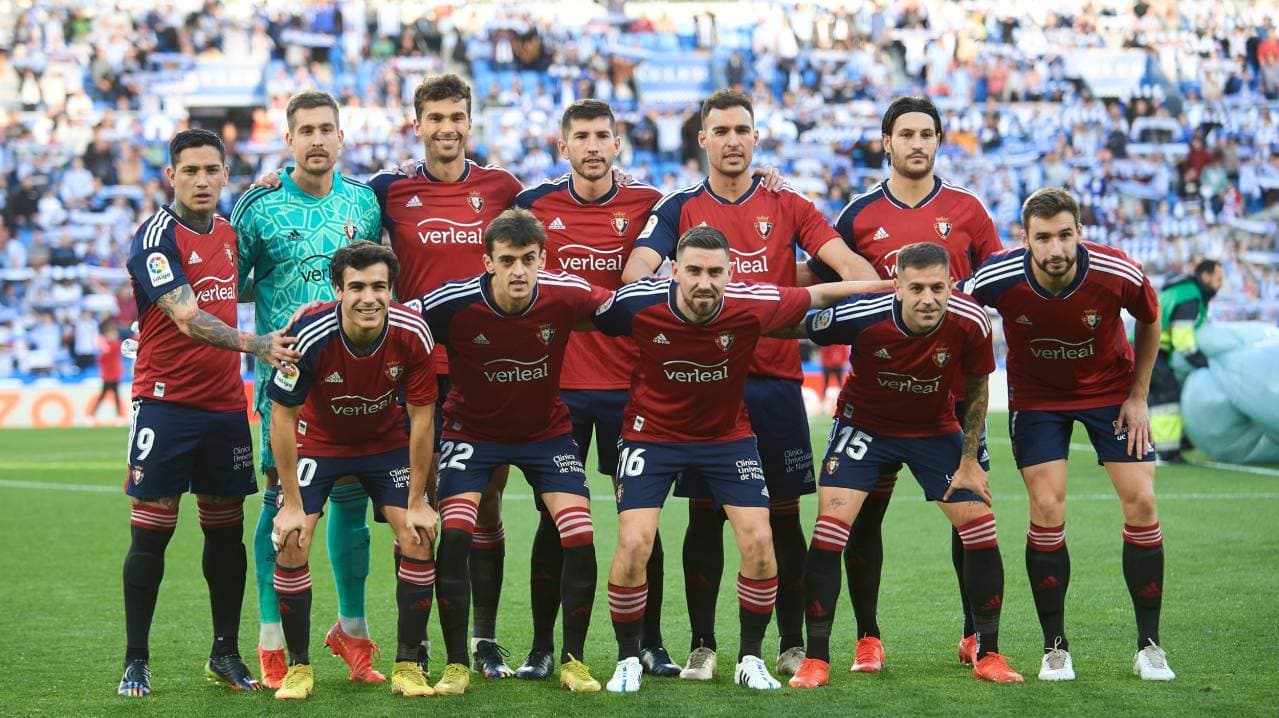
Tactically, the lineups told their own story. Alessio Lisci doubled down on Osasuna’s season-long reference system, a 4-2-3-1 that has been used in 22 league matches: S. Herrera in goal, a back four of V. Rosier, A. Catena, F. Boyomo and A. Bretones, L. Torro and J. Moncayola as the double pivot, with R. Garcia, A. Oroz and V. Munoz supporting lone striker A. Budimir. Espanyol, under Manolo Gonzalez, answered with a 4-4-2: M. Dmitrovic behind a defence of O. El Hilali, C. Riedel, L. Cabrera and C. Romero; a midfield line of T. Dolan, U. Gonzalez, P. Lozano and P. Milla; and a front two of Exposito and K. Garcia.
Tactical Voids and Discipline
Both sides entered with notable absences that subtly reshaped their options. Osasuna were without R. Moro, listed as “Missing Fixture” through injury, depriving Lisci of an extra wide option from the bench – significant for a team that often needs late width to stretch games at El Sadar.
Espanyol were hit harder in pure attacking depth: C. Ngonge and J. Puado both missed out with knee injuries. In a side already reliant on collective movement rather than a single prolific scorer, losing two forwards narrowed Gonzalez’s ability to change the game state from the bench and forced him to lean even more on players like Exposito and P. Milla to carry both creation and finishing responsibility.
Disciplinary trends across the season foreshadowed the game’s edge. Osasuna’s yellow cards spike late: 21.35% of their bookings come between 76-90 minutes, with another 14.61% between 91-105 – a profile of a side that grows increasingly desperate and stretched as time ticks away. Red cards are similarly clustered, with 28.57% between 31-45 and another 28.57% between 76-90 and 91-105.
Espanyol, meanwhile, are one of the league’s most combustible late-game teams: 30.00% of their yellow cards arrive in the 76-90 window, and their reds are concentrated in the second half – 40.00% between 46-60 and 40.00% between 76-90. In other words, this fixture was always likely to become more chaotic rather than calmer as it approached the final whistle.
On an individual level, the disciplinary spine is clear. For Osasuna, A. Catena carries 11 yellow cards and 1 red in the league, while J. Moncayola has 9 yellows. For Espanyol, P. Lozano has amassed 11 yellows and a yellow-red, Edu Expósito 9 yellows, and O. El Hilali 9 more. Add in C. Pickel’s combination of 3 yellows, 1 yellow-red and 1 straight red, plus P. Milla’s own red, and you have two squads with multiple players walking a disciplinary tightrope.
Key Matchups
The central duel of the night was always going to be A. Budimir against Espanyol’s leaky away defence. Budimir arrived as one of La Liga’s most efficient focal points: 17 league goals overall from 36 appearances, with 88 shots and 41 on target. His penalty record is revealing: 6 scored but 2 missed, meaning he is dangerous yet not infallible from the spot – a detail that shapes how defenders like L. Cabrera and C. Riedel can risk borderline challenges in the box.
Espanyol’s away defensive record heading into this game – 31 conceded in 19 matches, an average of 1.6 goals against on their travels – suggested that Budimir would find chances, particularly with Osasuna’s 4-2-3-1 geared to feed him early crosses and second balls. Catena’s long passing (1673 total passes with 12 key) and Moncayola’s 38 key passes overall are key supply lines, designed to pin Espanyol’s centre-backs deep and isolate their full-backs.
Yet Espanyol’s “shield” is more collective than individual. O. El Hilali, with 72 tackles, 15 blocks and 40 interceptions, and L. Cabrera’s aerial presence form a back line that, while statistically porous, is aggressive in first contact. The match’s 2–1 outcome in Espanyol’s favour suggests they managed to limit Budimir’s most dangerous zones, forcing him into more back-to-goal work and contested headers rather than clean penalty-box finishes.
If Budimir vs the Espanyol back line was the “Hunter vs Shield”, the “Engine Room” was the clash between Osasuna’s double pivot and Espanyol’s creative-metronomic axis of Pol Lozano and Edu Expósito.
Lozano’s season numbers – 945 passes at 87% accuracy, 23 key passes, 38 tackles, 6 blocks and 22 interceptions – frame him as the metronome and screen. Beside him, Expósito is the risk-taker: 965 passes with 80 key passes, 6 assists and 44 dribble attempts with 33 successes. He is Espanyol’s top assist provider and their primary progressive passer, but also a card magnet with 9 yellows.
Across from them, Moncayola’s 1369 passes (38 key) and 52 tackles give Osasuna a box-to-box profile, while L. Torro’s presence provides the positional anchor. In theory, this should allow Osasuna to compress central spaces and deny Expósito time to lift his head and find K. Garcia or Milla between the lines.
In practice, the 2–1 scoreline in Espanyol’s favour implies that Lozano and Expósito managed to tilt key phases of the game their way. Whether through breaking Osasuna’s first press or winning second balls, the visitors’ midfield found enough moments to feed a front line that, while not prolific, is opportunistic.
Statistical Prognosis and Tactical Verdict
Following this result, the numbers tell a story of small structural advantages exploited. Osasuna’s overall profile – 1.2 goals for and 1.3 against per game, with 7 clean sheets but 11 matches failing to score – describes a team that lives on narrow margins. At home they rarely fail to find the net, but their inability to turn dominance into multi-goal cushions leaves them vulnerable to exactly the kind of 2–1 defeat that unfolded here.
Espanyol, by contrast, continue to embody volatility: 1.1 goals for and 1.5 against overall, yet with 10 clean sheets and only 9 games failing to score. Their away record of 5 wins and 5 draws in 19 matches shows that, despite defensive softness, they have enough attacking structure – particularly through Expósito and Milla – to punish lapses.
From an Expected Goals lens, even without raw xG values, the patterns are clear. Osasuna’s 4-2-3-1, with a high-volume target man and creative midfield trio, is built to generate steady, medium-quality chances rather than a barrage of high-value opportunities. Espanyol’s 4-4-2, with dual creators in central midfield and wide forwards who drift inside, is more about sudden surges and exploiting transitional moments.
The decisive factor at El Sadar was Espanyol’s ability to turn a limited number of promising situations into two goals, while Osasuna once again found themselves trapped between territorial control and a lack of ruthless edge. In a match shaped by absences, disciplinary risk and contrasting seasonal identities, the visitors’ sharper execution in both boxes made the difference – and may well define how both clubs remember this campaign.