Old Trafford’s Future: Funding a 100,000-Seat Stadium
Manchester United have finally cleared the biggest physical obstacle to building a new Old Trafford. The club now own the key piece of land at Wharfside, opposite the previously targeted Freightliner site that was ultimately deemed unworkable.
The dream is vast: a 100,000-seat arena, a modern super-stadium to match United’s global weight. The problem is just as big.
Who is going to pay for it?
Land in Place, Questions Piling Up
For months, land acquisition stood between United and any meaningful step forward. That barrier has gone. The Wharfside plot gives the club the canvas it craved.
Yet as the diggers remain idle, the financial picture grows more complicated.
Andy Burnham, a vocal supporter of government funding for the wider regeneration of the area (though not the stadium itself), is poised to leave his role as mayor of Manchester and head for Downing Street as Prime Minister. His departure shifts the political landscape at the very moment United need clarity.
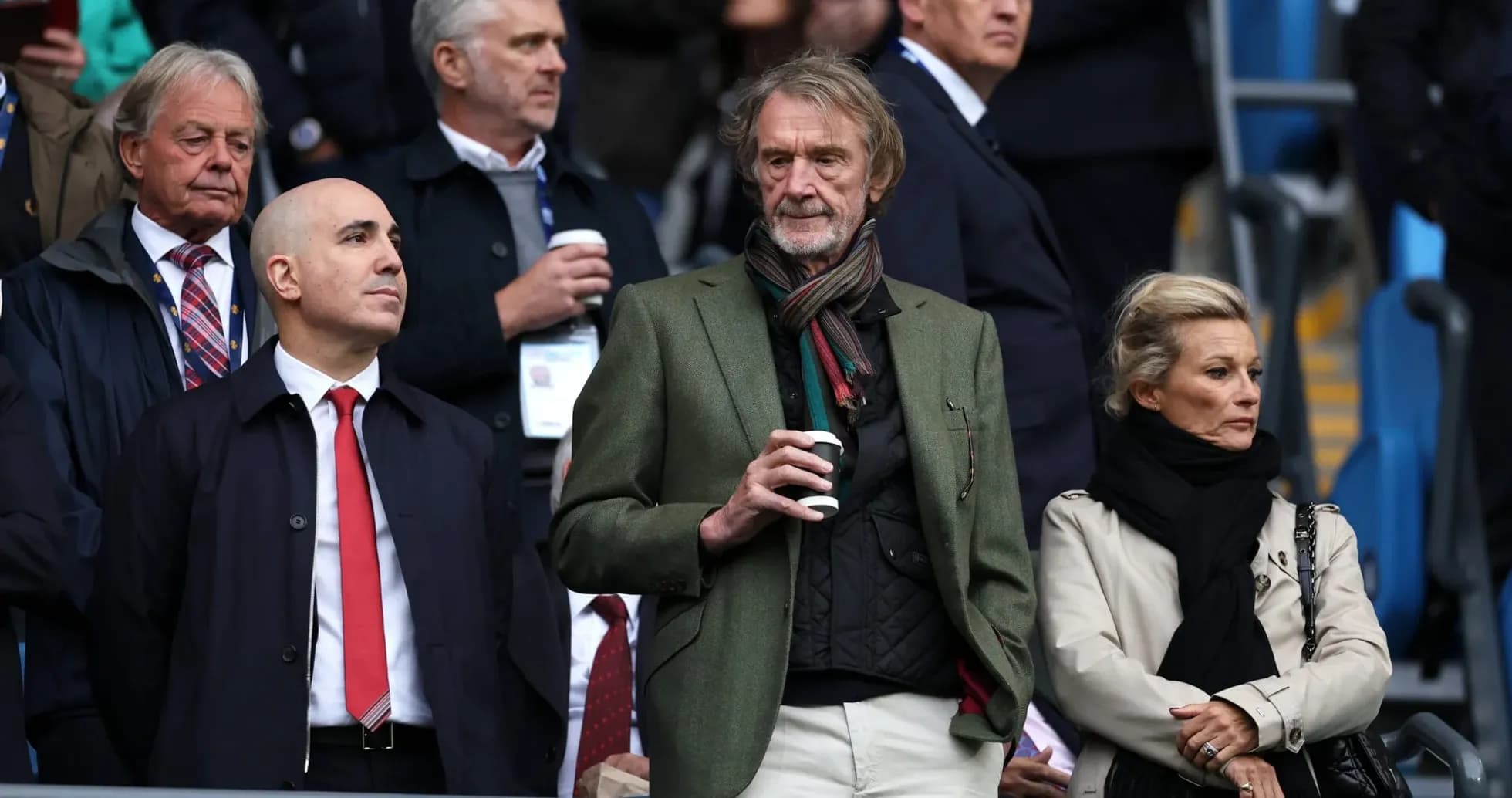
Government money for infrastructure around the ground was one thing. A public contribution to the stadium itself was never on the table. Without that, the burden falls back on Sir Jim Ratcliffe and the ownership structure — and the options are neither simple nor painless.
The most emotive question is already looming: what price, if any, would United accept for the naming rights to Old Trafford?
Heritage versus revenue. Emotion versus arithmetic.
“Monumentally Complex”: Why Simple Debt Won’t Do
Adam Williams, GRV Media’s head of football finance, believes United cannot realistically deliver this project without bringing in fresh capital at ownership level.
His reasoning is stark.
Tottenham Hotspur built their stadium in a different financial climate. Interest rates were at historic lows, with large chunks of Spurs’ borrowing fixed between two and three per cent. Today, the Bank of England base rate sits at 3.75 per cent, and lenders would add a premium on top for a club in United’s position.
Williams points to United’s recent refinancing of $425m of notes at 5.36 per cent as a marker — and warns that the true cost of borrowing for a new stadium could climb higher once lenders dig into the risk profile.
Spurs entered their stadium build with “next to no debt”. United are already carrying around £1.4bn, before transfer liabilities are even factored in. At the same time, Ineos, Ratcliffe’s conglomerate, has seen its credit rating downgraded by several agencies in recent years, chipping away at the external security that might comfort potential lenders.
The upshot? United are likely to pay roughly double the interest rate Spurs secured for their stadium project.
And that’s only half the story.
Construction costs have surged. Raw materials, labour, logistics — all buffeted by geopolitical tension and supply chain disruption. Williams notes that the £2bn figure United have floated as the projected cost of the stadium is seen by many experts as optimistic.
Big builds rarely come in on time or on budget. United face the prospect of borrowing more than Spurs did, at a higher rate, in a more expensive market.
A Financial Jigsaw, Not a Simple Loan
This will not be a straightforward “take out a loan and build a ground” exercise.
Williams expects a “monumentally complex” financing structure, pieced together from multiple sources: personal seat licences, bonds, traditional loans, possible equity injections, and the sale of naming rights. Every slice adds money; each one also adds strings.
And even if the stadium fills and the tills ring, there is a hard lesson from north London.
Spurs have almost quadrupled their matchday income since leaving White Hart Lane. Yet they still lose money in most seasons. That isn’t solely down to stadium costs, but it underlines a key point: extra revenue is not the same as extra profit.
An extra £100m in matchday and sponsorship income does not automatically cancel out interest payments and operating costs. The only figure that really matters is the profit generated by the new asset, not the headline revenue.
Williams is blunt about the choices ahead. He does not see a route to completion without one of three things happening:
- A) United sell a stake in the club or carve out the stadium as a standalone business and sell part of that.
- B) The club go back to the markets with another IPO.
- C) The hierarchy squeeze supporters and commercial partners so aggressively at the new ground that revenues soar in the short term — at the risk, as Williams puts it, of “corroding the club’s soul in the long term”.
For a fanbase already weary of debt, refinancing, and shareholder dividends, the prospect of higher prices and deeper commercialisation around a new stadium will be a raw one.
Timelines Slipping, Targets Moving
When plans for a new stadium were first floated in 2025, the aim was bold: completion by 2031. That target now looks optimistic at best.
We are five months away from 2027. No construction. No shovels in the ground. No firm start date.
The land is there. The vision is there. The money is not.
Funding has become the central question, overshadowing architectural drawings and capacity debates. United have options, but none are quick and none guarantee a smooth journey from blueprint to opening night.
Inside the club, a new milestone has emerged: hosting the 2035 Women’s Euros final. That gives United roughly nine years to design, fund, build and open a stadium worthy of such an occasion.
The moment construction begins, the club can finally pin down a realistic timeline. Until then, the finish line keeps moving — further and further into the distance, while the old Old Trafford waits, ageing, iconic, and increasingly overshadowed by a simple, brutal equation:
How much of Manchester United’s future are they willing to sell to build it?