Nigeria's Super Falcons Aim for World Cup Qualification in WAFCON
Nigeria will chase history in Morocco with a familiar core, a heavy burden of expectation and one conspicuous gap in the back line.
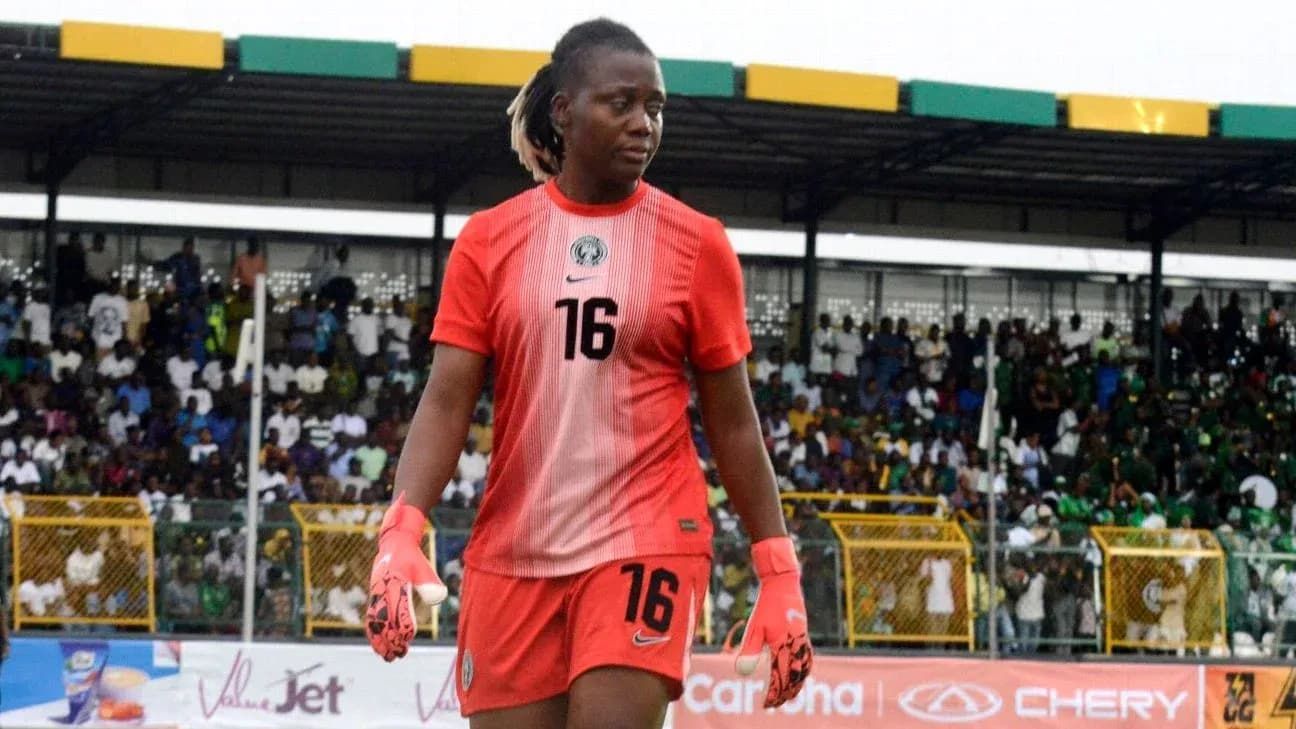
Justine Madugu has named a 25-player squad built around the same spine that powered the Super Falcons to a record 10th Women’s Africa Cup of Nations crown last year. Captain Rasheedat Ajibade, outstanding goalkeeper Chiamaka Nnadozie and talismanic forward Asisat Oshoala all return as Nigeria set out to defend their title and lock down another ticket to the FIFA Women’s World Cup.
World Cup first, trophies later
Madugu has been blunt about priorities. With WAFCON doubling as the African qualifying route for the 2027 World Cup in Brazil, Nigeria’s initial target is simple: reach the semifinals.
Do that, and the rest of the continent’s heavyweights can worry about the maths. The four semifinalists go straight to Brazil. Fifth place earns only a lifeline via an intercontinental playoff.
Nigeria have never missed a Women’s World Cup. They are the only African nation with a perfect attendance record since 1991, one of just seven teams worldwide to manage that run. Protecting that streak is the first job. Lifting an 11th African title comes next.
Madugu put it plainly to CAFonline: qualify first, then defend the crown. He knows the dynamic has changed. Nigeria arrive as champions, the team everyone wants to knock off the pedestal.
Plumptre’s absence leaves a hole
The one major omission jumps off the page. Ashleigh Plumptre, a defensive leader and one of the most composed figures in last year’s campaign, misses out as she continues to recover from an injury sustained in March.
She addressed the decision herself, explaining that her body “is asking for more time” and that she is “listening.” Her message to fans and teammates was part apology, part rallying cry: back this team, be patient, they need you.
On the pitch, though, her absence is more than emotional. Plumptre’s calm under pressure and left-footed balance in the back line gave Nigeria a different dimension. Madugu must now lean even harder on his remaining veterans.
Old guard, new teeth
Experience still runs right through this squad.
Ajibade returns as captain and heartbeat, Nnadozie as the last line of resistance and arguably Africa’s premier goalkeeper. In front of them, Osinachi Ohale, Michelle Alozie, Christy Ucheibe, Halimatu Ayinde and Oshoala form a hardened core that has seen almost everything the women’s game can throw at them.
Ohale anchors the defence with her aerial dominance and positional sense. Alozie’s energy and edge down the flank have become a trademark. Ucheibe and Ayinde offer bite and balance in midfield, while Oshoala remains the reference point in attack, even as the next wave arrives to share the load.
That next wave is no longer just a supporting cast. Jennifer Echegini and Deborah Abiodun in midfield, along with forwards Gift Monday, Esther Okoronkwo and Omorinsola Babajide, are being pushed into bigger roles. They bring legs, flair and a different tempo, the kind of edge Nigeria will need in a 16-team tournament where the margin for error shrinks quickly.
One home-based hopeful, a global cast
Only one home-based player makes the cut: Abia Angels goalkeeper Fatima Oloko. She joins a goalkeeping group headlined by Nnadozie of Brighton & Hove Albion and Comfort Erhabor of Portsmouth Ladies.
The rest of the squad is scattered across Europe, North America, Asia and the Middle East, underlining how far Nigerian players have spread across the global club game. From Paris Saint-Germain to SL Benfica, from Galatasaray to Pachuca, the Super Falcons will arrive in Morocco with minutes, miles and high-level experience in their legs.
Group C and the road ahead
Nigeria’s route begins in Group C, based entirely in Rabat. They will face Egypt, Zambia and tournament debutants Malawi.
On paper, Nigeria carry the weight of history into that group. In reality, Zambia have grown into a serious continental force, Egypt are steadily rebuilding, and debutants always bring an element of the unknown. Any slip could complicate that all-important push to the last four.
This edition of WAFCON is the second in its expanded 16-team format. No champion has yet defended the trophy in this new landscape. Nigeria, with 10 titles already, are aiming to become the first.
They arrive with a familiar backbone, an absent leader in defence, a new generation pushing from underneath and a non-negotiable target: keep the World Cup streak alive, then prove once again that the continent still runs through the Super Falcons.