Morocco's Prime Minister Warns Football Federation President on World Cup Final
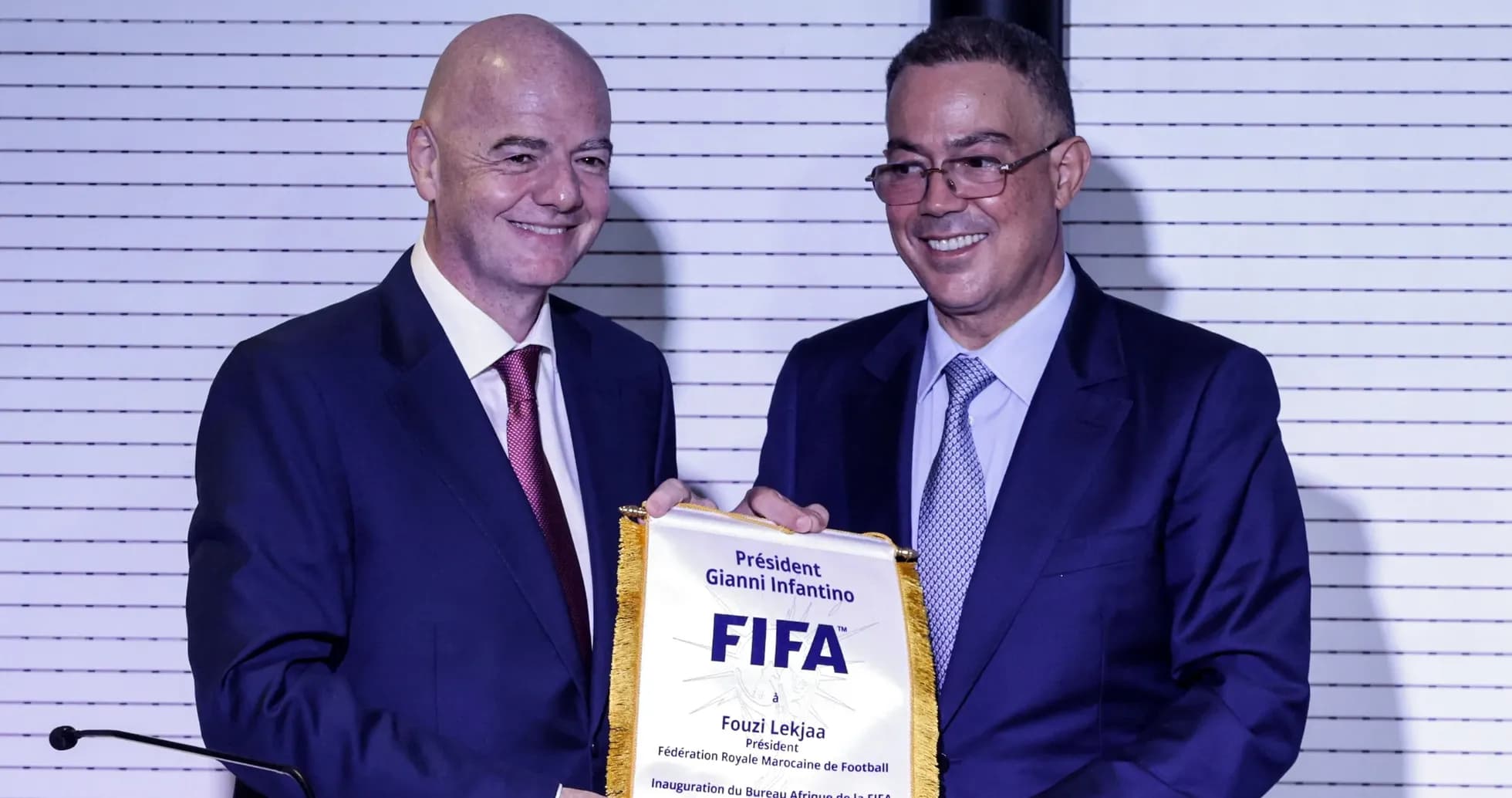
Morocco’s Prime Minister has publicly rebuked one of the country’s most powerful sporting figures, ordering Royal Moroccan Football Federation president Fouzi Lekjaa to stop making promises about hosting the 2030 World Cup final in Casablanca.
The warning, reported by BBC Sport, cuts straight to the heart of a growing tug-of-war over where the showpiece match of the centenary tournament will be staged.
Political fire over a football promise
Lekjaa lit the fuse at a political party event when he declared that Morocco’s new mega-stadium in Casablanca would have the “honour” of staging the final. It was a bold, crowd-pleasing line. It was also, crucially, premature.
FIFA has not confirmed the venue. Talks with co-hosts Spain and Portugal are still to come. That was enough for Prime Minister Aziz Akhannouch to step in.
Speaking at a rally, Akhannouch did not bother to soften his words. He told Lekjaa:
“Do not offer to host the big final game in Morocco while we still have not discussed the matter with our allies, Spain and Portugal. There should be some respect, brothers. Stop using electoral promises to pull the rug out from under us. These are huge matters. Deciding where the final will be held is a major issue.”
The message was clear: football prestige cannot outpace diplomatic reality.
The 2030 World Cup, shared between Morocco, Spain and Portugal with opening matches also staged in South America to mark 100 years of the competition, is already a complex political and logistical puzzle. Lekjaa’s assertion risked making it even more delicate.
FIFA waits, Spain pushes
While politicians trade words, FIFA has stayed in neutral. The governing body has only said that “a decision will be made in due course,” offering no hint as to whether the final will land in Africa or Europe.
Spain, though, is not hiding its intentions.
Rafael Louzan, president of the Spanish federation (RFEF), has been emphatic in public. Speaking to Cadena SER radio, he insisted Spain is the logical destination for the final.
“Even though no decision has been taken, I believe Spain is the place because it cannot be any other way,” Louzan said. “As you know, we are currently world champions. I believe Spain’s organisational capacity for major events is beyond question and that is why reality dictates that the grand final cannot and must not be held anywhere other than in Spain.”
Spain’s argument leans on recent success and infrastructure. Their men’s national team, fresh from beating Argentina to secure a second World Cup title this past summer, has restored the country’s status at the very top of the game. Around them sit two modernised giants: the revamped Santiago Bernabeu in Madrid and the expanding Spotify Camp Nou in Barcelona, both ready-made stages for football’s biggest night.
Morocco’s giant bet
Morocco, though, is not quietly stepping aside.
The country has launched an audacious stadium project: a 115,000-seat arena near Casablanca, designed to become the largest football-specific venue on the planet. It is a clear statement of intent, a concrete-and-steel argument that Africa can host the final for the first time since Johannesburg in 2010.
The plan is simple: build something so big, so modern and so spectacular that it forces the conversation. Rival Spain’s legendary grounds with a new cathedral of the game and make Casablanca impossible to ignore.
But Akhannouch’s intervention shows where the Moroccan government currently draws the line. They want the final. They are investing heavily to get it. They just do not want domestic political theatre to jeopardise delicate negotiations with Madrid and Lisbon.
A long game, not a sprint
The timeline offers both sides breathing room. For the 2026 World Cup, FIFA did not confirm New Jersey’s MetLife Stadium as the final venue until early 2024. The same slow burn is likely here.
That delay suits the politics. It gives Morocco time to push its case and show progress on its giant stadium. It gives Spain time to lean on its history, its world champion status and its proven ability to stage major events.
For now, the final whistle on this battle is a long way off. The only certainty is that the race to host the 2030 World Cup final has already moved far beyond football.